The factory
behind the case.
Three production lines, 100k+ pieces a month — and one obsession: the sample you approve and the 1,000th unit off the line are the same case. Here is exactly how it gets made, and everything it can be made from.
Six steps.
Zero shortcuts.
This is the part buyers actually audit. Every step below happens on our floor in Dongguan — follow a case from raw sheet to container.
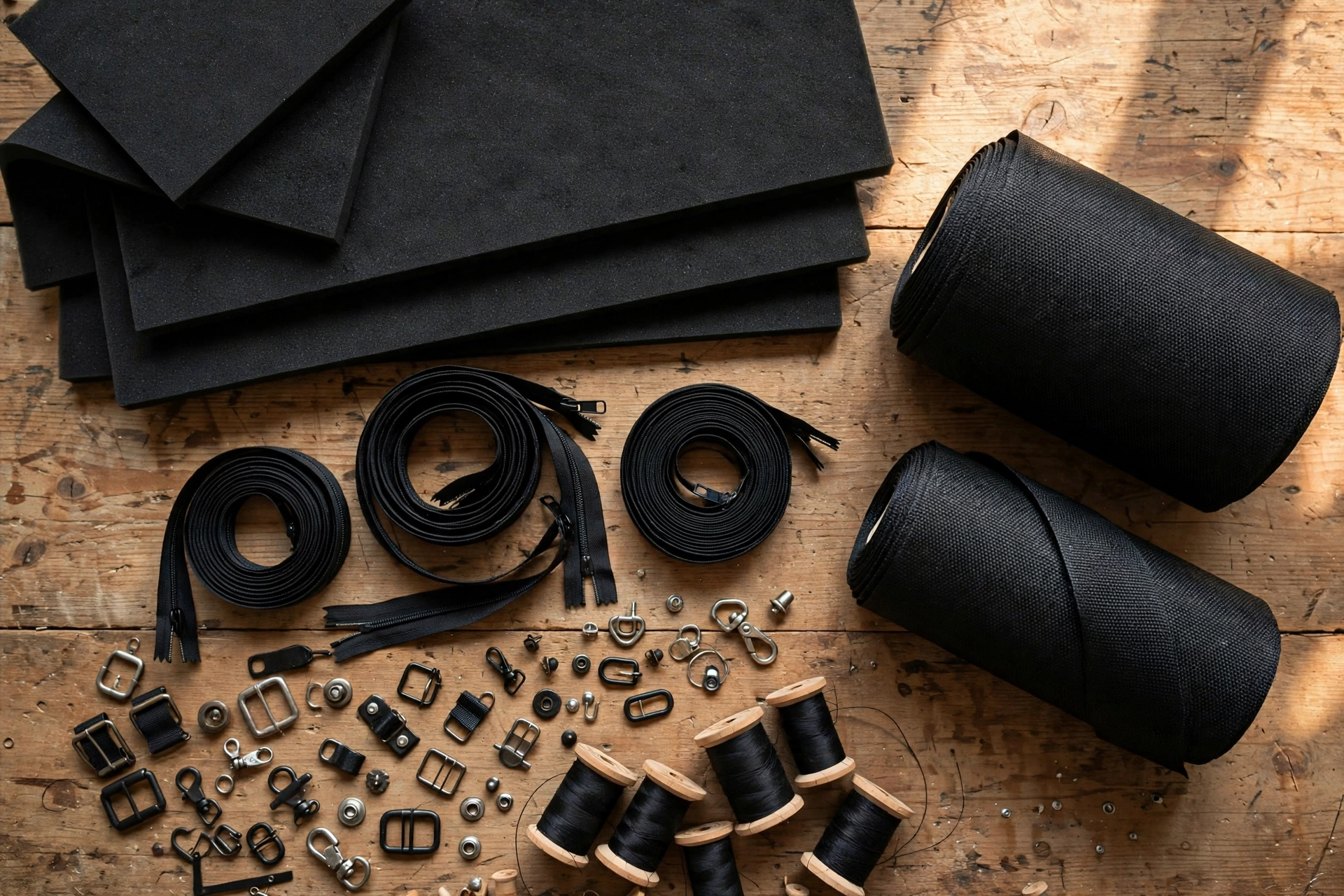
Material prep — inspected on arrival
Every case starts as raw stock: EVA sheets, outer fabrics, zippers, hardware, thread. Everything is checked against spec before it touches the line — because a flaw caught here costs cents, caught later costs a container.
- EVA, fabric, hardware — spec-checked inbound
- Colors matched to your approved standard
- Rejected stock never reaches the line
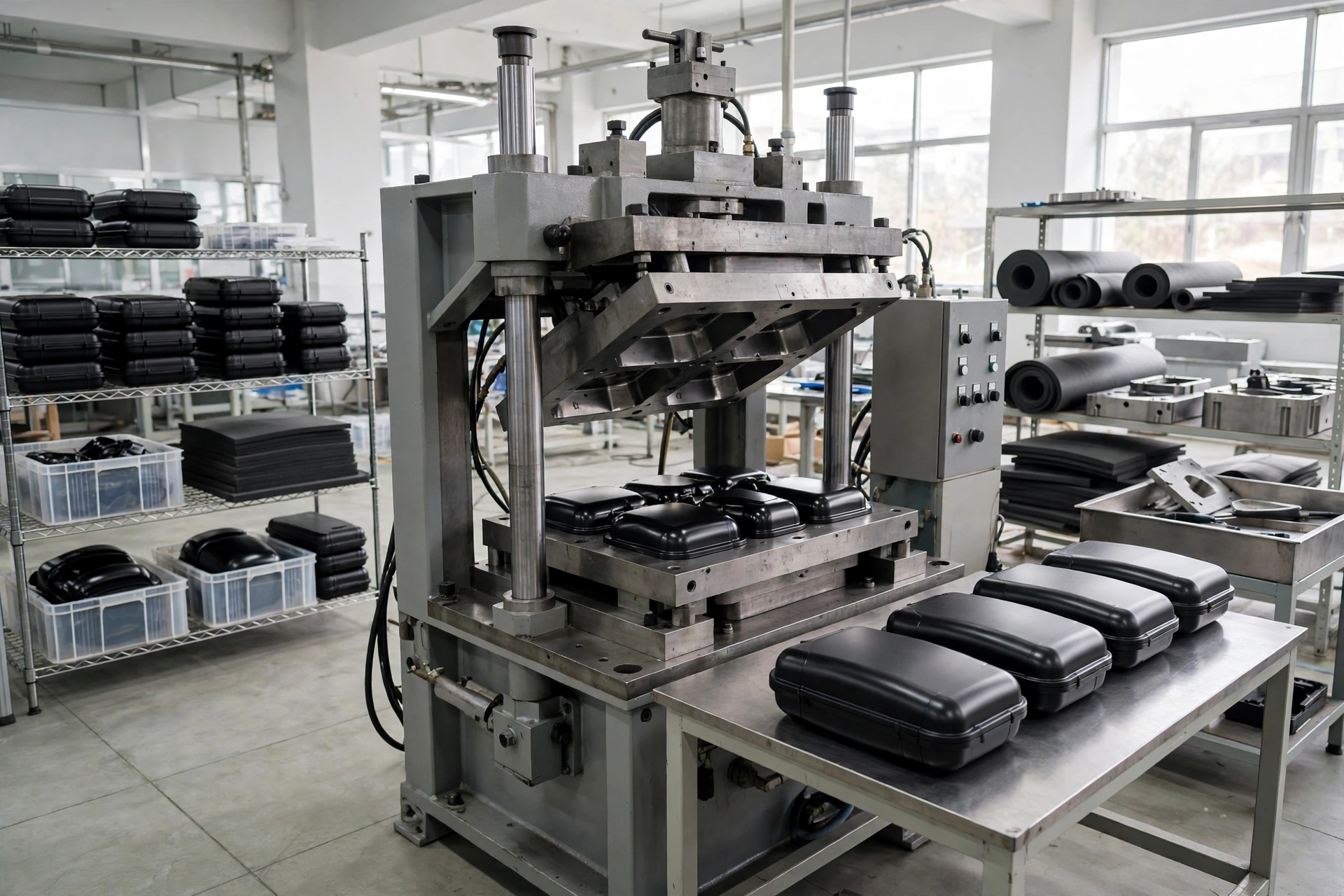
Compression molding — the shell takes shape
EVA goes into steel molds under heat and pressure and comes out as a rigid hard shell — this is the armor. The mold is cut to your design, which is why no two custom cases share a silhouette.
- Steel molds cut to your design
- Heat + pressure = rigid, shape-holding shell
- The step stock cases skip
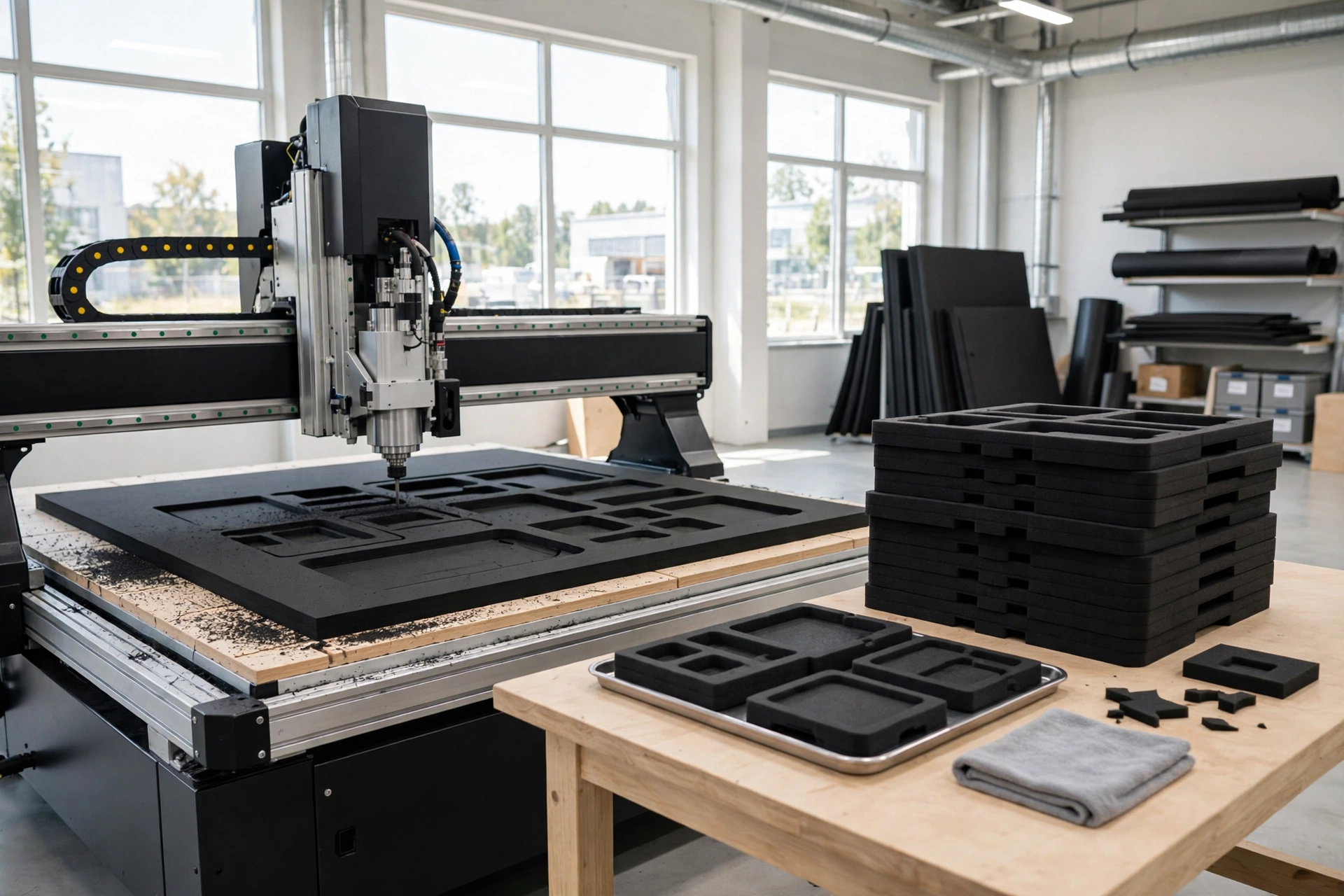
Precision cutting — cavities to ±0.5mm
The foam insert is CNC and die-cut from your product's dimensions — every cavity mapped, every tolerance held. This is the "engineered around your product" part: the insert fits the product, not the other way around.
- CNC + die cutting from your CAD or sample
- Cavities held to ±0.5mm
- Clean edges — no tearing, no crumbs
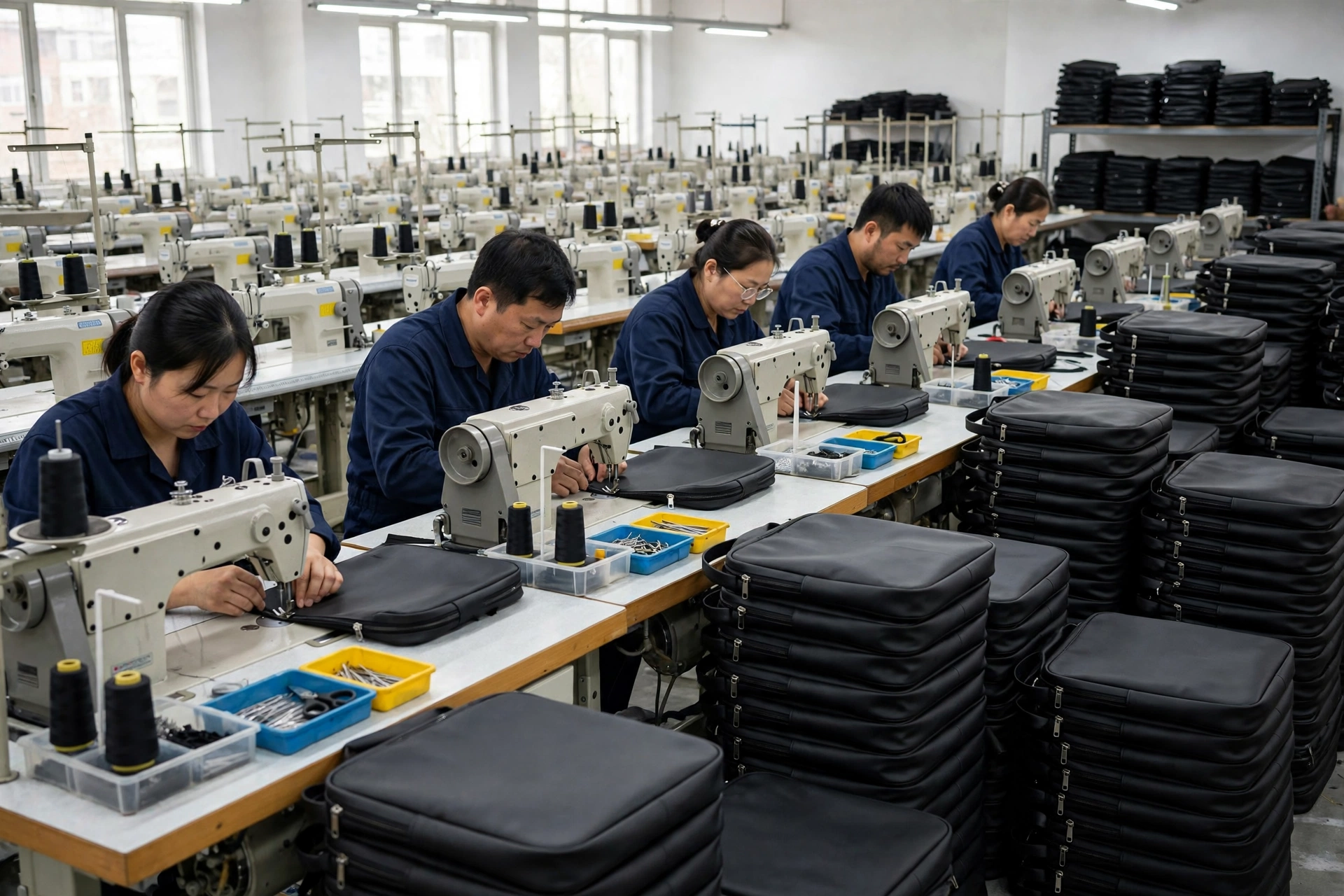
Sewing & assembly — the human step
Shells, zippers, bindings, handles and linings come together at the sewing line. Machines do the straight miles; experienced hands do the corners, curves and closures where quality is won or lost.
- Zippers, bindings, handles set by hand
- Linings fitted to the molded shell
- Stress points reinforced, not hoped for
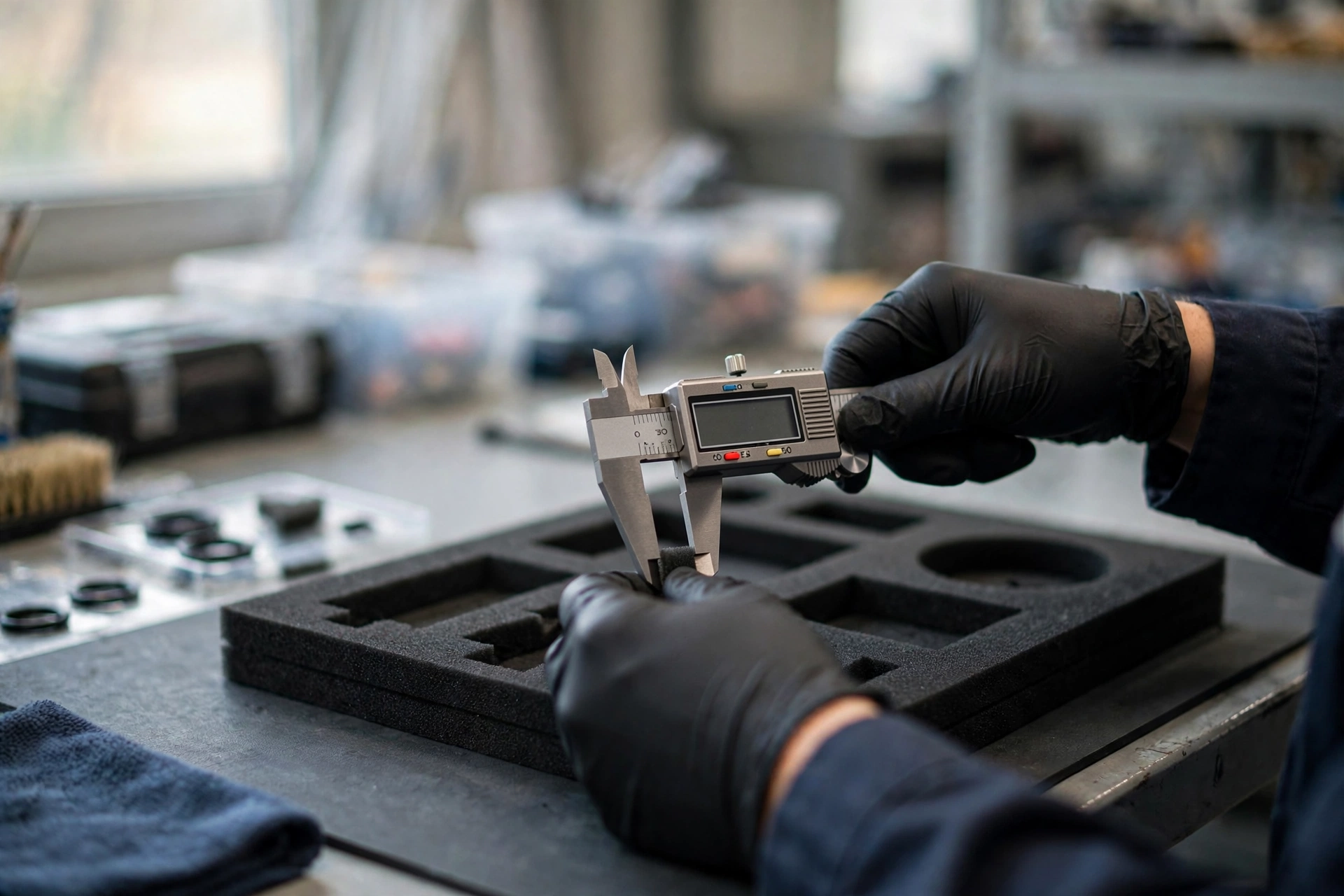
QC inspection — caliper vs. your sample
Every batch is measured against the sample you approved — dimensions, cavity fit, stitching, zippers, finish. The question we answer before anything ships: is the 1,000th unit the same case as the sample?
- Caliper-checked against your approved sample
- Stitching, zippers, finish — every unit
- Failures never get packed
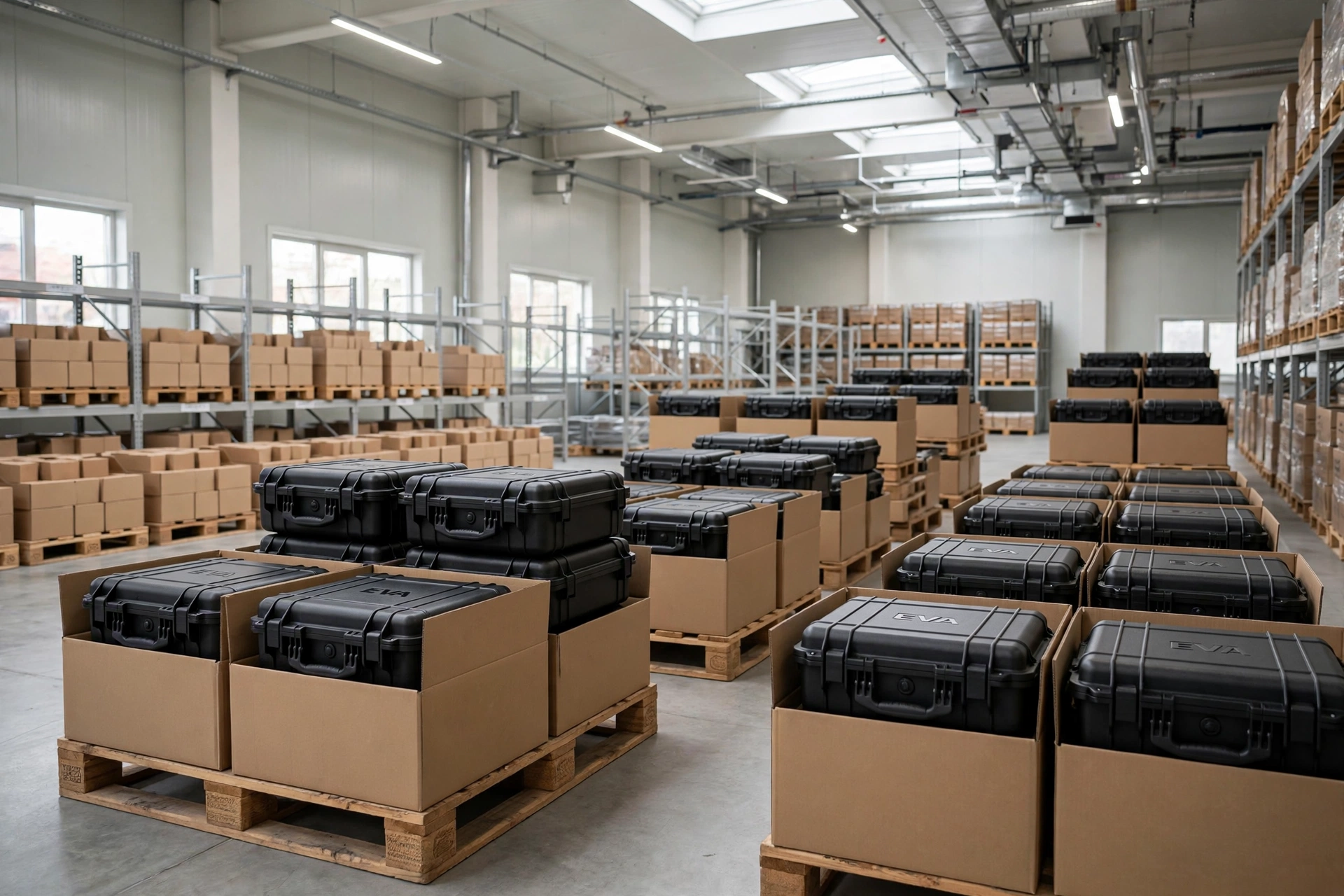
Packing & shipping — protected to your door
Cases are packed in export cartons, palletized and loaded for the container. The protection story doesn't end at the product — it ends when the carton opens at your warehouse.
- Export cartons, palletized
- Container-load planning included
- Arrives as it left
Spec it
like an engineer.
The proven standards we stock. Anything outside the library, we source to your spec — special fabrics, colors, hardware and linings are routine.
EVA foam
The bone of every case. Densities from soft-touch to rigid armor, any color — molded for the shell, cut for the insert. Your pick sets the protection level.
Outer fabrics
1680D and 900D polyester, canvas, PU leather and more. The fabric is the first thing a buyer touches — it sets the price tier.
Linings
Microfiber for lenses and screens, soft velvet for instruments, anti-static for electronics. The lining touches your product — we match it to the surface.
Zippers & hardware
Chunky reverse-coil zippers, metal pulls, D-rings, buckles and latches. The zipper is the most-used part of the case — we don't cheapen it.
Foam inserts
Die-cut or CNC-milled to your product, flocked or anti-static options. Every cavity is mapped — nothing generic.
Branding
Debossed logos in the EVA, embroidery, print and woven labels. The case sells your brand before it's even opened.
The details buyers
check first.
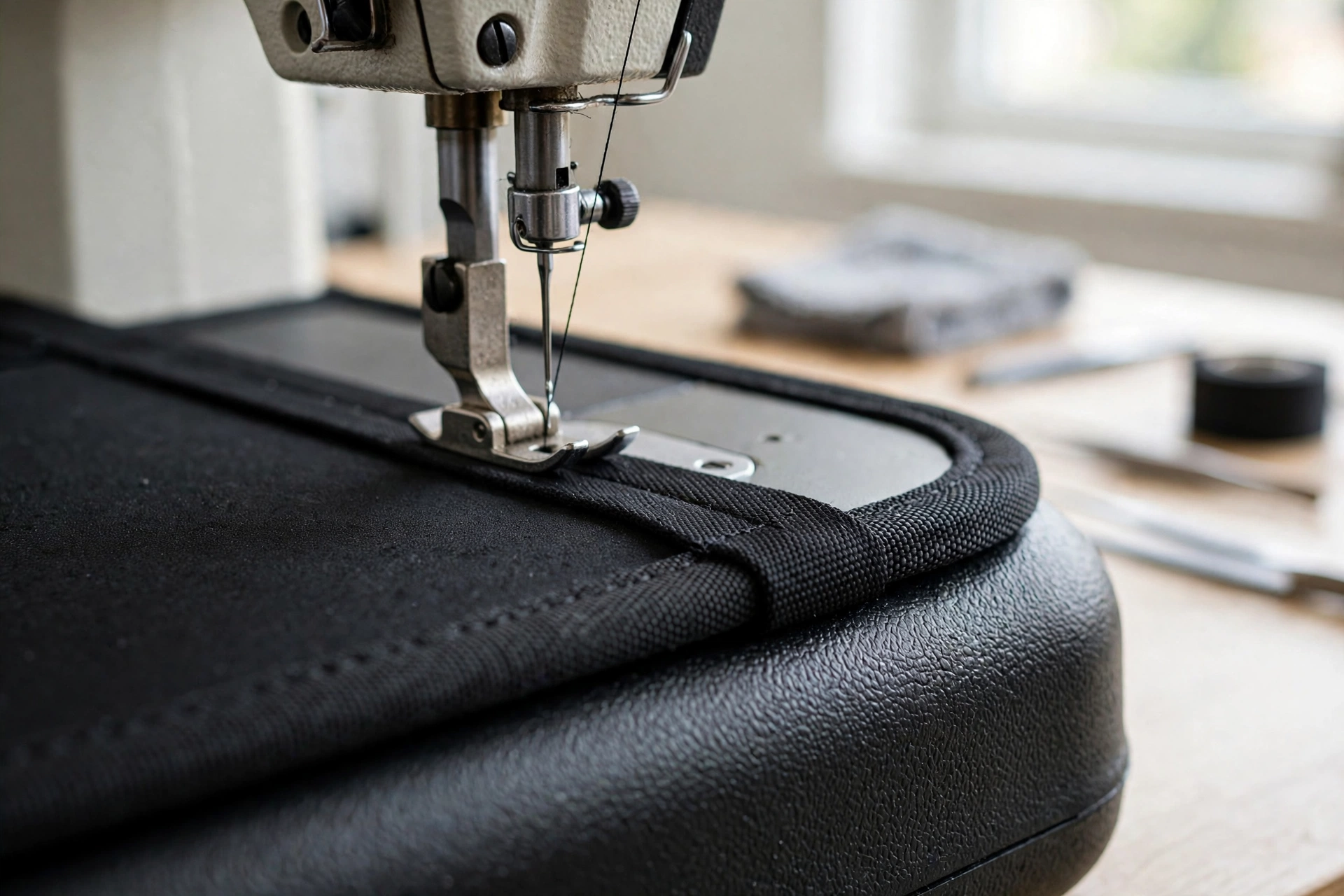
Stitching, binding, deboss
Flip any case over and look at the back of the stitching — straight lines, even tension, no skipped stitches. Edges get bound, not raw. Logos get debossed into the EVA, not stuck on. These are the three things experienced buyers check in the first ten seconds, and the three things cheap cases fail.
- Straight stitch lines, even tension
- Bound edges — never raw
- Debossed branding, molded in
Asked by buyers
auditing the factory
Yes — buyers are welcome in Humen Town, Dongguan. We can also walk you through the line on a video call if you can't travel.
EVA compression molds and foam cutting dies are developed to your product's dimensions — the mold is what makes the case truly custom, not a stock shell with your logo.
Every batch is caliper-checked against your approved sample — dimensions, cavity fit, stitching and finish. The sample and the 1,000th unit are the same case.
Typically 1,000 pcs for custom OEM/ODM orders. Samples in about 7 days after design confirmation, production in 15–25 days.
Yes — the library covers the proven standards, but sourcing to buyer spec is routine: special fabrics, colors, hardware and linings.
Tell us what you're packing.
We'll design around it.
Dimensions, 3D files, or a box of actual products — engineering feedback and a quote within 24 hours.
info@hcdcase.com