Custom EVA tool case,
built around your tools.
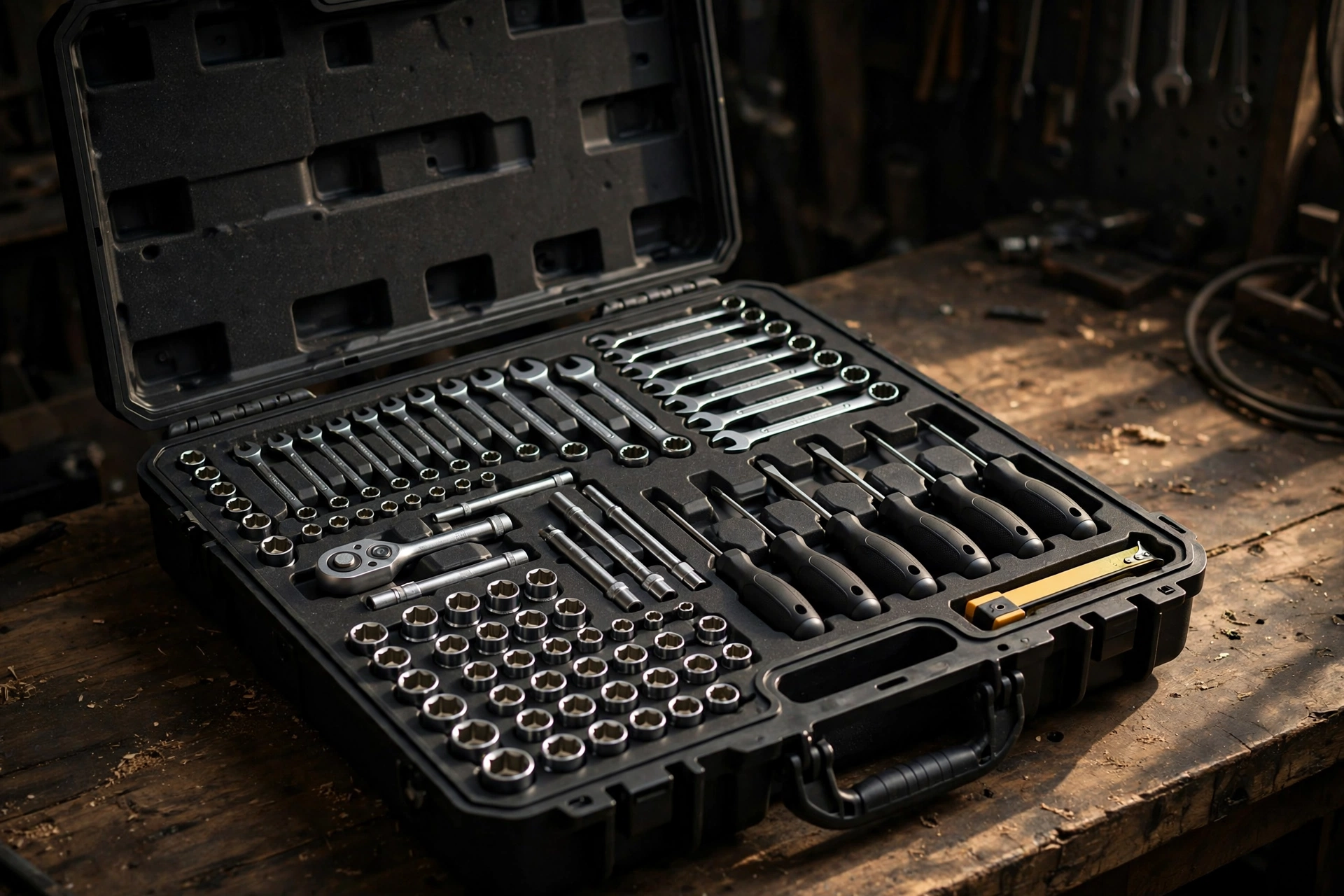
Seventy-two tools, each in a cavity cut to ±0.5mm. This is the OEM/ODM tool case we show buyers who think "it's just a tool box" — and watch them change their minds. Zero rattle. Zero guesswork.
- Die-cut tolerance ±0.5mm
- Shell 1680D ballistic EVA
- Zippers water-resistant sealed
- Custom MOQ 1,000 pcs
The four ways tool cases
usually go wrong.
We've heard these from tool brands for years. This case exists because we got tired of hearing them.
"The sample was perfect. The 1,000 units weren't."
The oldest story in sourcing: a hand-finished sample, then mass production that drifts. Our answer: the cavity map is locked from your tools' 3D scans before we cut anything — and every batch is caliper-checked against your approved sample, not against a drawing.
"One wrong millimeter and the wrench doesn't fit."
A cavity 1mm too tight and your flagship wrench won't seat; 1mm too loose and it rattles all the way to the customer. Our answer: ±0.5mm die-cut tolerance, 2° draft angles — tools lift out cleanly and sit dead still in transit.
"Three rounds of samples. Two months lost."
Every revision round is a month your product isn't selling. Our answer: a digital cavity map you approve before we touch foam — then a physical sample in your hands in about 7 days. Most projects ship on round one.
"You explain your tools. They nod. They get it wrong."
Most case factories have never held your tools. We start from the other end: send us your tool list, dimensions, or 3D files — we design the case around your product, and we'll tell you which of your tools will cause problems before you ask.
Pull it apart.
See what you're paying for.
Five layers. Tap each number to see why it's there — and what goes wrong when a factory skips it.
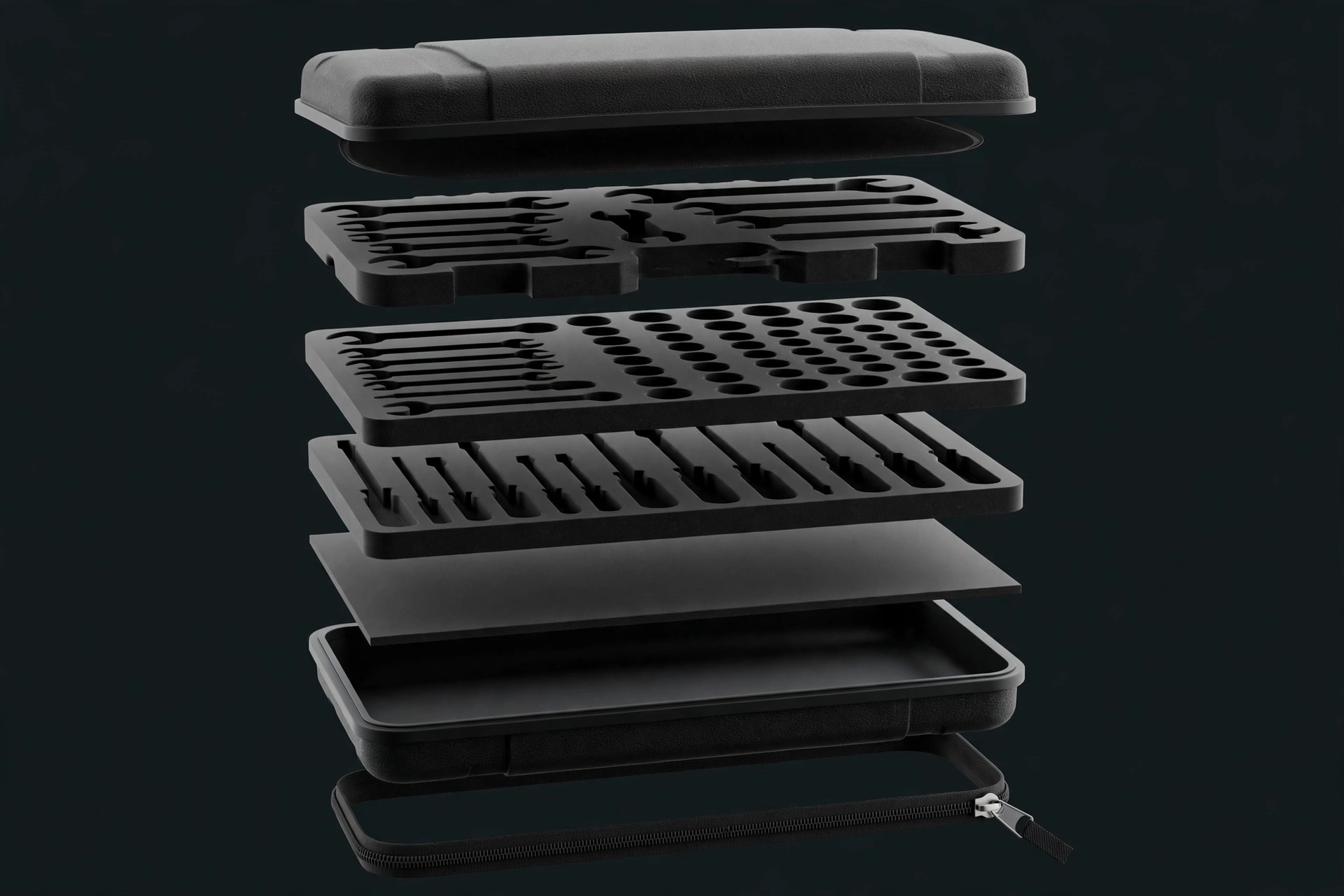
1 · Lid shell
Hot-pressed 75° EVA with 1680D ballistic face. This is the armor — it takes the drops, the rain, the truck bed. Cheap cases thin this layer first; that's why they crack in year one.
The details we obsess over.
Three close-ups. This is the difference between "a case" and "your case".
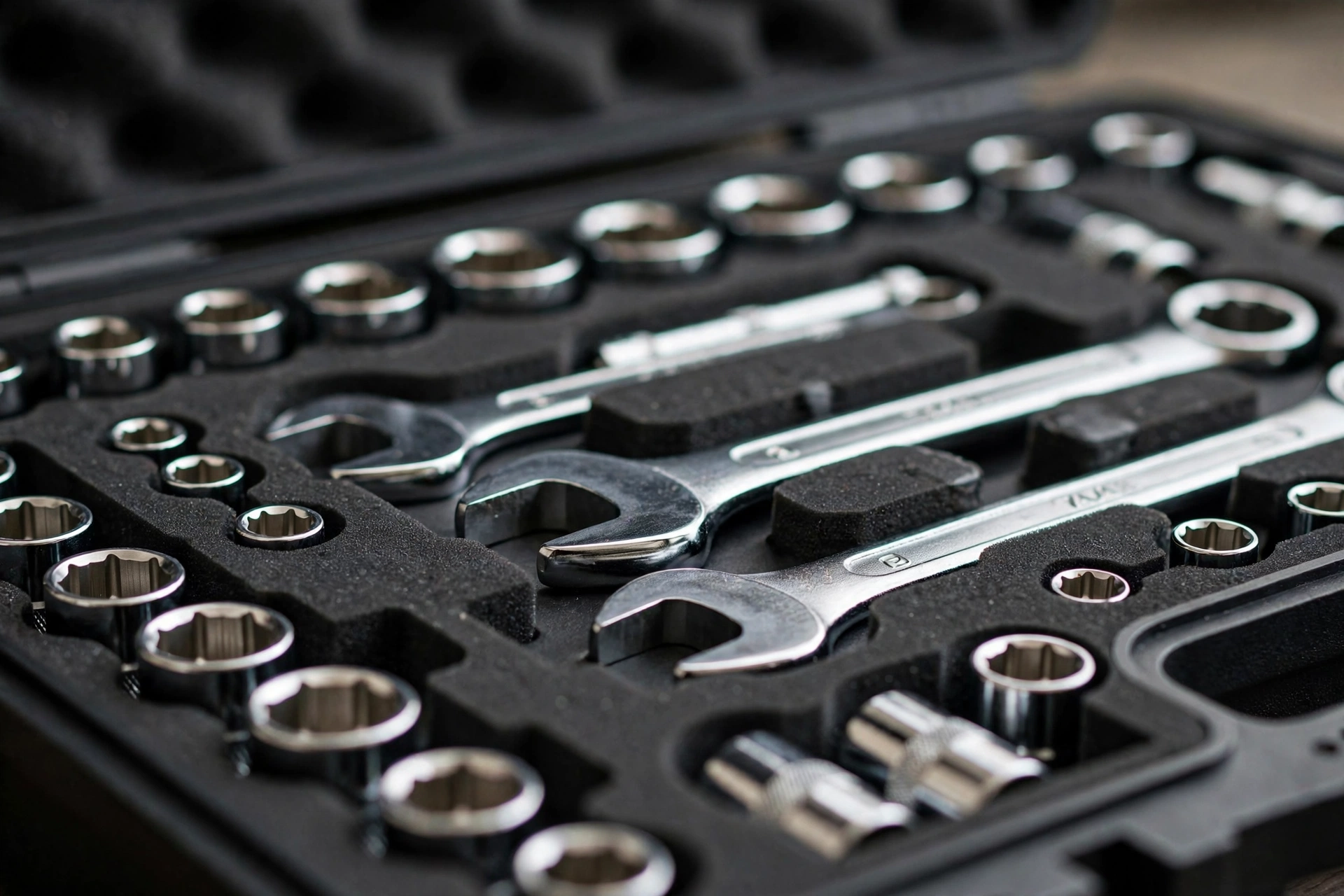
Die-cut cavities, ±0.5mm
Look at the edges — no tearing, no fuzz, no crushed walls. Each cavity is cut from the tool's 3D scan with a 2° draft angle.
- Finger notches under every tool — no digging with fingernails
- 4mm minimum wall between cavities — survives the press
- Caliper-checked against your approved sample, every batch
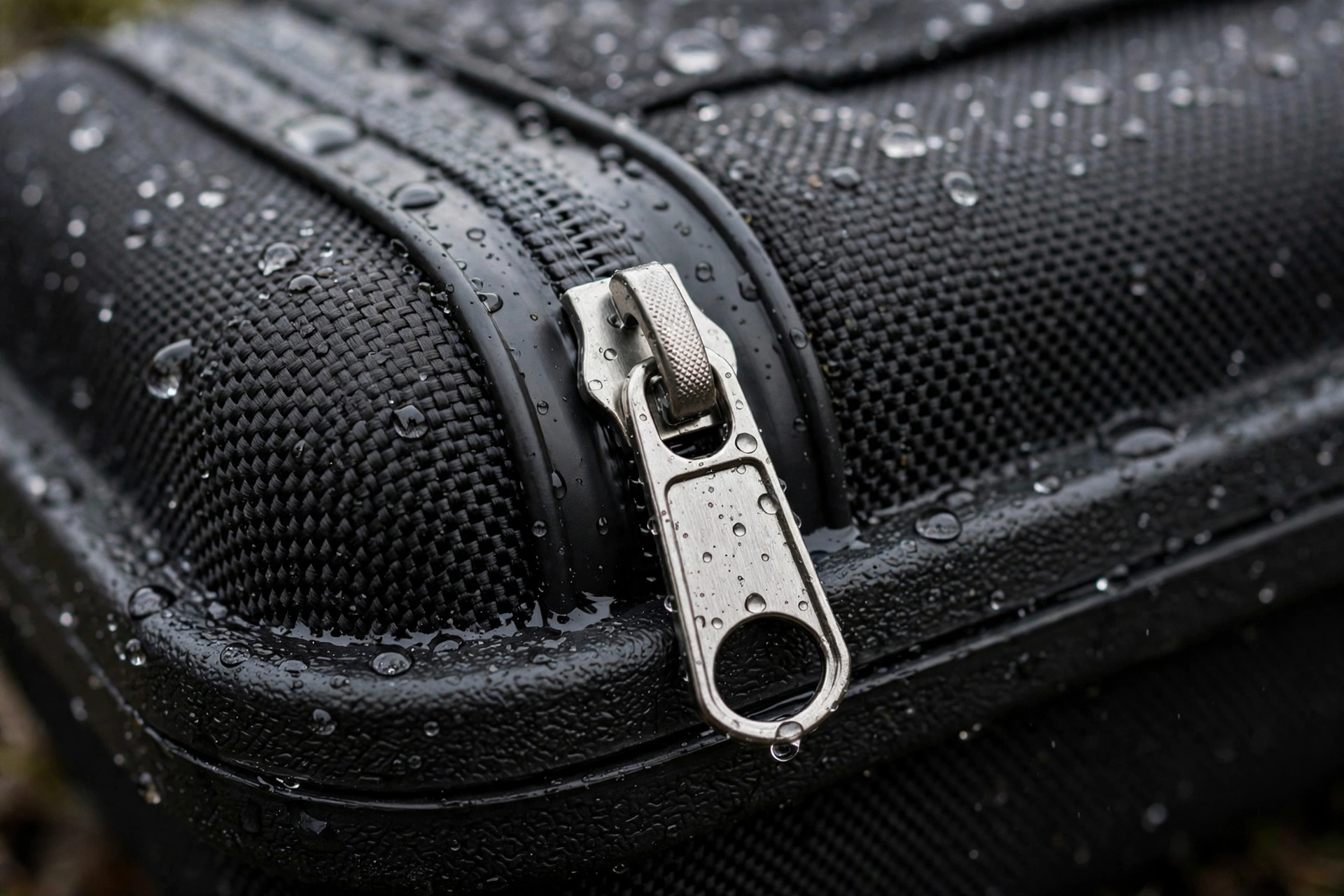
Sealed zippers, beading water
See the droplets sitting on the surface instead of soaking in? That's a sealed zipper tape + DWR-coated face fabric.
- 10,000-cycle zipper life — tested, not claimed
- Custom pullers with your logo, molded not glued
- Double-stitched zipper garage — the #1 failure point, reinforced
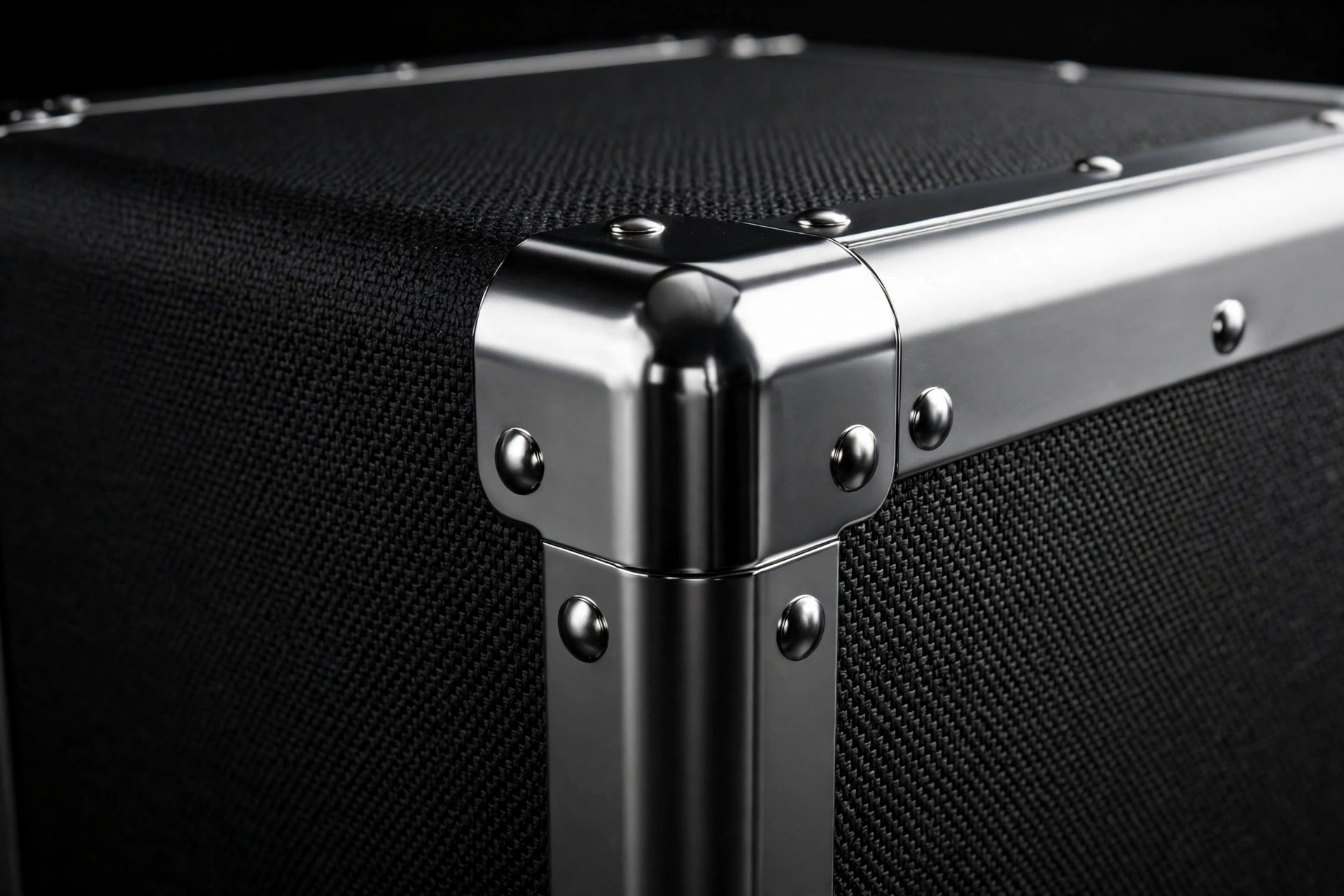
Metal corners, zero excuses
Corners take 90% of drop impacts. We armor them with metal guards instead of hoping the EVA is enough.
- Riveted, not glued — glue fails in heat
- Guards are replaceable — the case outlives its hardest knocks
Picked for the jobsite,
not for the catalog.
Every material on this case was chosen for a reason. Here's the reasoning — so you can judge us on it.
- EVA shell — 75° high-density
- Why: hard enough to hold shape under a toolbox's weight, resilient enough to absorb drops. Lower-density EVA (55–65°) feels premium but deforms under load — wrong for tools.
- Face fabric — 1680D ballistic polyester
- Why: the abrasion king. Jobsite concrete, truck beds, scaffolding — 1680D shrugs off what 600D would shred in months.
- Foam insert — 38° EVA, die-cut
- Why: softer than the shell so tools seat without scratching, firm enough that cavities keep their shape for years. Die-cut (not molded) for ±0.5mm precision.
- Zippers — sealed, water-resistant
- Why: the most-used part of the case. Sealed tape keeps rain out; metal sliders outlast plastic 3-to-1 in cycle testing.
- Hardware — metal corners & latches
- Why: riveted metal where impacts land. Plastic hardware is where cheap cases go to die.
All tool cases.
No two built the same.
Same product family — different face fabrics, colors, closures and forms. This is what "custom" actually looks like.
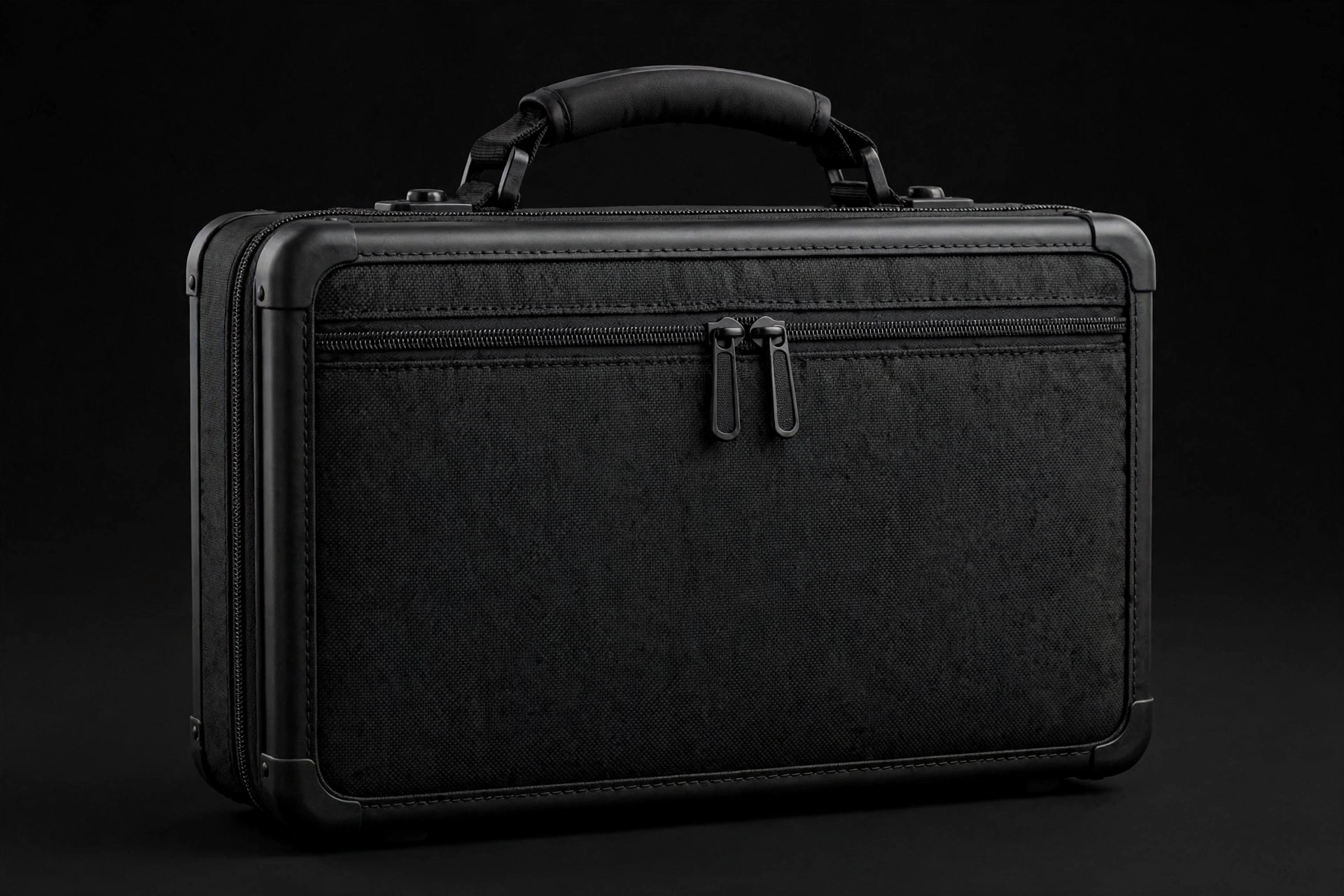
Ballistic black
1680D ballistic · dual zippers · the classic
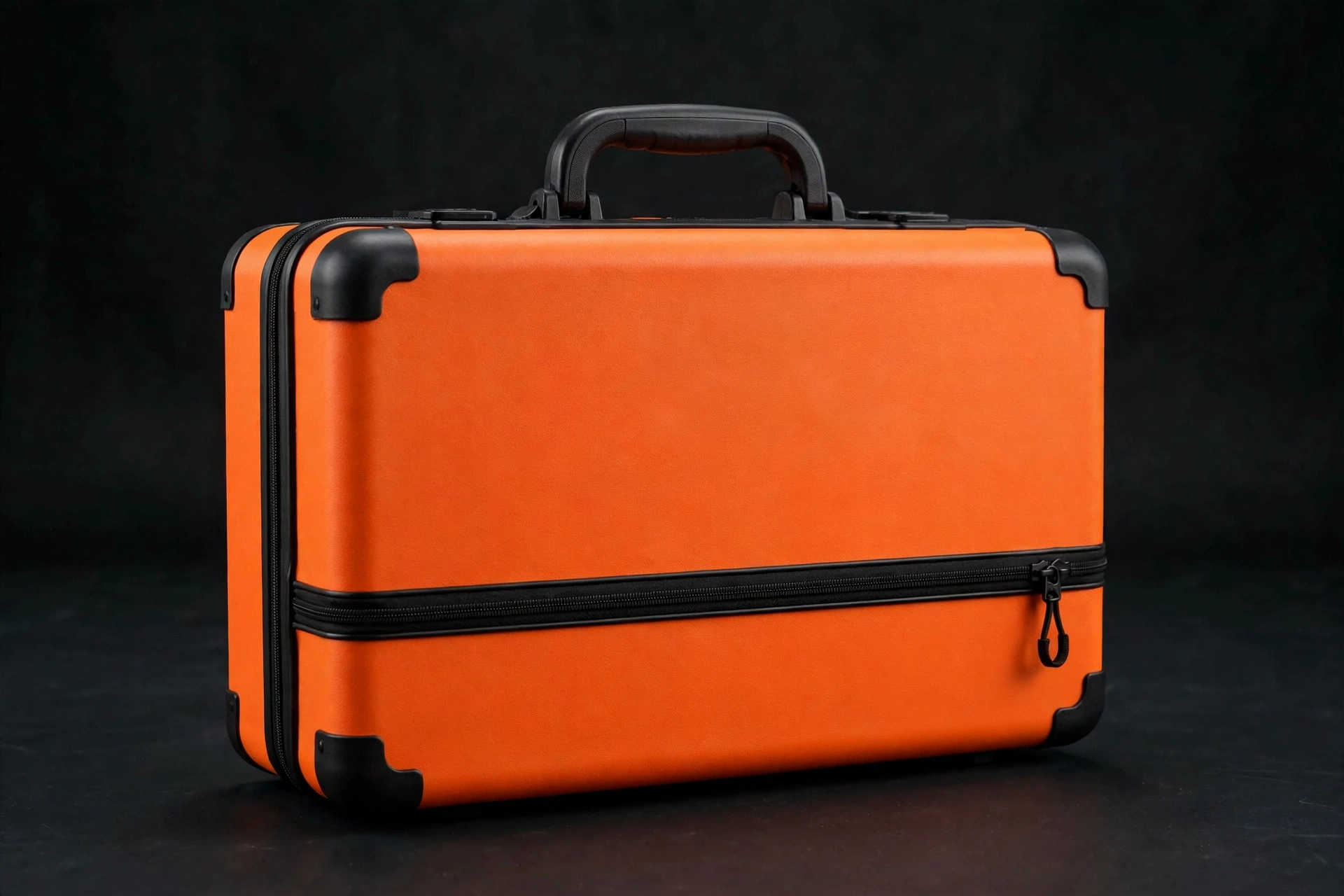
Hi-vis orange
Safety orange · wraparound zip · jobsite visibility
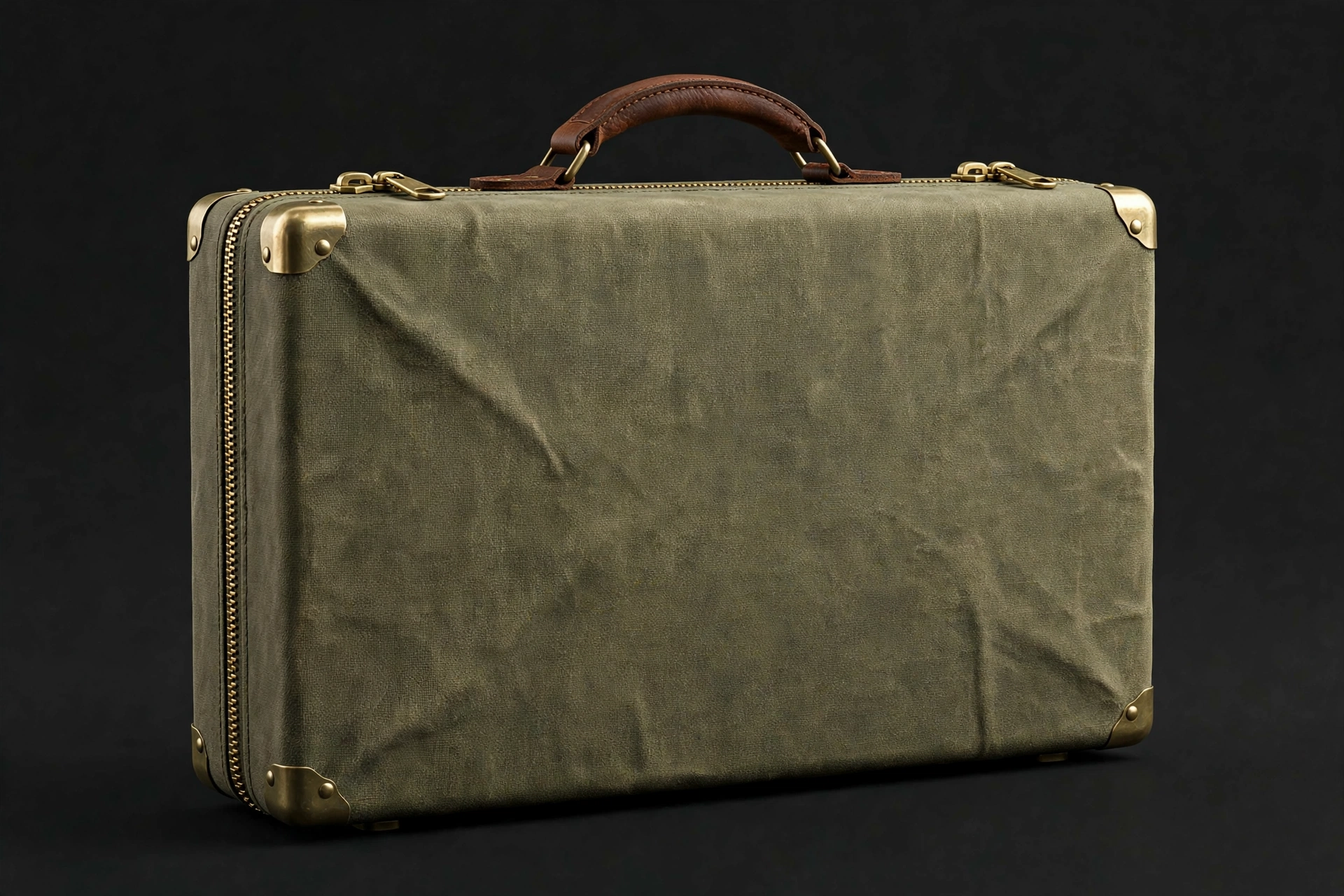
Canvas craftsman
Waxed canvas face · leather handle · brass zips
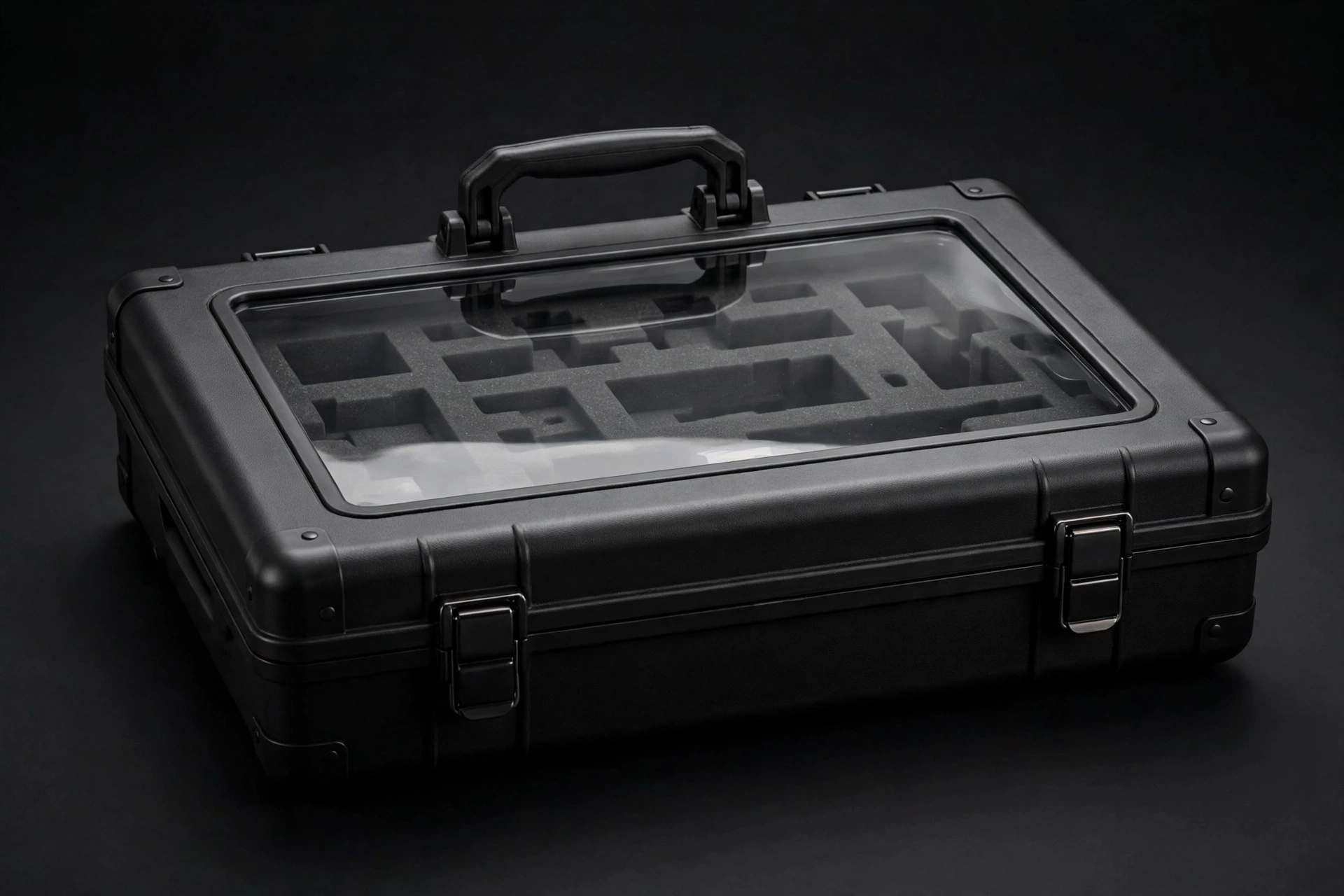
Clear lid
Transparent TPU window · see contents at a glance
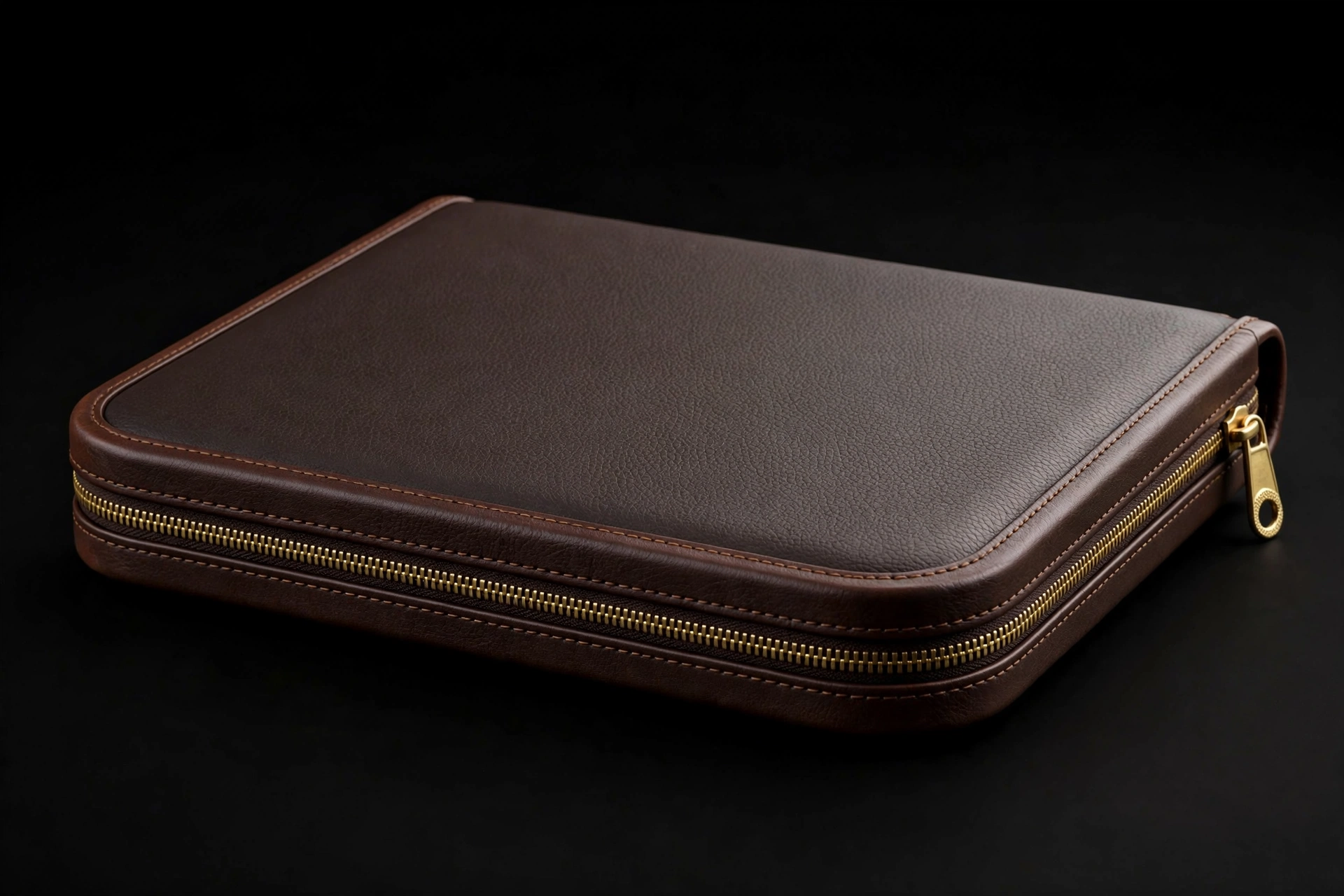
Leather-trim slim
Thin profile · leather edges · executive sets
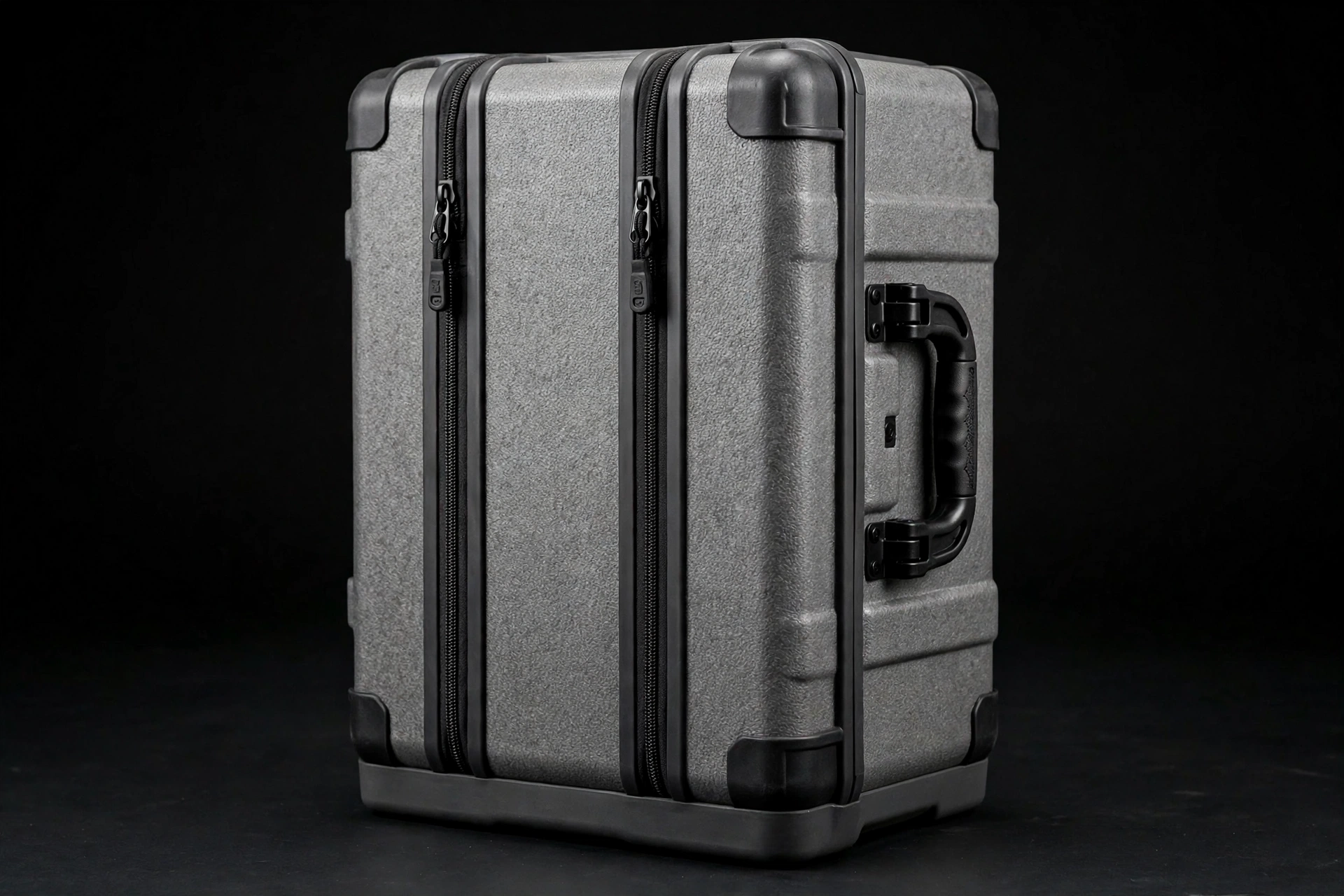
Deep cube
Tall form · dual zippers · bulky power tools
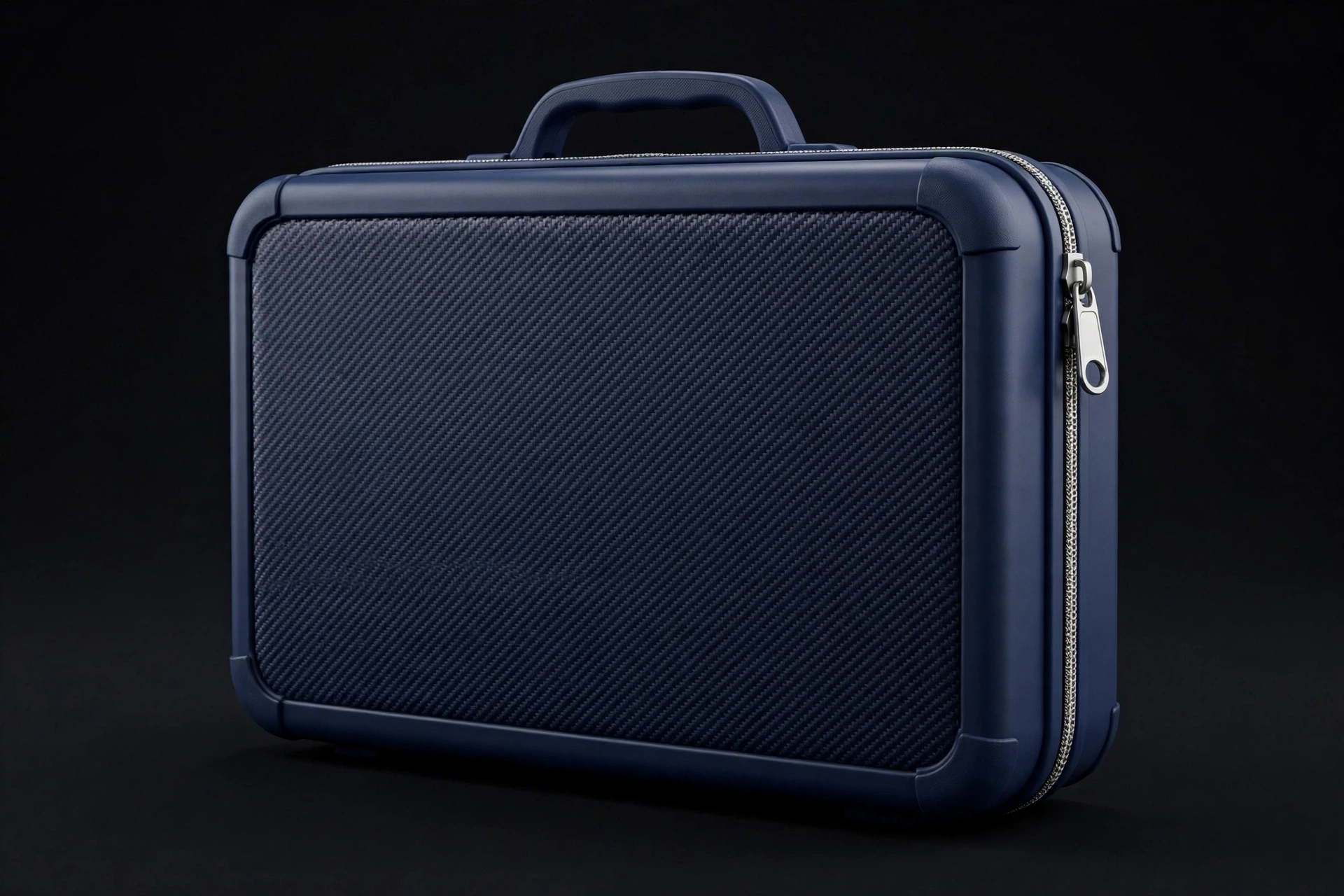
Carbon navy
Carbon texture · navy · modern industrial
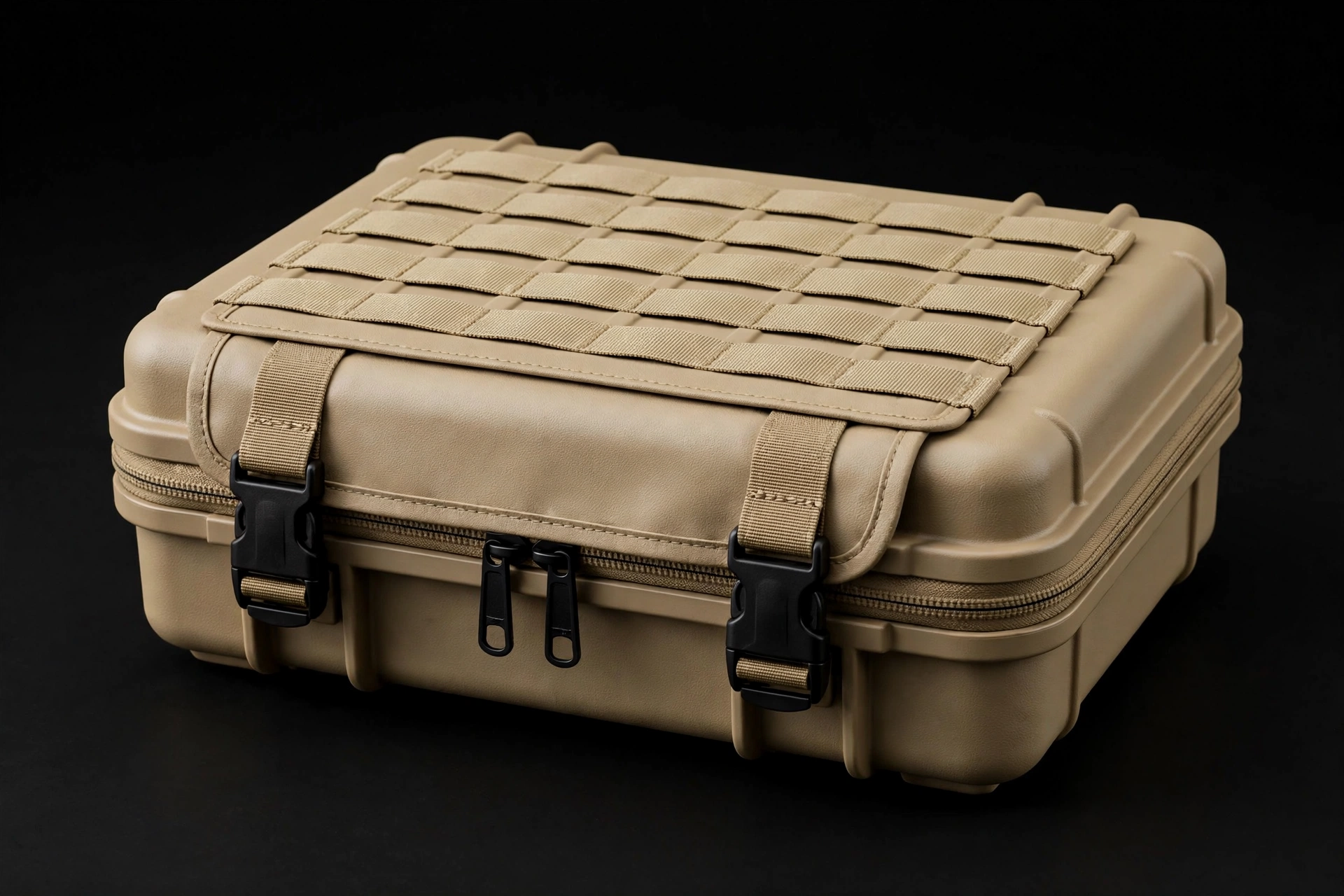
Field tan
Webbing strip · buckle flap · outdoor crews
You don't need to know packaging.
Just tell us about your product.
Three questions about your tools, your world, your business — then we prescribe the build. That's the part where we usually know your product better than you expect.
Numbers, not adjectives.
- Custom MOQ
- 1,000 pcs — real custom work starts here
- Sampling
- ~7 days — physical sample in your hands
- Mass production
- 15–25 days after sample approval
- Monthly capacity
- 100k+ pcs across 3 production lines
Asked by tool brands
An EVA tool case is a hard-shell protective case made from heat-pressed EVA (ethylene-vinyl acetate) foam. Unlike soft tool bags, it holds its shape, absorbs impacts, and can be fitted with die-cut foam inserts cut to the exact shape of your tools — so every tool has its own pocket.
±0.5mm, verified with caliper inspection against your approved sample — every batch, not just the first.
Yes. Send dimensions or 3D files for each tool; we build the cavity map digitally and confirm with you before cutting steel. Physical tools get us to ±0.3mm if you can ship them.
Sealed zippers + hot-pressed seamless shell. It handles driving rain and jobsite washdown — not submersion, we're honest about that.
Typically 1,000 pcs. Samples in ~7 days, production 15–25 days after your approval.
Send us your tool list.
We'll draw the cavities.
Dimensions, 3D files, or a box of actual tools — get engineering feedback and a quote within 24 hours.
info@hcdcase.com