Custom EVA camera case,
worthy of the glass inside.
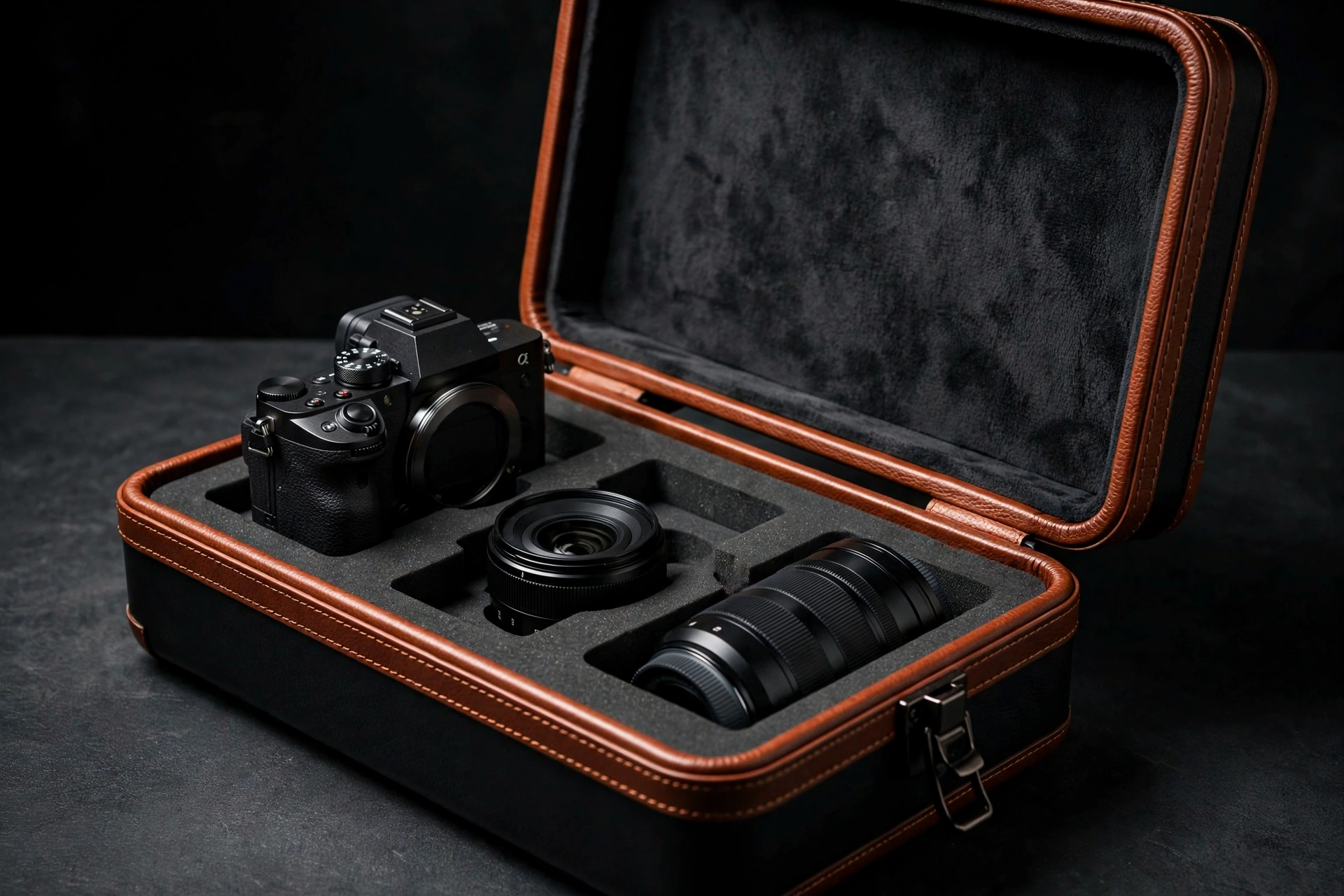
A mirrorless body and two lenses, die-cut to the millimeter, wrapped in leather trim. This case doesn't just protect a $2,000 camera — it makes it feel like $3,000. That's what packaging is for.
- Lens wells ±0.3mm
- Trim genuine leather
- Zippers weather-sealed
- Custom MOQ 1,000 pcs
The four ways camera cases
usually go wrong.
A camera case has two jobs: protect the glass, and honor the price tag. Most fail the second.
"A scratched front element costs more than the case."
One grain of grit between lens and foam and the coating is gone. Our answer: microfiber-lined wells cut to ±0.3mm from your lens dimensions — glass seats without pressure, never shifts, never touches anything hard.
"The kit looks cheap next to a $2,000 body."
A premium camera in a nylon sack tells the customer the brand cut corners. Our answer: genuine leather trim, contrast stitching, brass hardware — the case raises the perceived value of everything inside it. That's margin.
"Rain doesn't wait for the shoot to end."
Weather-sealing is where mid-range cases quietly fail. Our answer: sealed zippers and a hot-pressed seamless shell — real rain, not marketing rain.
"Every second fumbling is a missed shot."
Batteries and cards buried at the bottom of the case. Our answer: a magnetic quick-access front flap — cards and batteries in elastic slots, reachable without opening the main compartment.
Pull it apart.
See what you're paying for.
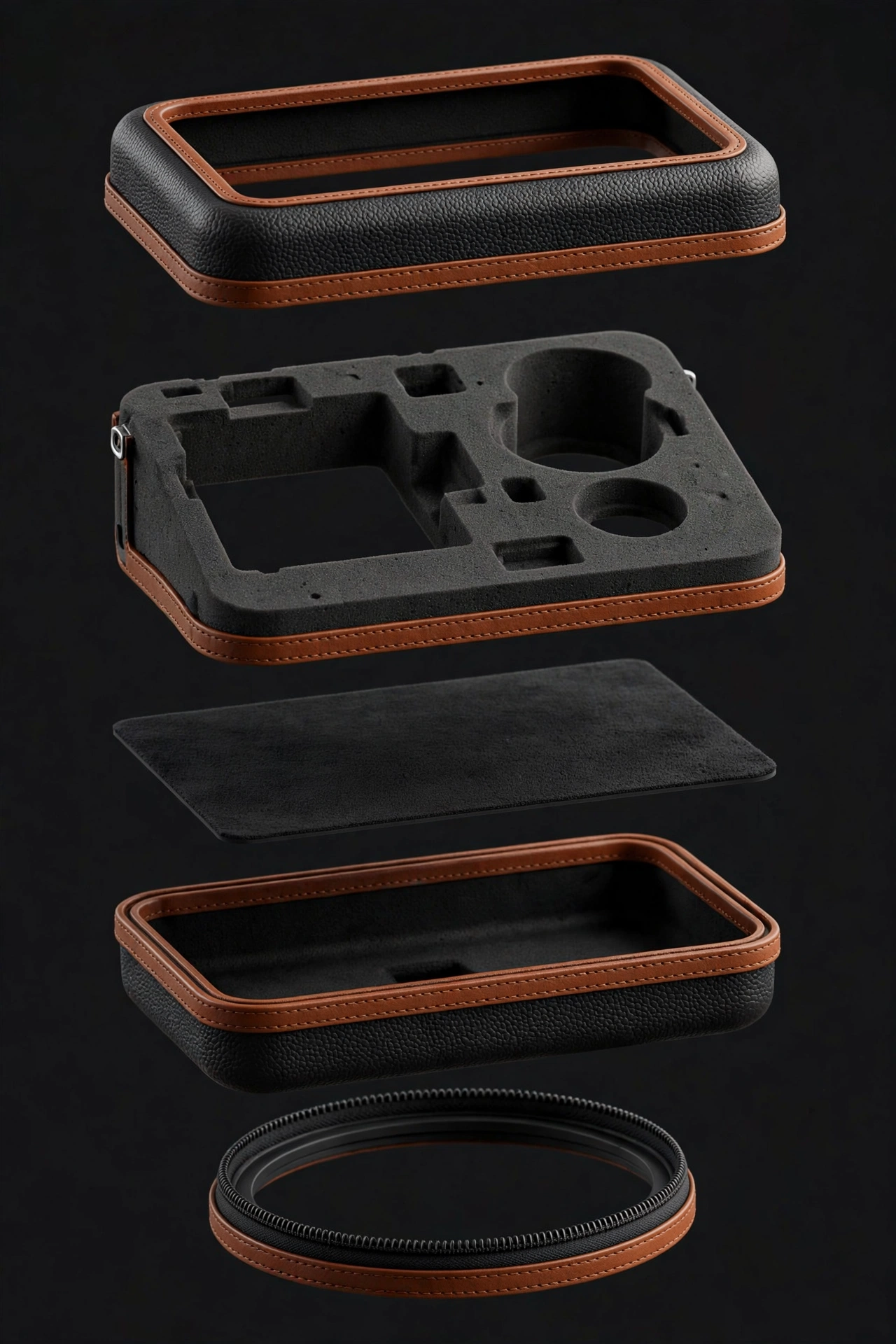
Five layers. Tap each number to see why it's there — and what goes wrong when a factory skips it.
1 · Lid shell
Hot-pressed 75° EVA with leather-trimmed edge. Rigid enough to protect glass from a drop, finished like a luxury good — because the case is part of the product's price justification.
The details that raise the price tag.
Three close-ups. Protection is the baseline — these are the details customers pay extra for.
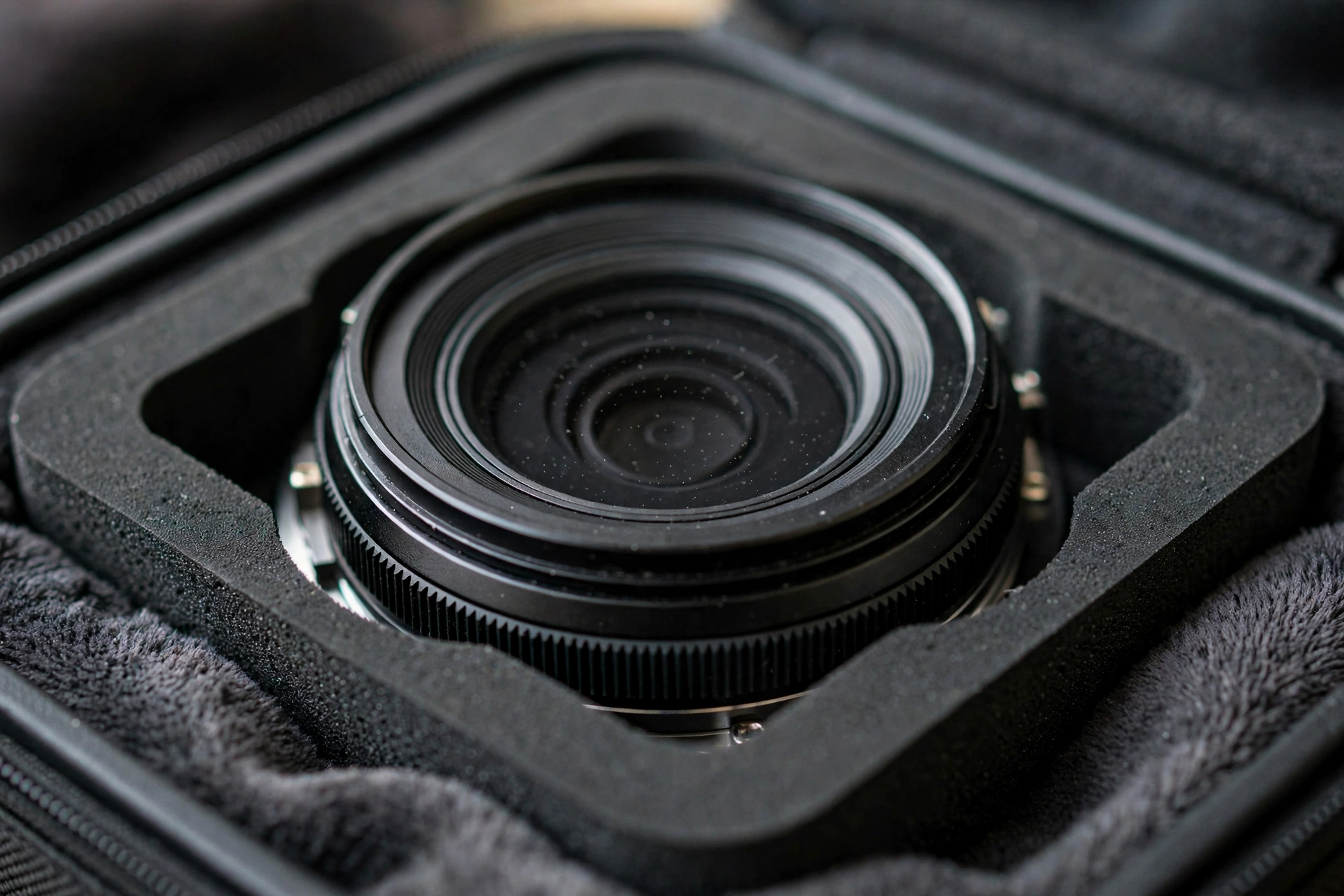
Lens wells, ±0.3mm
Tighter than our tool-case tolerance — because glass doesn't forgive. Cut from your lens dimensions, lined in microfiber.
- Zero pressure on the lens barrel — seats by gravity alone
- Microfiber lining, replaced if it ever pills
- Wells mapped from 3D scans when you can share them
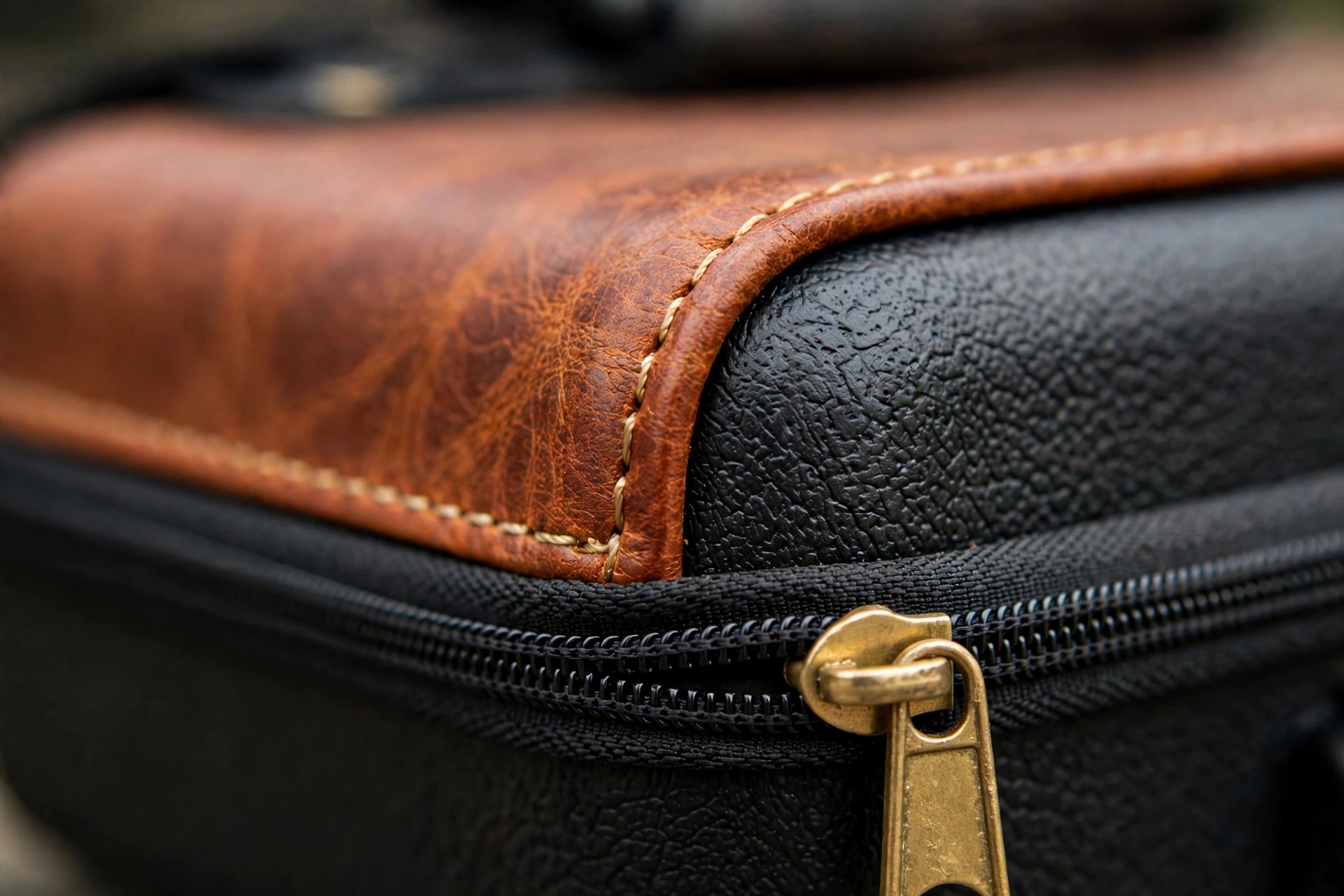
Leather trim, contrast stitching
This is the margin detail. Genuine leather, saddle-stitched — the first thing a customer touches, and the reason the kit feels premium.
- Full-grain leather, edge-painted and burnished
- Brass hardware — zippers and rivets that age well
- Your logo debossed, not printed
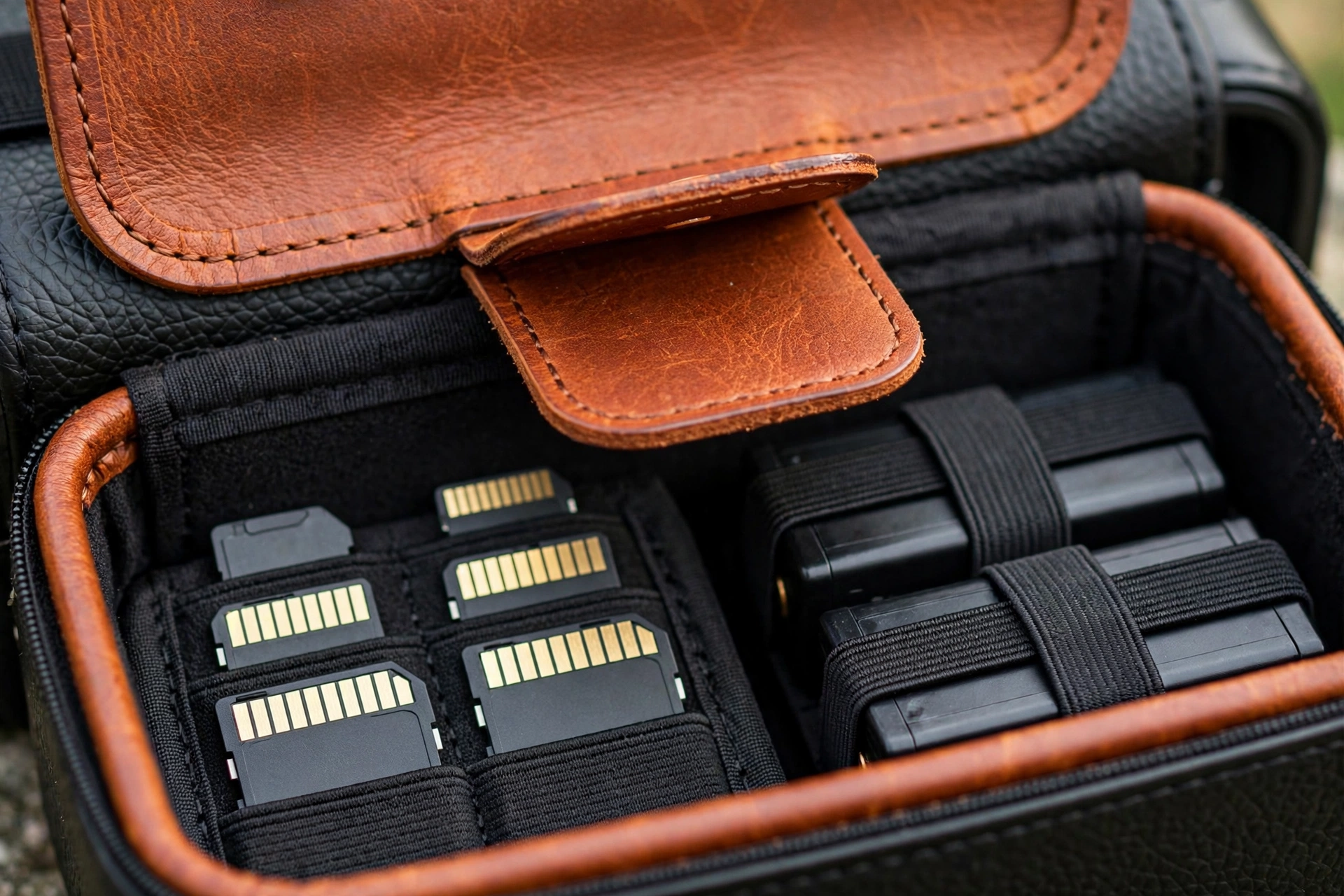
Magnetic quick-access flap
Cards and batteries without opening the main compartment. One-handed, silent, instant.
- Rare-earth magnets — holds through a sprint
- Elastic slots sized to card and battery formats
- Silent open — no velcro rip during a ceremony
Picked to protect glass
and justify price.
Every material here serves two masters: the lens, and the customer's willingness to pay.
- EVA shell — 75° high-density
- Why: glass needs rigidity. 75° EVA holds shape under impact where softer foams would transfer the shock to the lens.
- Lining — microfiber
- Why: the only thing that touches your glass. Microfiber is lint-free and non-abrasive — foam alone would eventually mark coatings.
- Trim — genuine leather
- Why: the premium signal. Leather trim is what separates a $40 case from a $140 case in the customer's hand.
- Zippers — weather-sealed
- Why: sealed tape keeps rain out of a case full of electronics. Brass pulls match the leather trim.
- Flap — magnetic, rare-earth
- Why: silent, one-handed access to cards and batteries. No velcro to wear out or rip at the wrong moment.
Every 3C product deserves
its own case.
Not "a tech organizer" — a case designed for one product, that makes that product feel worth more. Find yours.
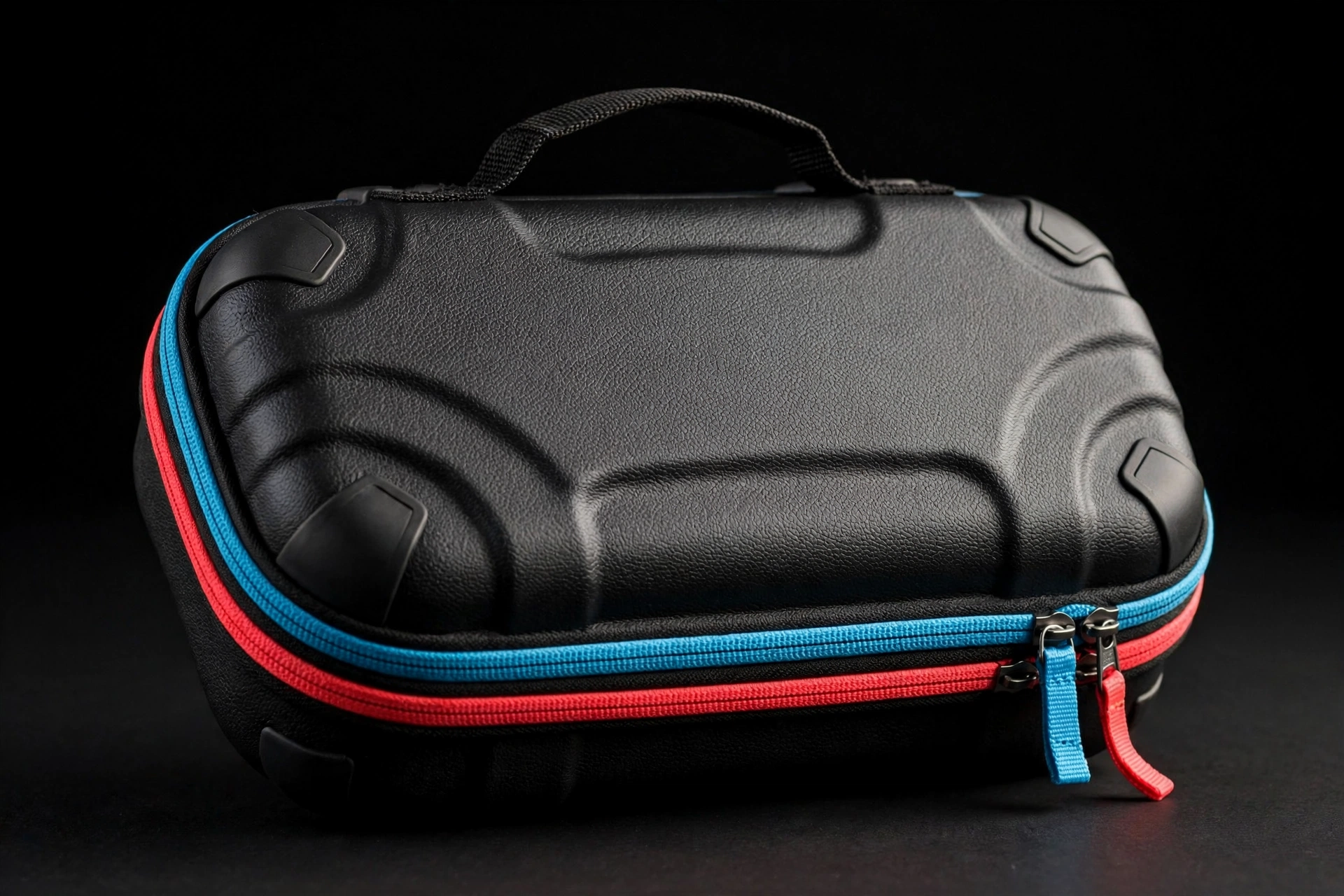
Game console
Neon accents · molded clamshell · handheld consoles
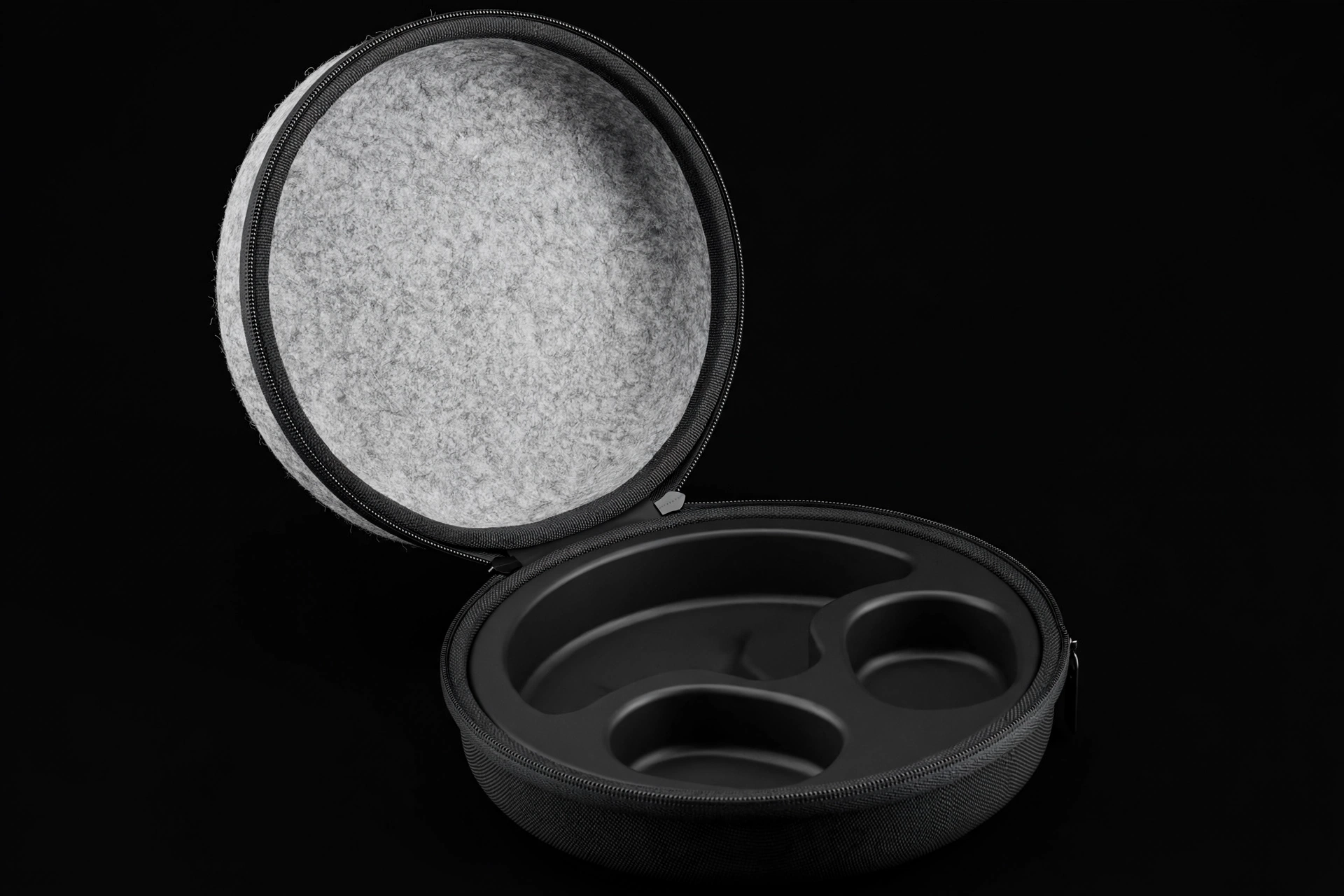
Over-ear headphones
Felt face · molded cradle · audiophile grade
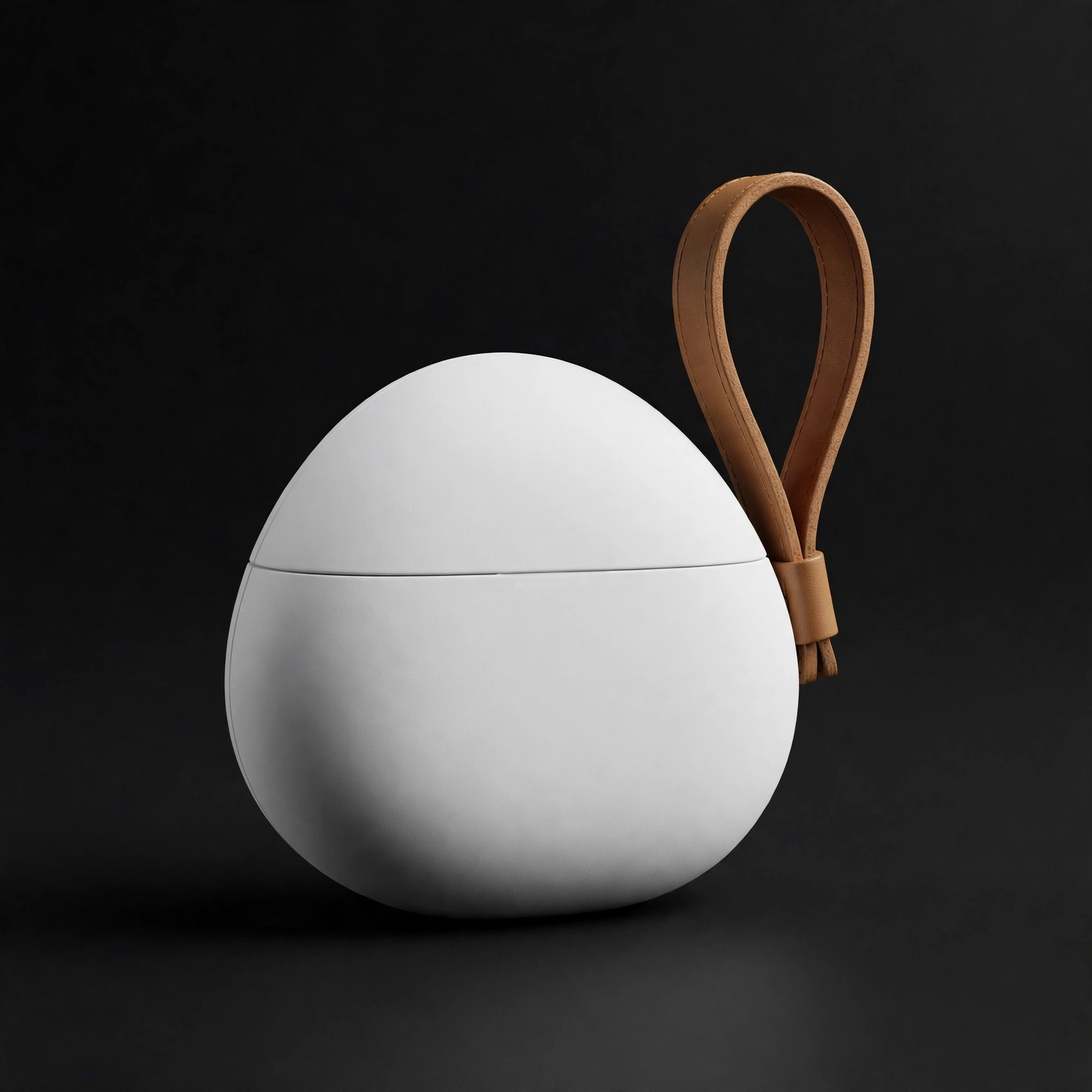
Wireless earbuds
Pebble form · leather loop · pocket premium
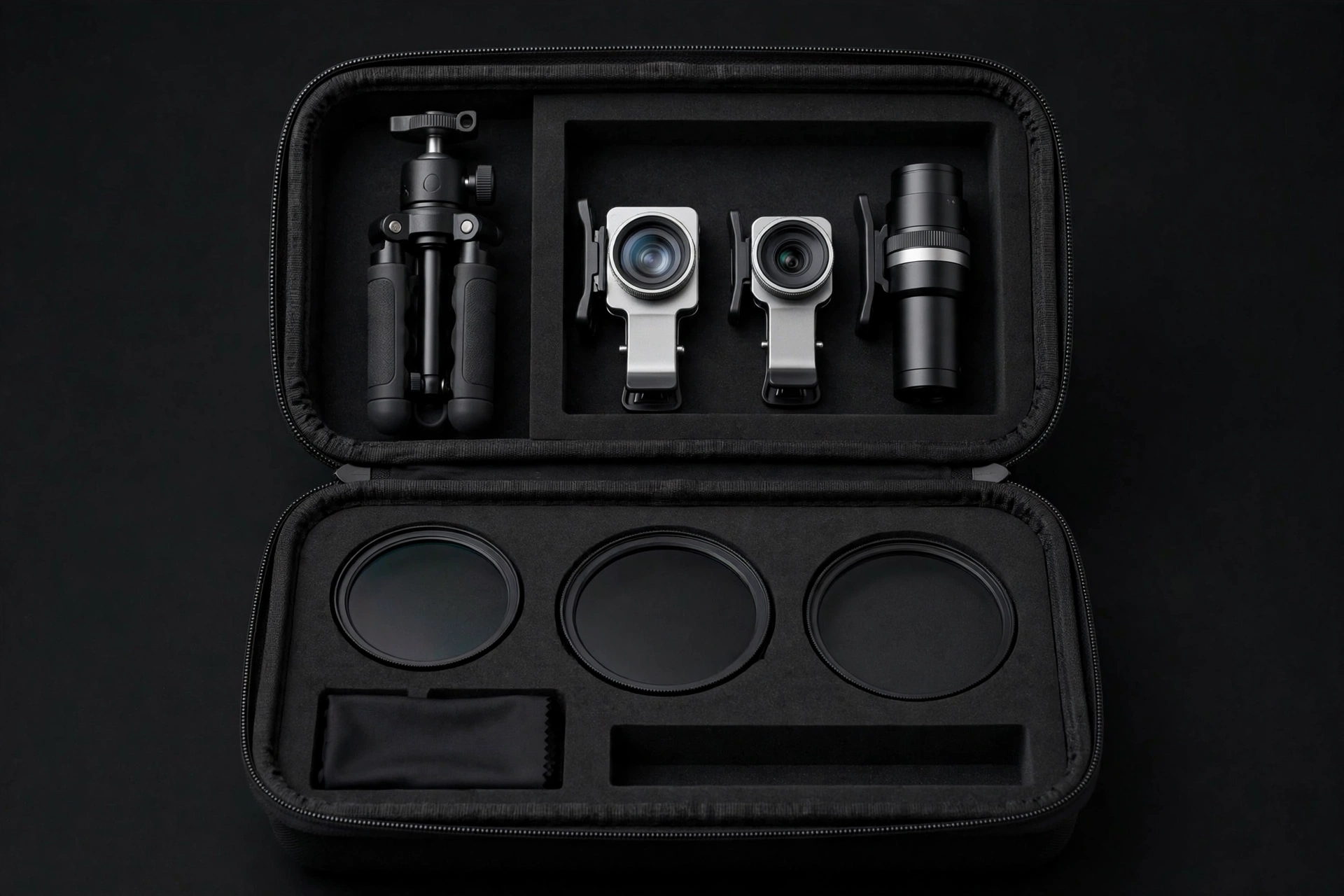
Phone photo kit
Modular compartments · lenses, grips, filters
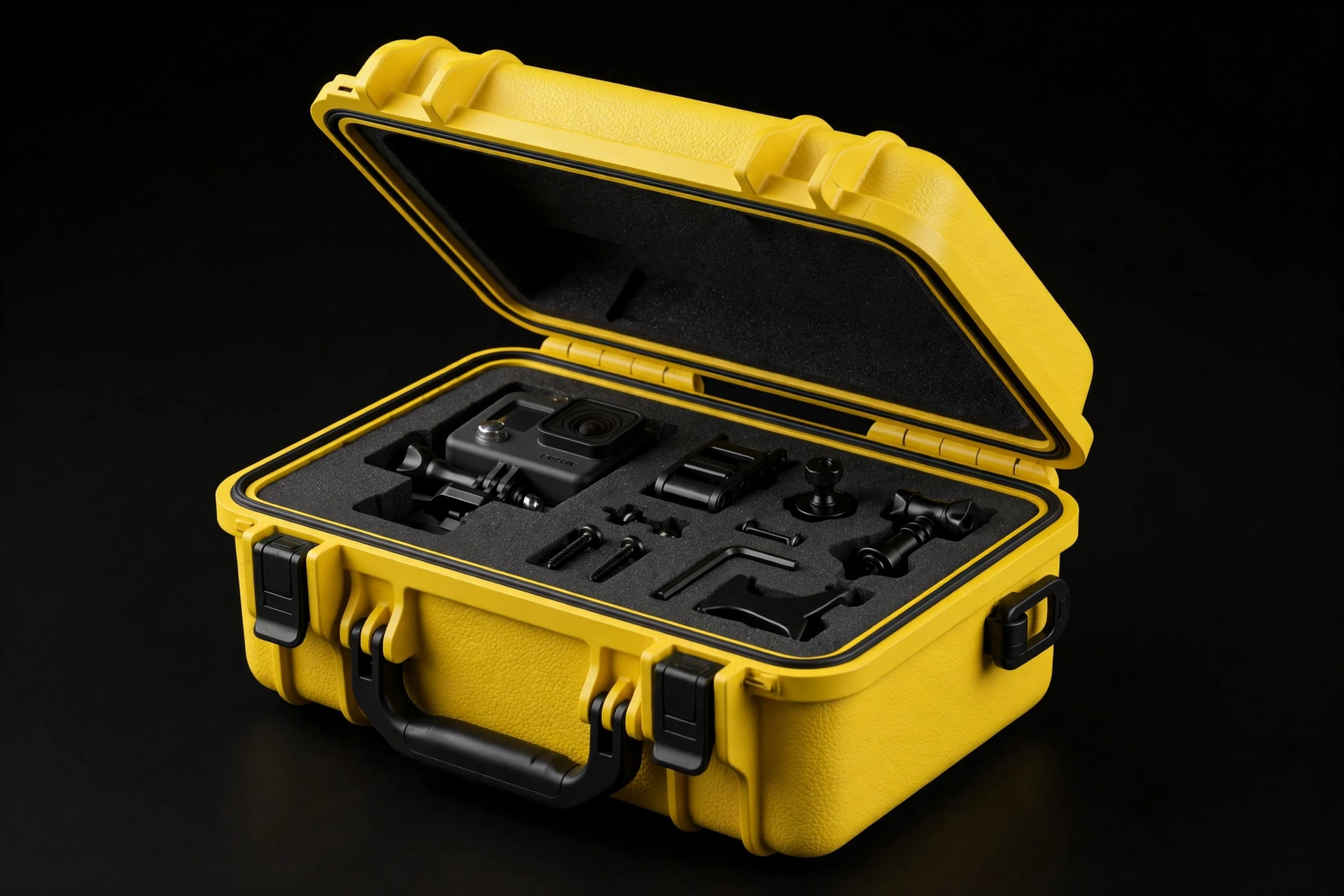
Action camera
Hi-vis yellow · die-cut mounts · adventure ready
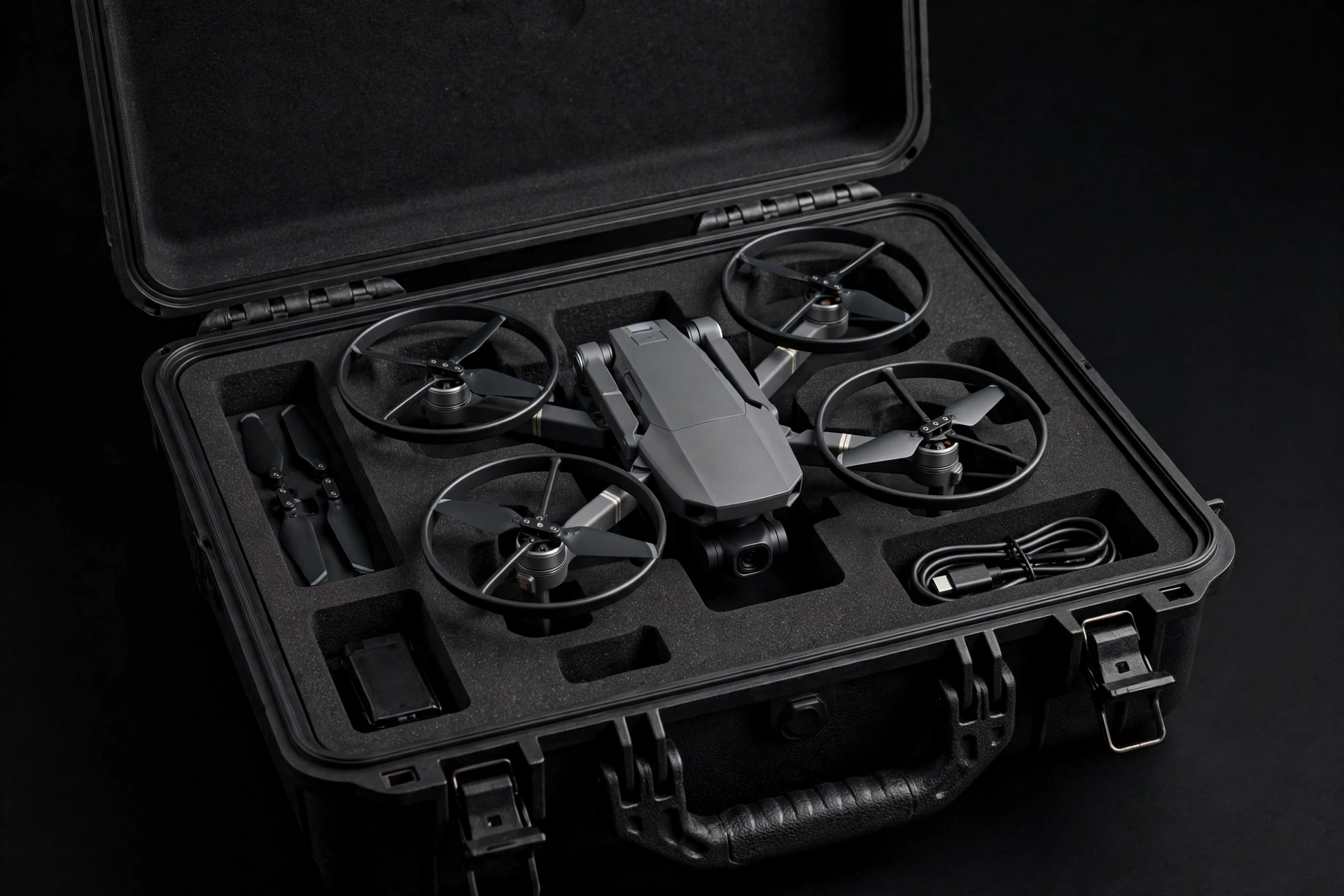
Camera drone
Prop-guard cavities · folding drones
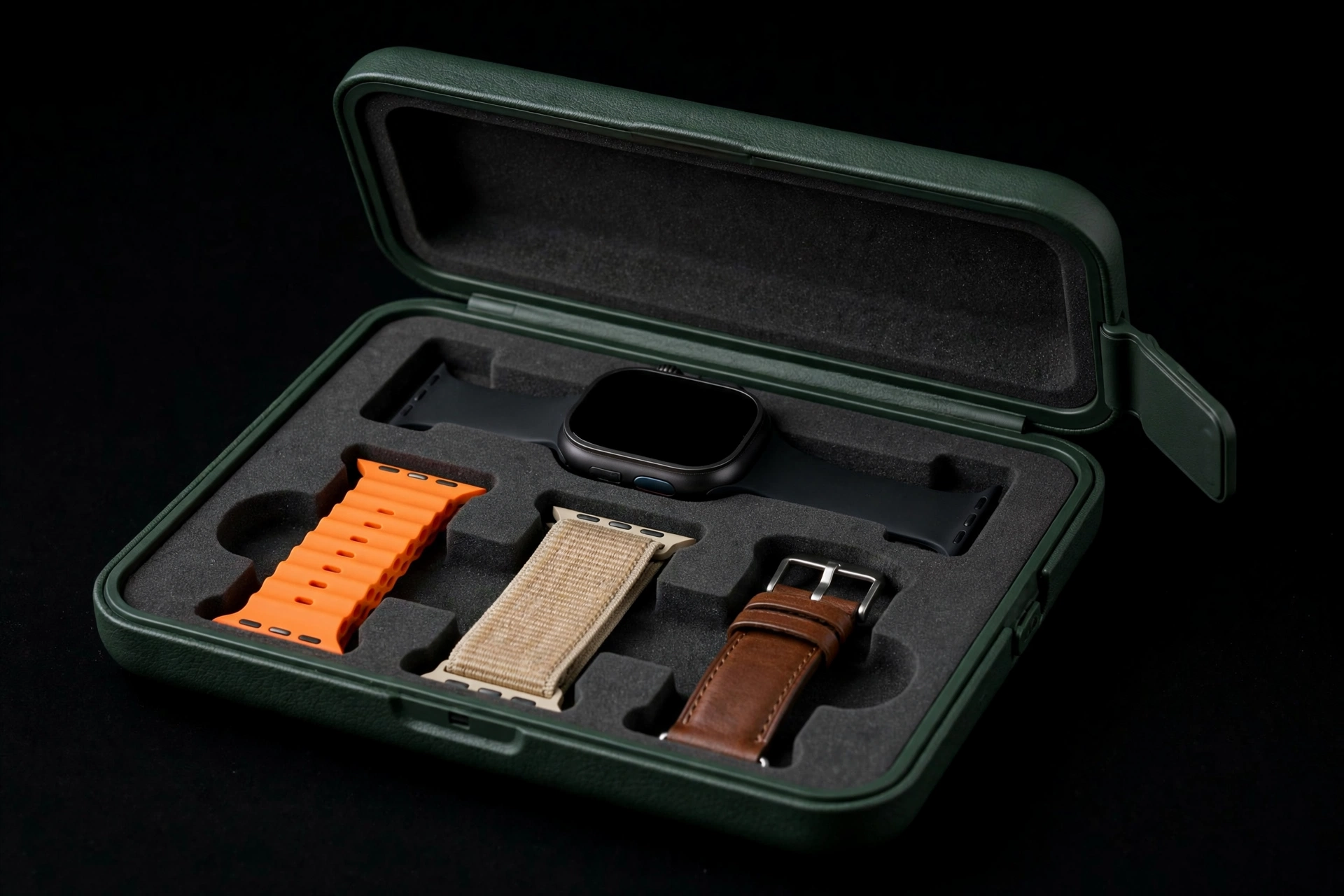
Smartwatch
Magnetic folio · molded band slots · gifting grade
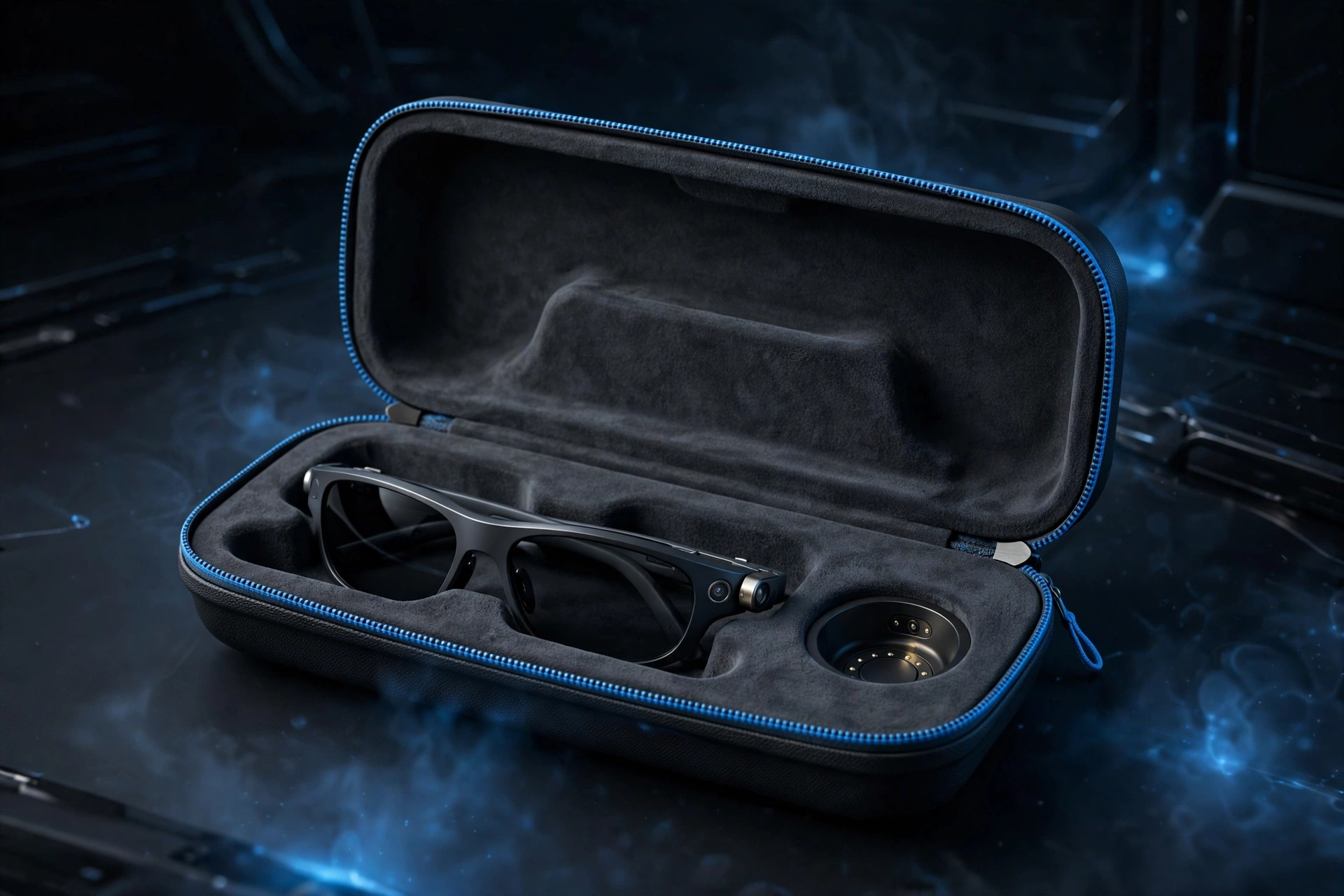
AI smart glasses
Charging dock cavity · camera-safe cradle · 2026's hottest
You don't need to know packaging.
Just tell us about your product.
Three questions about your product, your customer, your brand — then we prescribe the build that raises its price tag.
Numbers, not adjectives.
- Custom MOQ
- 1,000 pcs — real custom work starts here
- Sampling
- ~7 days — physical sample in your hands
- Mass production
- 15–25 days after sample approval
- Monthly capacity
- 100k+ pcs across 3 production lines
Asked by camera & 3C brands
An EVA camera case is a hard-shell protective case made from heat-pressed EVA foam, with die-cut compartments shaped to the exact dimensions of a camera body and lenses — so glass never touches anything hard.
We cut lens wells from your lens dimensions or 3D files to ±0.3mm. The lens seats by gravity alone — no pressure on the barrel, no shifting in transit.
That's the point. Leather trim, contrast stitching, brass hardware, debossed logo — the case is part of your price justification. Tell us your target retail price and we'll spec the finish to match.
Typically 1,000 pcs. Samples in ~7 days, production 15–25 days after your approval.
Send us your product.
We'll make it worth more.
Dimensions, 3D files, or the actual device — engineering feedback and a quote within 24 hours.
info@hcdcase.com