Custom TCG card binder,
that treats your collection like a gallery.
Cards don't slide out of pockets. Rings don't dent edges. Pages don't sag. A 3x3 magnetic-frame album — every card drops in and stays put — with 360° lay-flat binding, a built-in display easel, and a UV window for the cards you show off. This binder doesn't just hold a collection. It makes a $20 card feel like a $200 grail. Built for the games collectors actually play — Pokémon, Magic: The Gathering, Yu-Gi-Oh!, One Piece Card Game, Lorcana, sports.
- 3×3 magnetic frames
- 360° lay-flat binding
- Display easel + UV window
- Custom MOQ 1,000 pcs
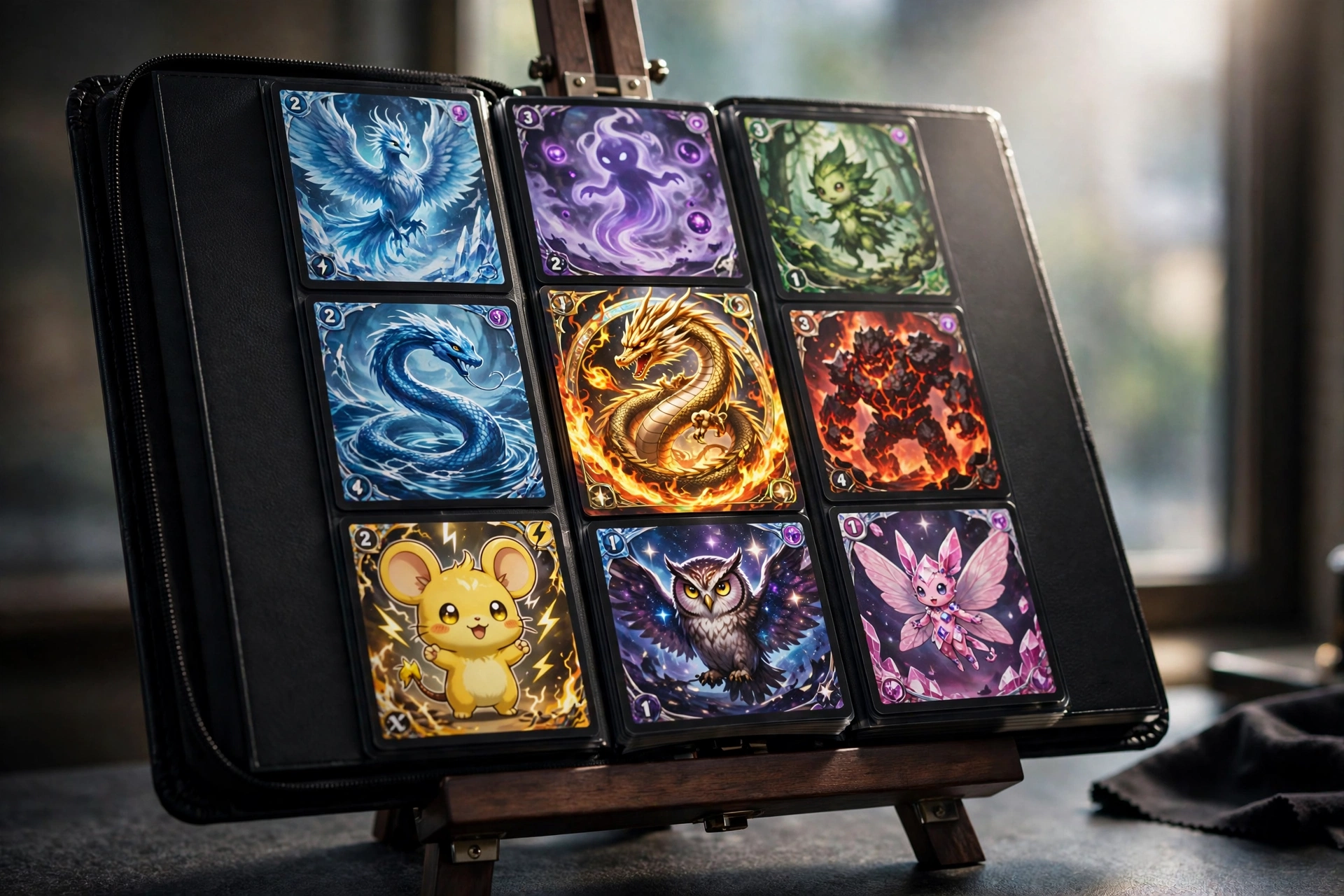
The four ways card binders
ruin collections.
A card binder has one job: the cards come out in the same condition they went in. Most fail it slowly.
"Cards slide out of side-loading pockets."
One upside-down binder and a $50 card is on the floor. Our answer: magnetic frames — each card drops in and stays put, held on all four sides, even upside down.
"Ring binders dent the card edges."
D-rings press into pages every time the binder closes — the damage shows up months later as edge wear. Our answer: no rings at all — bound pages with magnetic frames, nothing ever presses on a card.
"Pages sag and cards warp."
Floppy pages bend under a full load — and a bent card is a dead card. Our answer: rigid magnetic page boards — every page stays flat under a full 3×3 load, forever.
"Displayed cards fade in the sun."
Collectors want to show their grails — and UV quietly kills them. Our answer: a UV-protective display window plus a built-in easel — show the collection, keep the colors.
Pull it apart.
See what you're paying for.
Five layers. Tap each number — every layer answers one of the seven fit-engineering questions: volume, size, protection, rattle, lift, scratch, static.
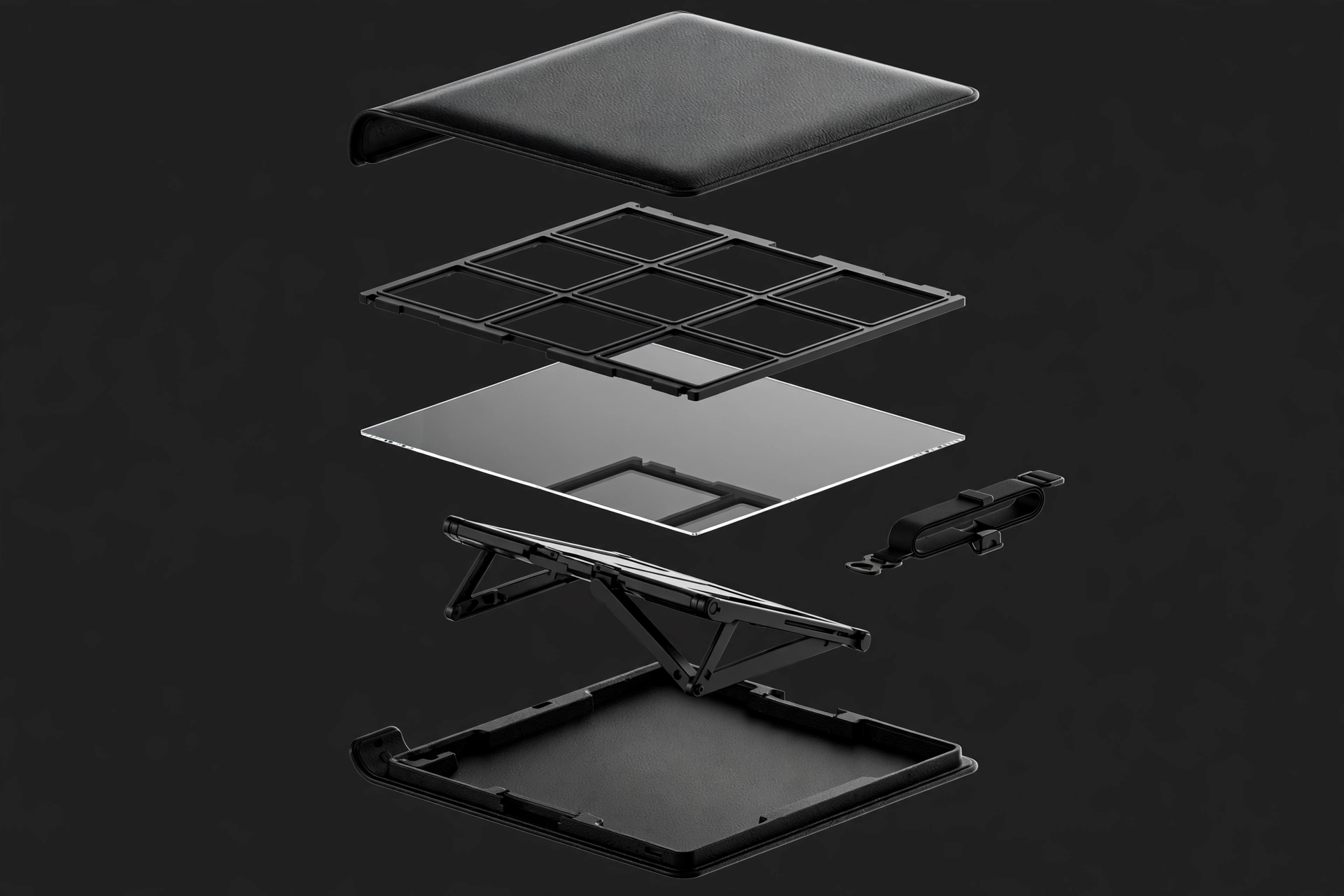
1 · Hard-shell cover
The vault door. Heat-pressed black EVA — rigid, crush-proof, foil-stamped with your brand. The collection inside never feels a drop.
The details collectors pay extra for.
Three close-ups. Protection is the baseline — these are the details that make a binder feel like a vault.
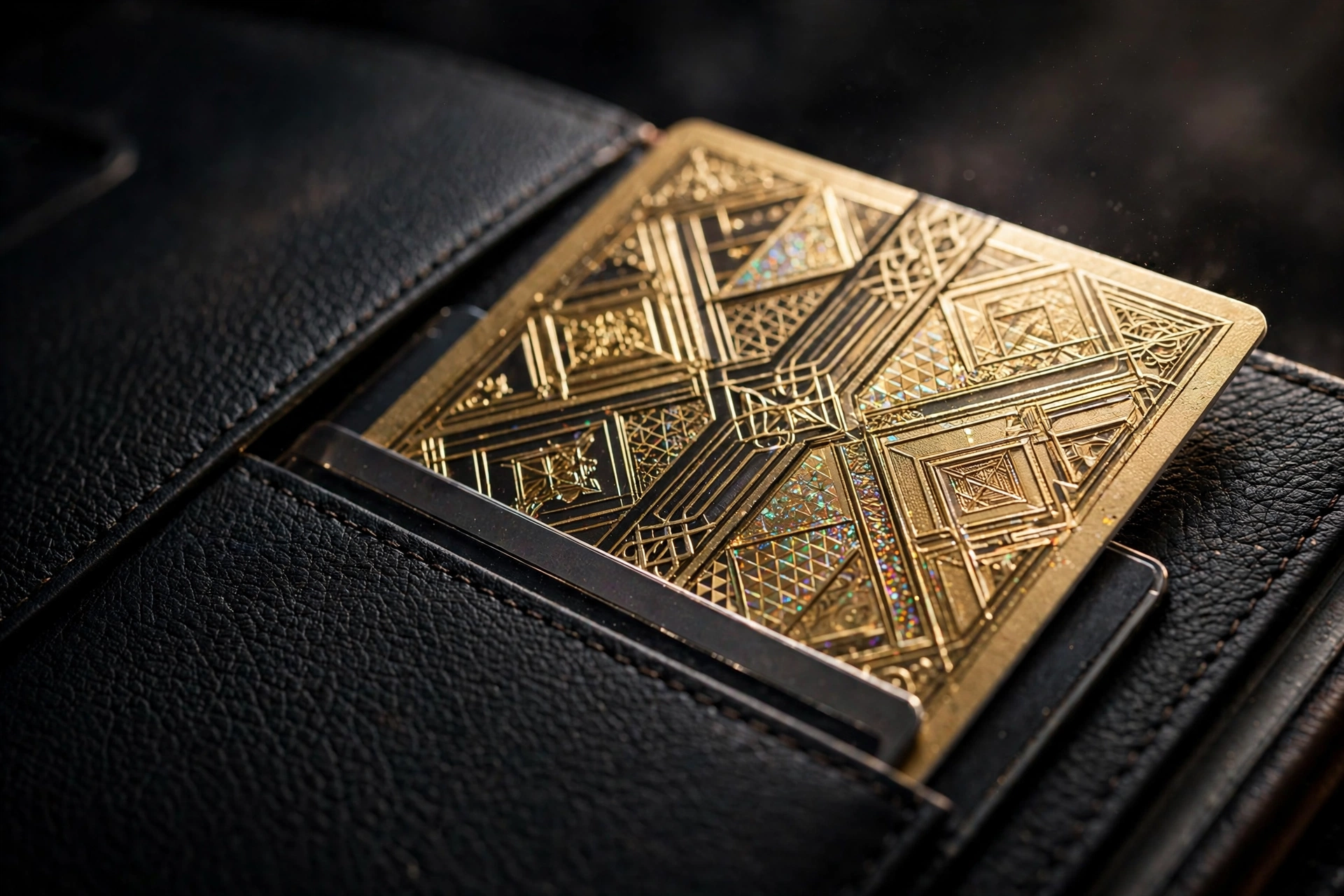
Magnetic frames — cards can't fall out
The mechanism is the moat. Each card drops into its own magnetic frame and stays put — upside down, in a backpack, on a convention floor. No side-loading pockets, no sliding, no floor finds.
- Held on all four sides — even upside down
- No rings — nothing presses card edges
- Swap cards in seconds, no wrestling
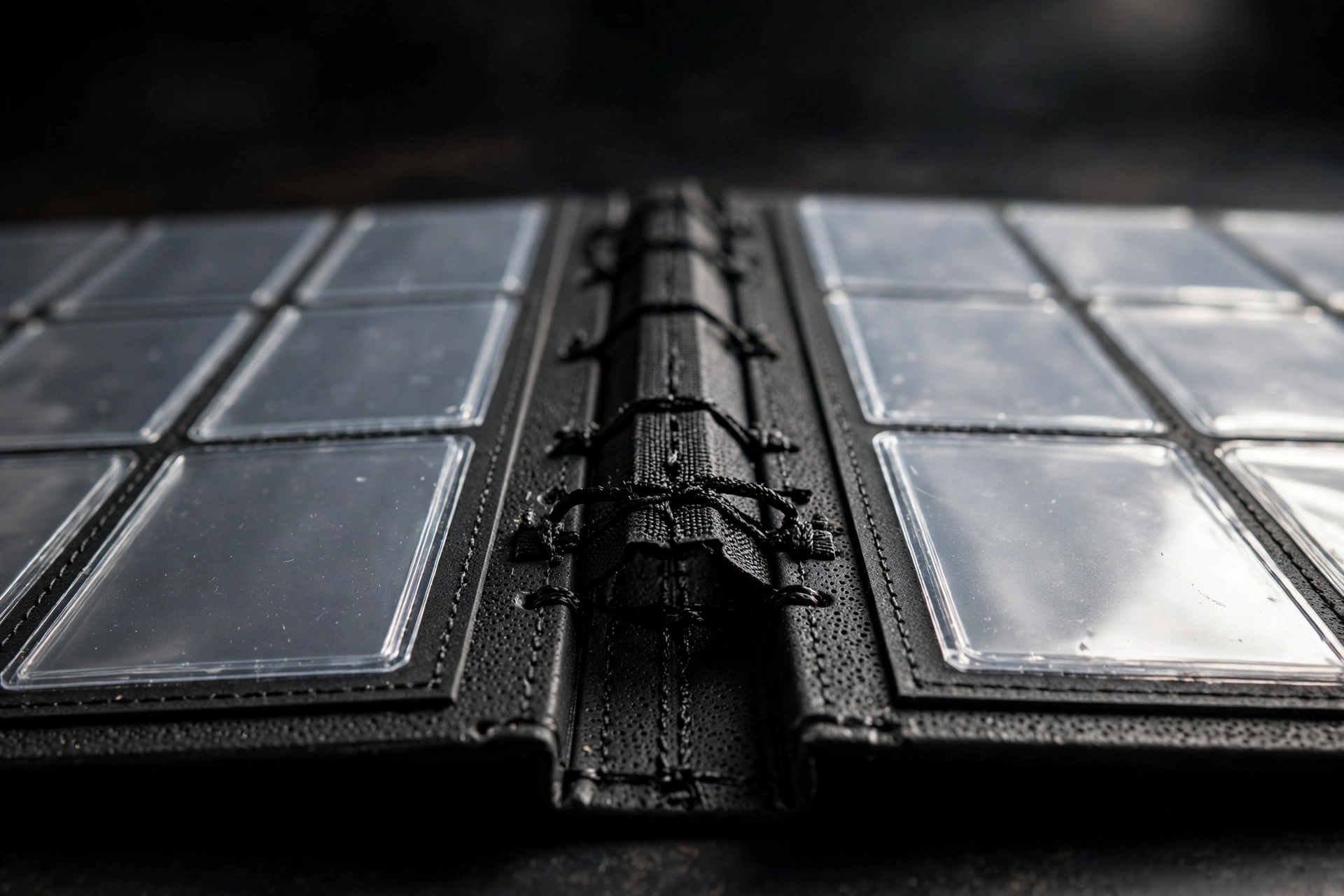
360° lay-flat binding
Pages lie perfectly flat — no spine curl pushing cards out, no fighting the binder on a table. Reinforced stitched spine survives years of page-turning at conventions and game nights.
- Pages stay flat under full load
- Reinforced stitched spine
- Folds back 360° for one-hand browsing
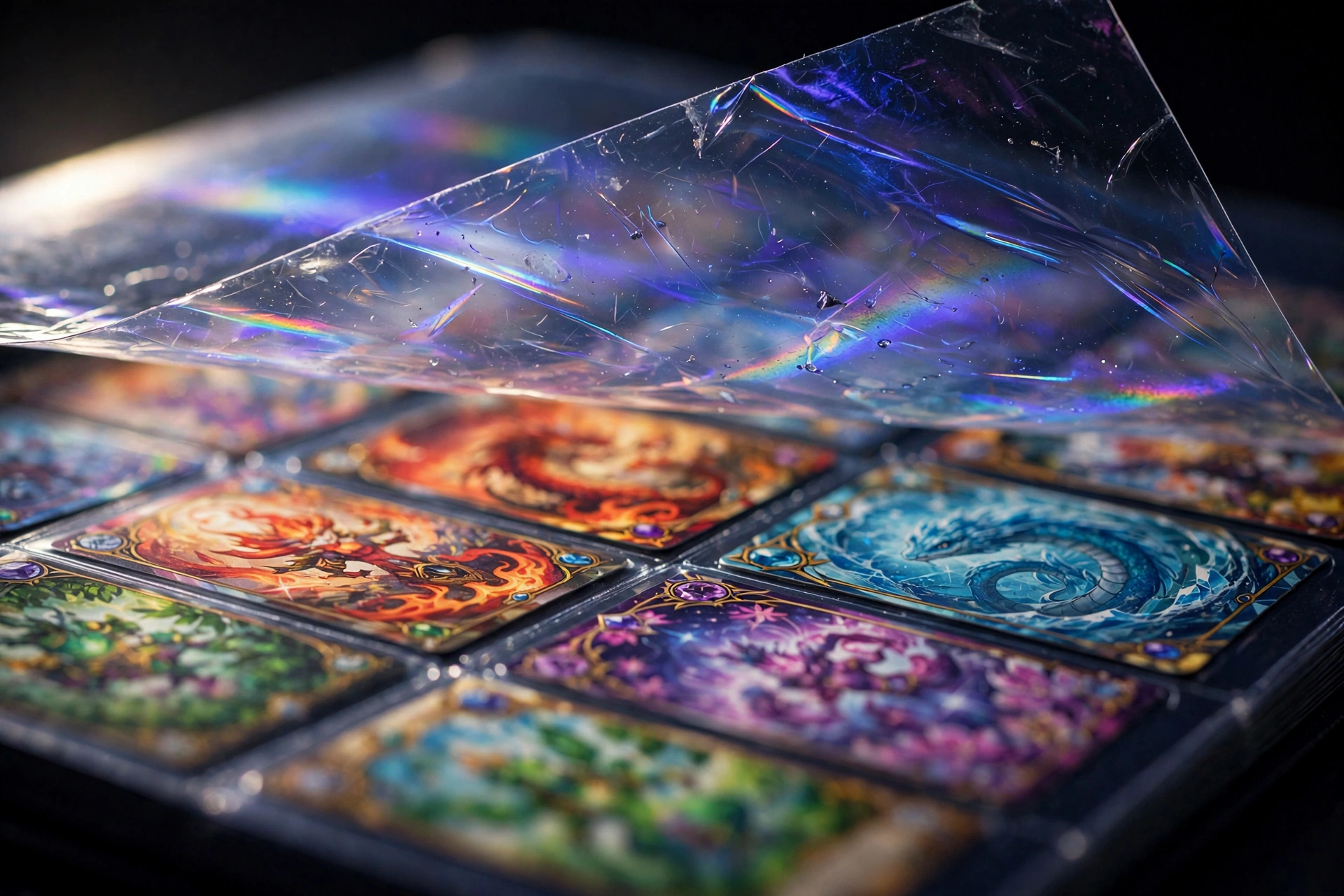
UV window — display without fading
Collectors want to show their grails — and sunlight quietly kills them. A UV-protective window over every display page blocks the fade, while the built-in easel turns the album into shelf art.
- UV-blocking display film
- Built-in easel stand
- Anti-glare — cards photograph cleanly
Picked to protect cardboard
worth more than gold.
Every material here serves one master: the card that must come out exactly as it went in.
- Shell — molded EVA, hard
- Why: the vault. Rigid heat-pressed EVA — crush-proof, drop-proof, the collection never feels what's outside.
- Pages — rigid magnetic boards
- Why: the anti-bend system. 3×3 magnetic frames on boards that never sag — a full page stays flat forever.
- Window — UV-protective film
- Why: the display enabler. Blocks the UV that fades displayed cards — show the grails, keep the colors.
- Binding — 360° lay-flat
- Why: the browsing experience. Pages lie flat, fold back fully — no spine curl pushing cards out at the table.
- Finish — foil stamp, theme colors
- Why: the shelf signal. Your game's art language on the cover — the binder sells the set before it's opened.
Every collection deserves
its own vault.
Not "a card binder" — a vault designed for one game, that treats its cards like they're worth it. Find yours.
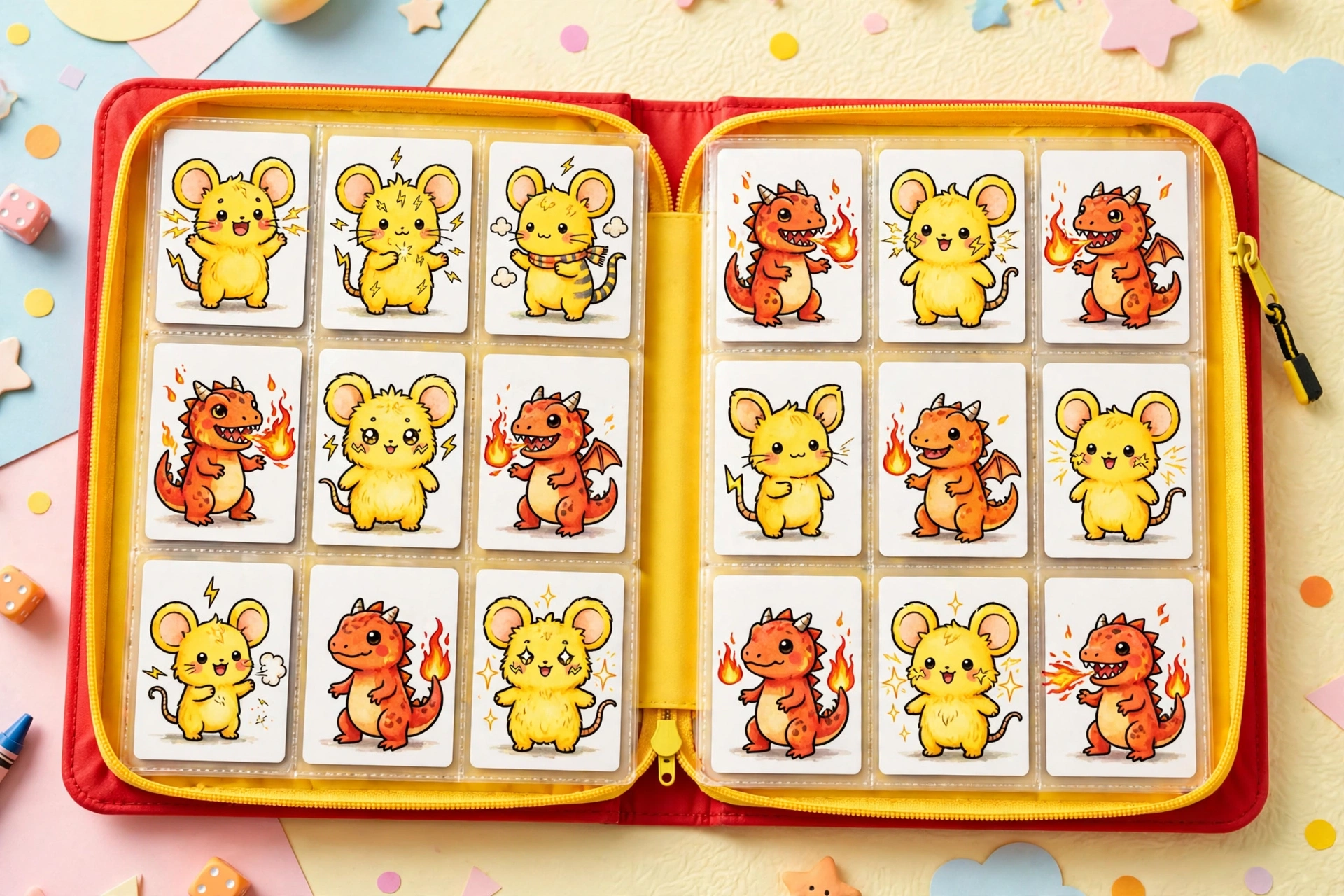
Pokémon binder
Red & yellow · 9-pocket · zippered
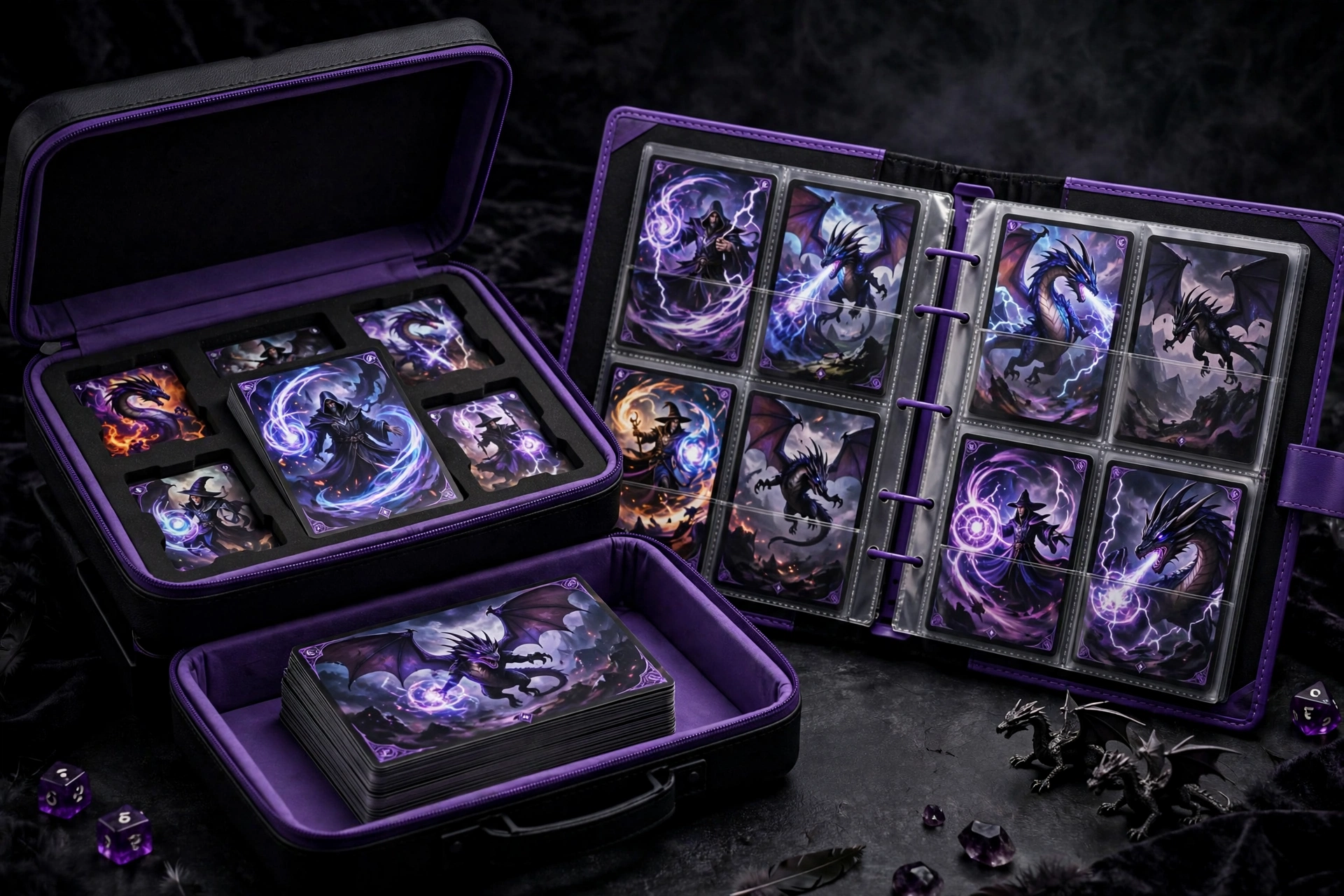
Magic combo set
Deck box + binder · purple · moody
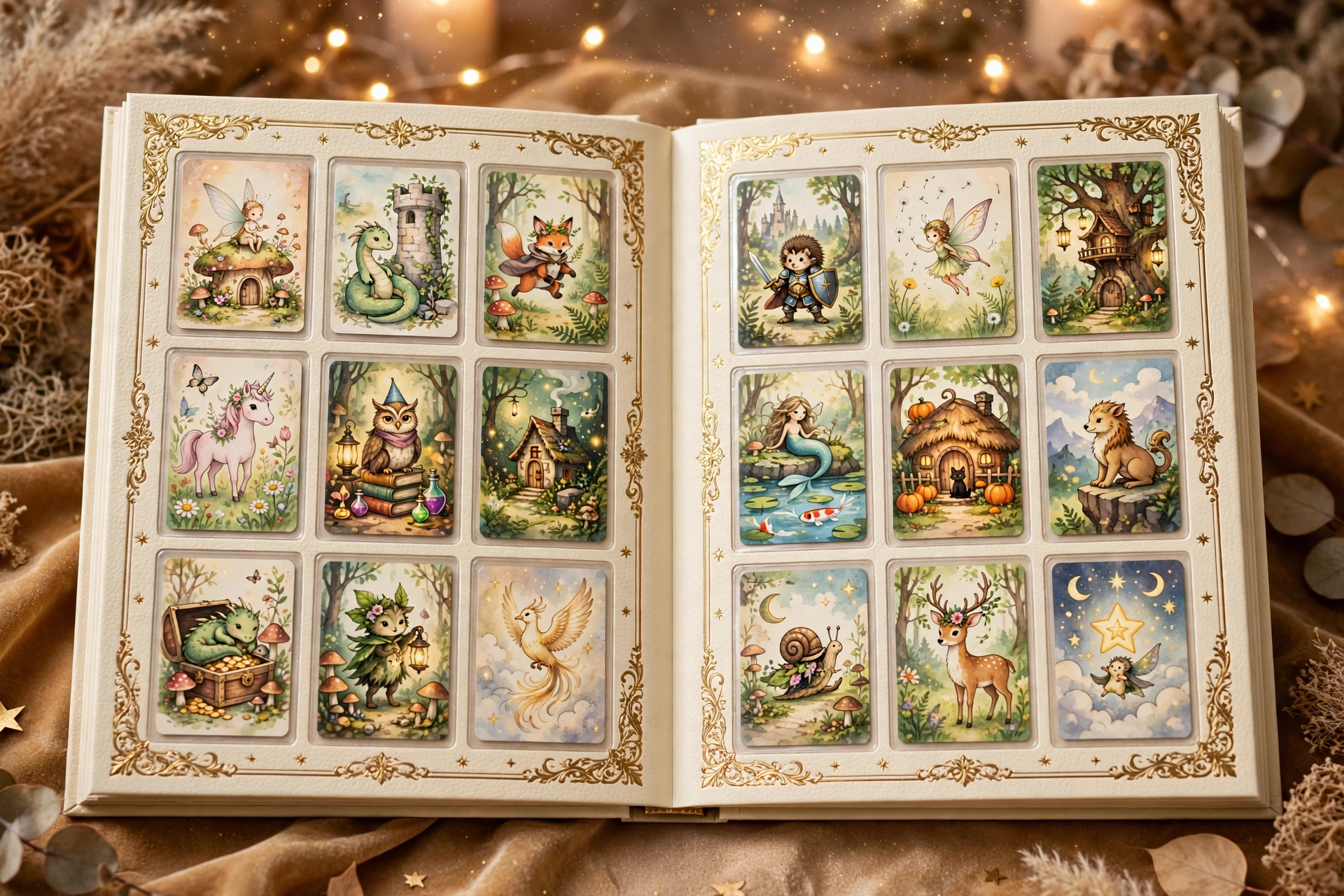
Lorcana storybook
Cream & gold · ornate · giftable
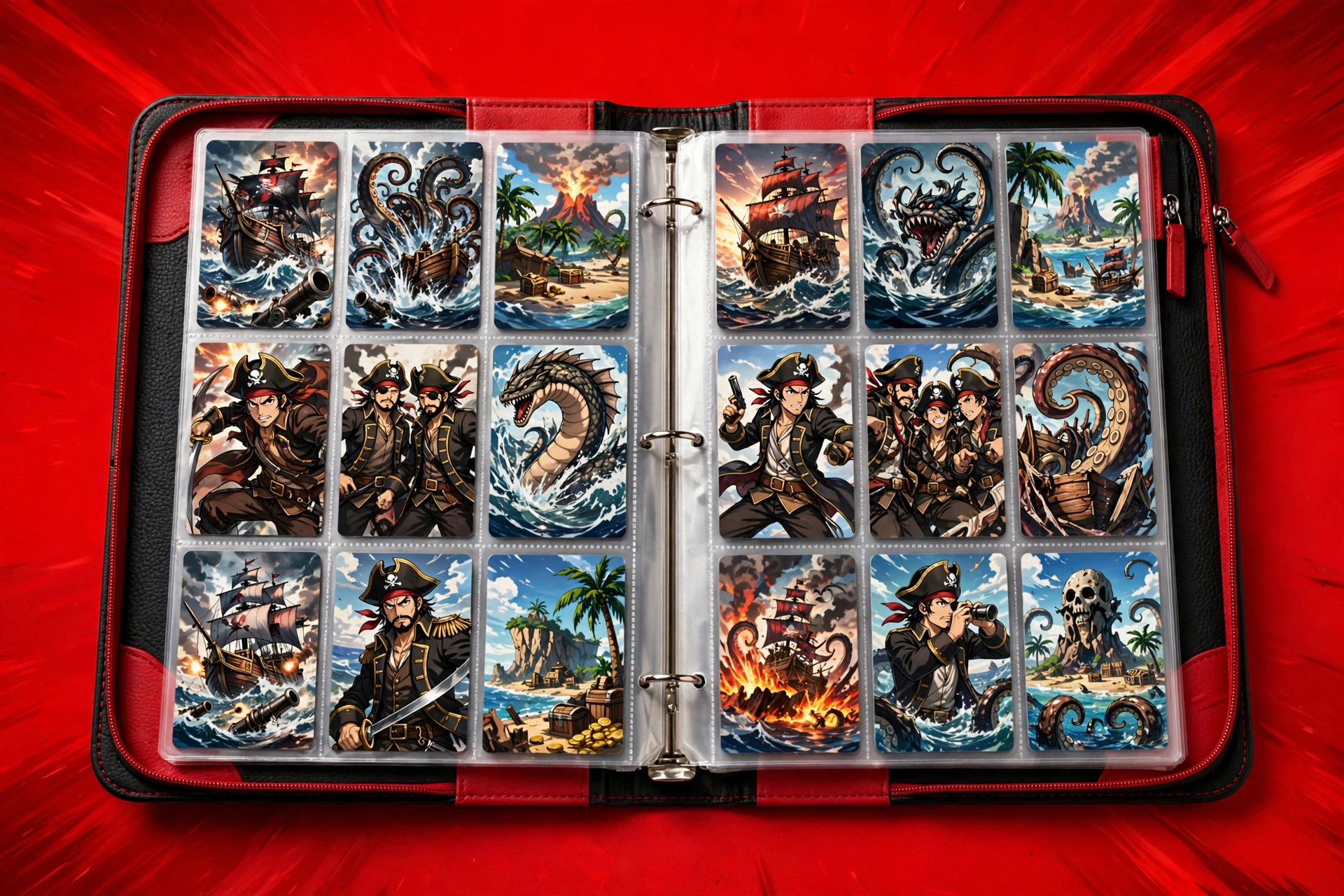
One Piece binder
Pirate anime · red & black · bold
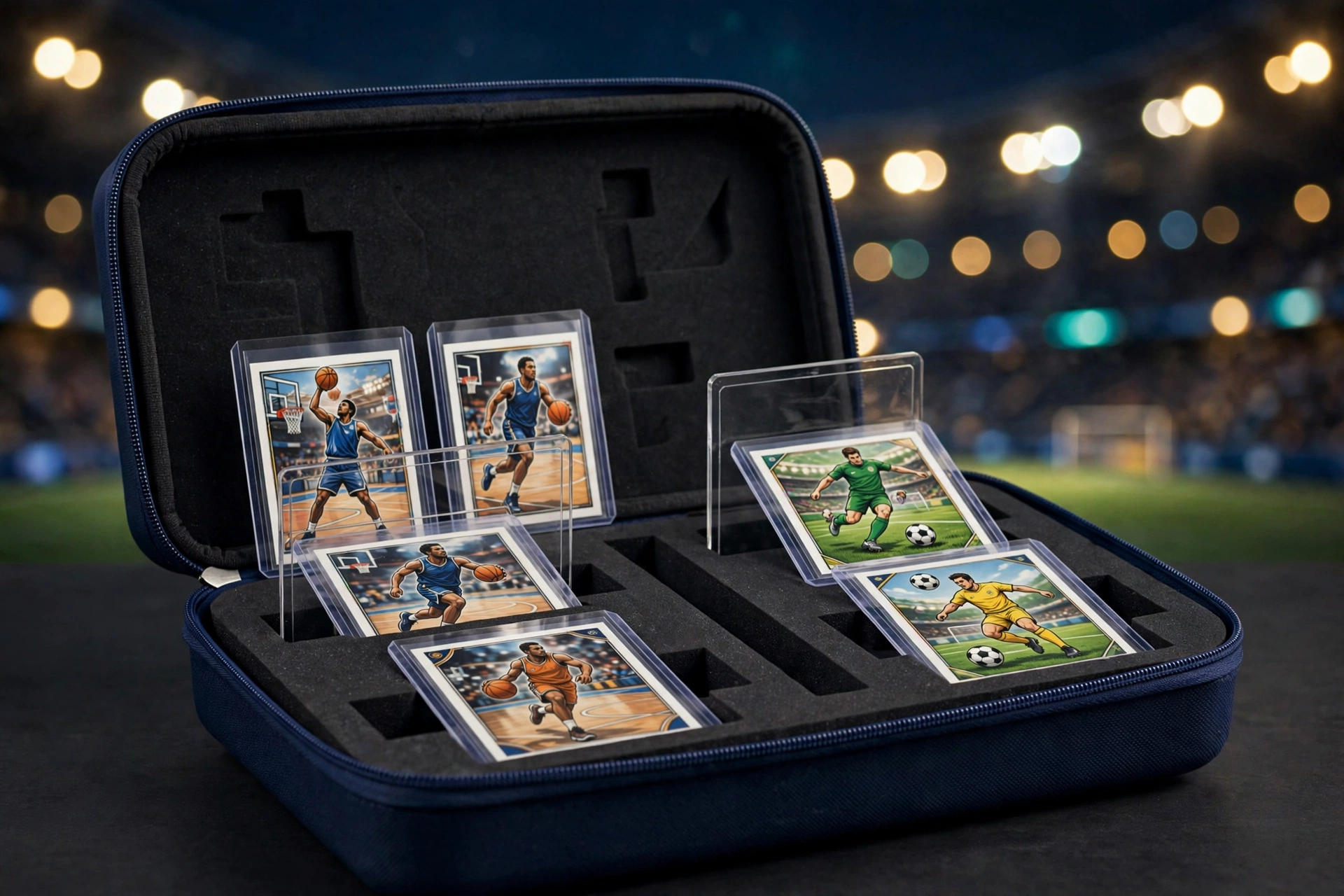
Sports card vault
Top-loader slots · navy · secure
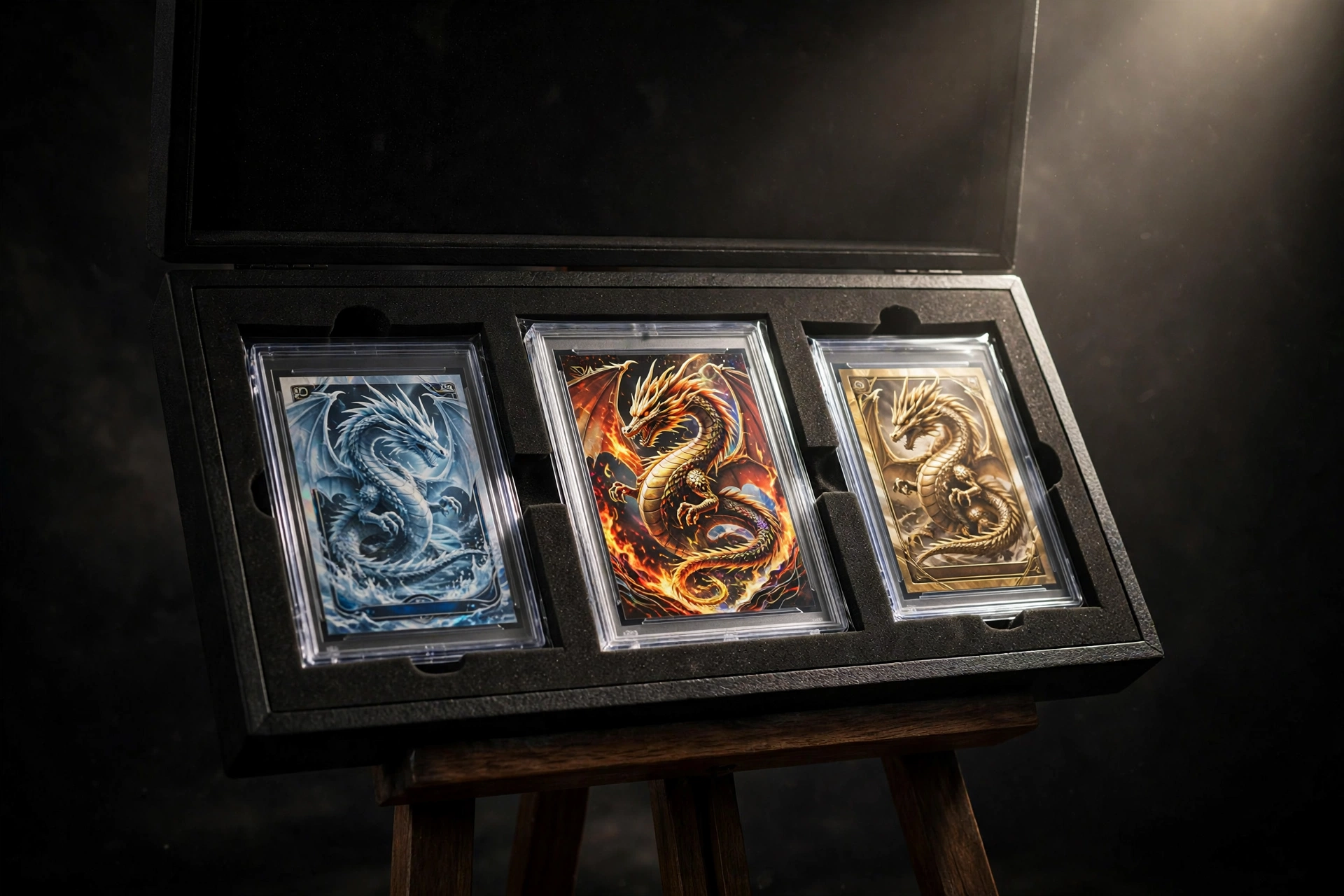
Graded grail display
Slab windows · easel · gallery
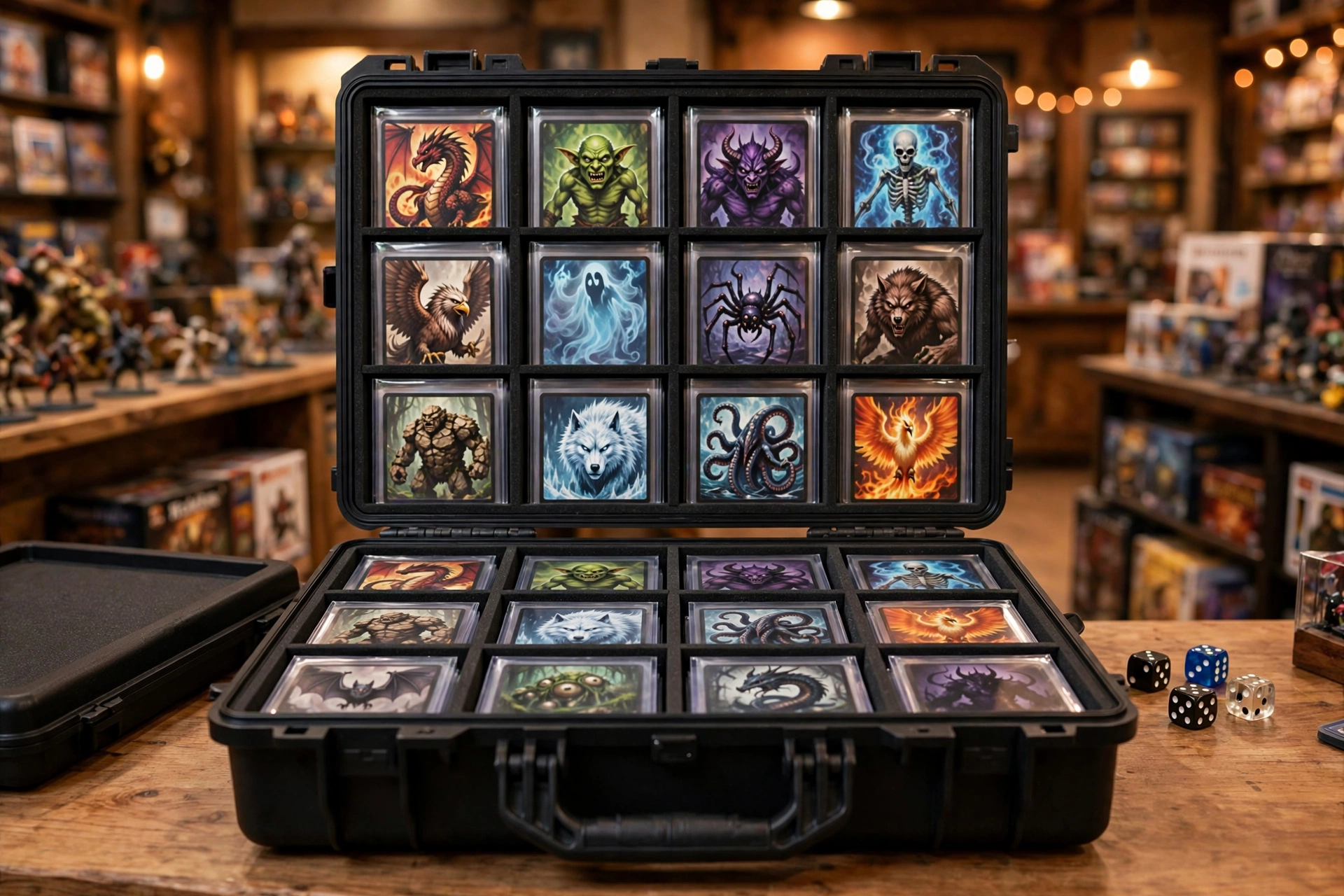
Shop storage box
Divided · high capacity · retail
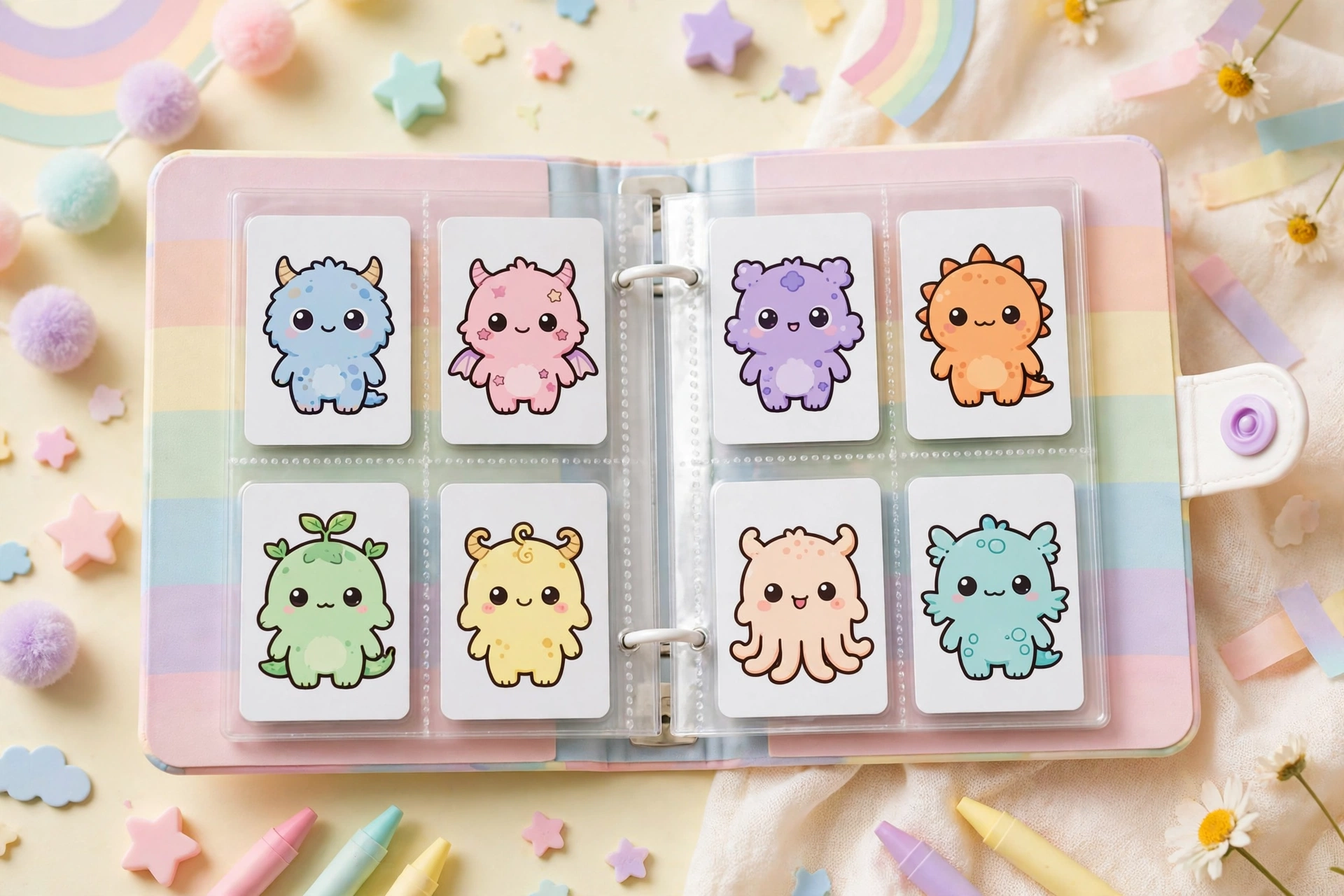
Kids mini binder
Pastel · snap · 4-pocket
You don't need to know packaging.
Just tell us about your product.
Three questions about your cards, their life, your brand — then we prescribe the vault they deserve.
What decides your case price.
We don't hide behind "contact for quote." Here are the four levers — tell us where you stand on each and the quote writes itself.
Album size & capacity
More pages, more material, more freight. A page count matched to the set — not a generic binder — is the cheapest freight you'll ever pay.
Page engineering
Magnetic frames cost more than welded pockets — and hold cards that pockets would drop. Rigid boards cost more than film — and never sag.
Display & finish
Easel stands, UV windows, foil stamping, theme embossing — each is a shelf signal with a price. We spec the finish to your price tier.
Quantity
Custom starts at 1,000 pcs. Unit cost falls as volume rises — tooling is amortized, not repeated.
Five questions to ask any EVA factory.
Including us. Take this list to every supplier you evaluate — the answers tell you who actually engineers the fit.
- 1 · What holds the cards — and what touches them?
- Good answer: magnetic frames or acid-free pockets, named materials, nothing abrasive against the card face. Red flag: "standard PVC pockets."
- 2 · Is the sample built on production tooling?
- Good answer: yes — the sample page becomes the production page. Red flag: hand-assembled samples that can't be repeated at volume.
- 3 · Do pages sag under a full load?
- Good answer: rigid page boards, tested flat under full 3×3 load. Red flag: "the film is thick enough."
- 4 · How do cards survive shipping inside?
- Good answer: magnetic hold plus a rigid shell — drop-tested with cards loaded, checking for shift in all directions. Red flag: "EVA is soft."
- 5 · Are materials acid-free and UV-safe?
- Good answer: named acid-free, PVC-free materials and a UV spec for display windows. Red flag: "it's plastic, it's fine."
Numbers, not adjectives.
- Custom MOQ
- 1,000 pcs — real custom work starts here
- Sampling
- ~7 days — physical sample in your hands
- Mass production
- 15–25 days after sample approval
- Monthly capacity
- 100k+ pcs across 3 production lines
Asked by card brands
A magnetic TCG card binder is a hard-shell card album with magnetic frames on every page — cards drop in and stay put, with no rings pressing on them and no pockets for them to slide out of.
Each card sits in its own magnetic frame — no side-loading pockets to slide out of, no rings denting edges, and rigid pages that never sag or bend the card.
Yes — a built-in easel stand turns the open album into a display, and a UV-protective window shields displayed cards from fading.
Standard TCG (63×88mm), Japanese size, top-loaders, and graded slabs — each gets its own frame or cavity. Send us your card dimensions and theme.
Any standard-size game — Pokémon, Magic: The Gathering, Yu-Gi-Oh!, One Piece Card Game, Disney Lorcana, sports cards, and your own IP. Pokémon, Magic: The Gathering, Yu-Gi-Oh!, One Piece Card Game and Disney Lorcana are trademarks of their respective owners; card artwork on this page is shown for compatibility illustration only. HCD is not affiliated with or endorsed by any game publisher.
Typically 1,000 pcs. Samples in ~7 days, production 15–25 days after your approval.
Send us your product.
We'll make it worth more.
Your card size, theme, or set list — engineering feedback and a quote within 24 hours.
info@hcdcase.com