Custom EVA first aid case,
open flat in one pull — like a workstation.
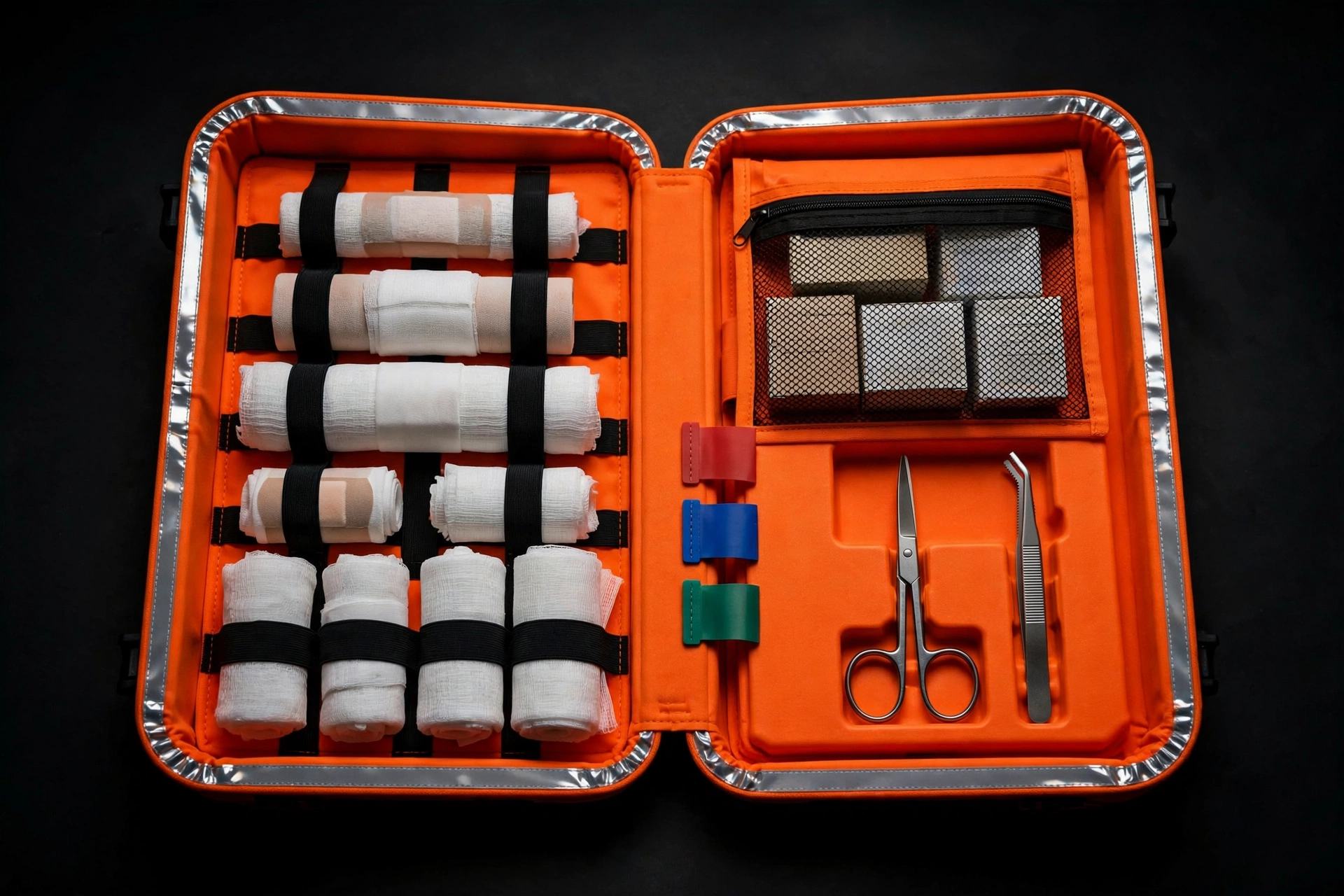
In an emergency it opens one-handed — or it fails. A 180° lay-flat case that becomes a workstation: red zone for bleeding, blue for airway, green for meds — everything visible, everything grabbable. Hi-vis orange with a reflective strip, because emergencies don't happen in daylight. This case doesn't just hold supplies. It organizes panic into action.
- 180° lay-flat open
- 3 color-coded zones
- Hi-vis reflective trim
- Custom MOQ 1,000 pcs
The four ways first aid kits
fail when it counts.
A first aid case has one brutal test: a stranger opens it in a panic. Most kits fail before the first bandage.
"Nobody can find anything inside."
A jumble of supplies in a red box is a drawer, not a kit. Our answer: three color-coded zones — red for bleeding, blue for airway, green for meds — so even a stranger grabs the right thing first.
"It takes two hands and a full minute to open."
Buckles, flaps, nested lids — every second of fumbling is the product failing. Our answer: one-pull 180° lay-flat opening — the case falls open into a workstation, everything visible, everything within reach.
"Expired supplies hide at the bottom for years."
Opaaque pockets and buried layers mean nobody restocks. Our answer: mesh zip pockets with visible labels — expiry dates stay readable, and a missing item is obvious at a glance.
"You can't find it in the dark."
Roadside at 2am, campsite at midnight — a black bag in a dark trunk is invisible. Our answer: hi-vis orange shell with a reflective strip — headlights find it before your hands do.
Pull it apart.
See what you're paying for.
Six layers. Tap each number — every layer answers one of the seven fit-engineering questions: volume, size, protection, rattle, lift, scratch, static.
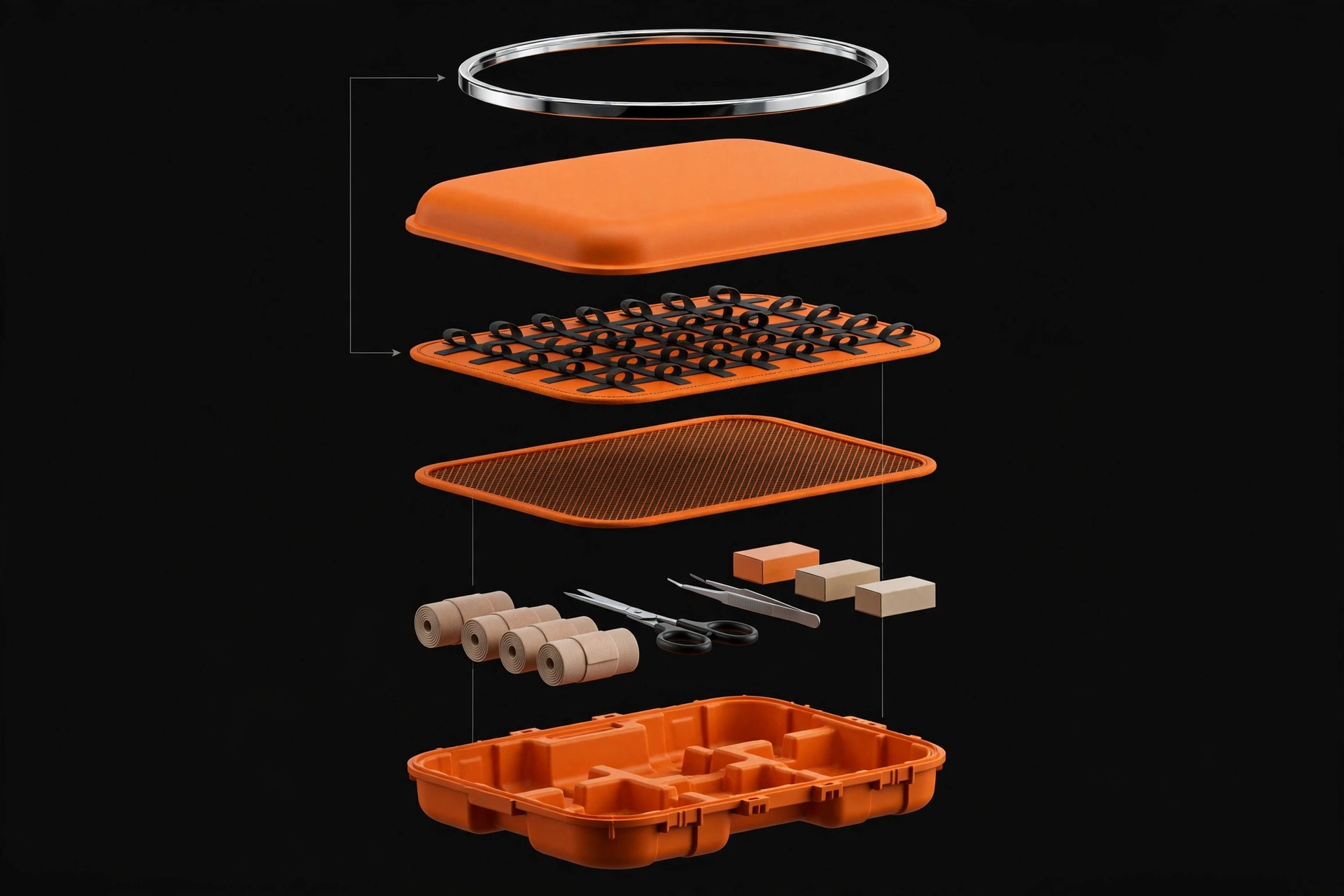
1 · Reflective trim ring
The 2am layer. A silver reflective strip bonded around the shell rim — headlights and flashlights find the kit in a dark trunk or campsite before hands do.
The details that work when it counts.
Three close-ups. Organization is the baseline — these are the details that decide whether a kit works in a panic.
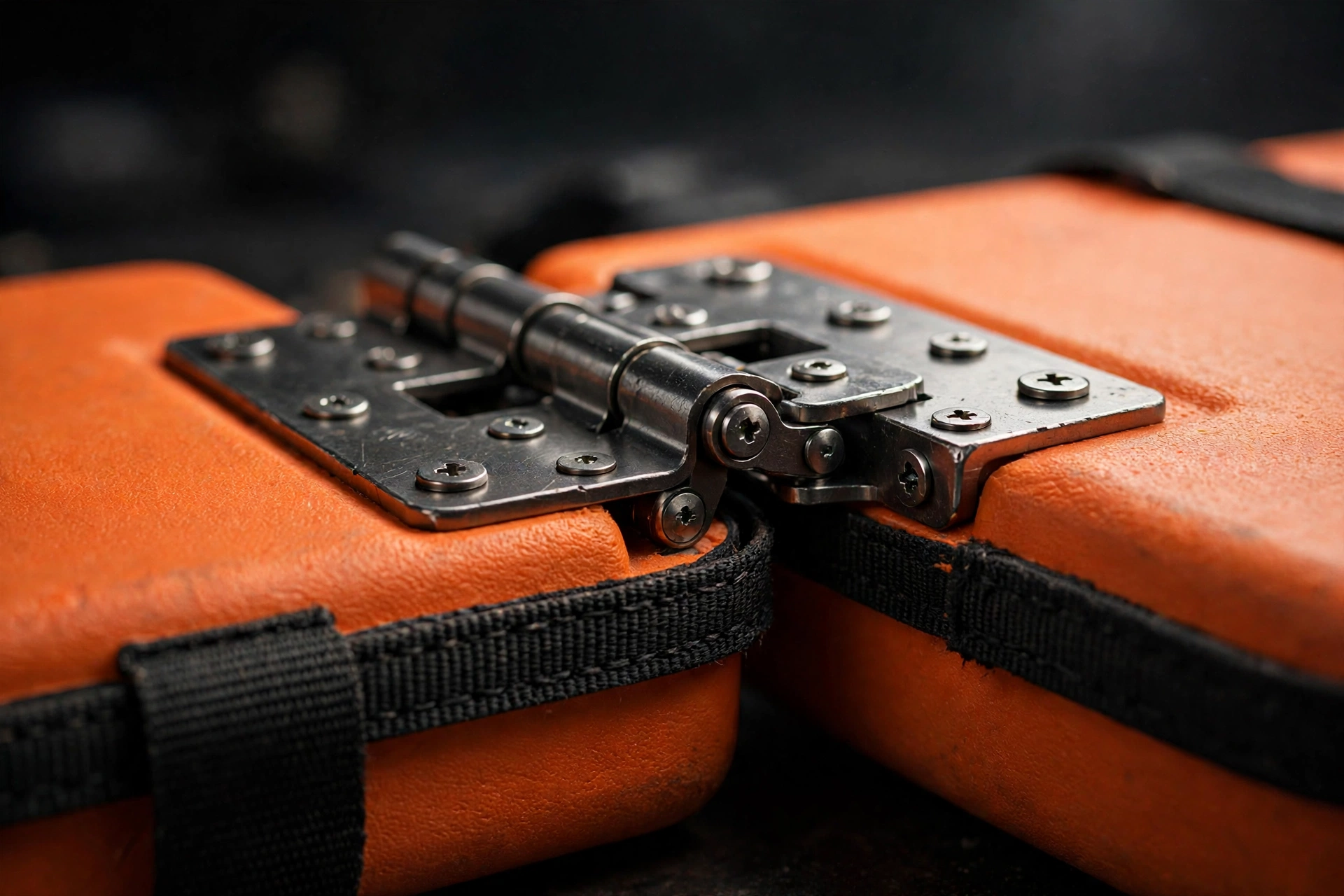
180° lay-flat hinge, one pull
The mechanism is the moat. A reinforced lay-flat hinge lets the case fall open flat into a workstation — no buckles, no flaps, no second hand needed. This is the difference between a kit and a drawer.
- Opens flat — everything visible at once
- Screwed hinge plates, not glued
- One-pull opening under stress
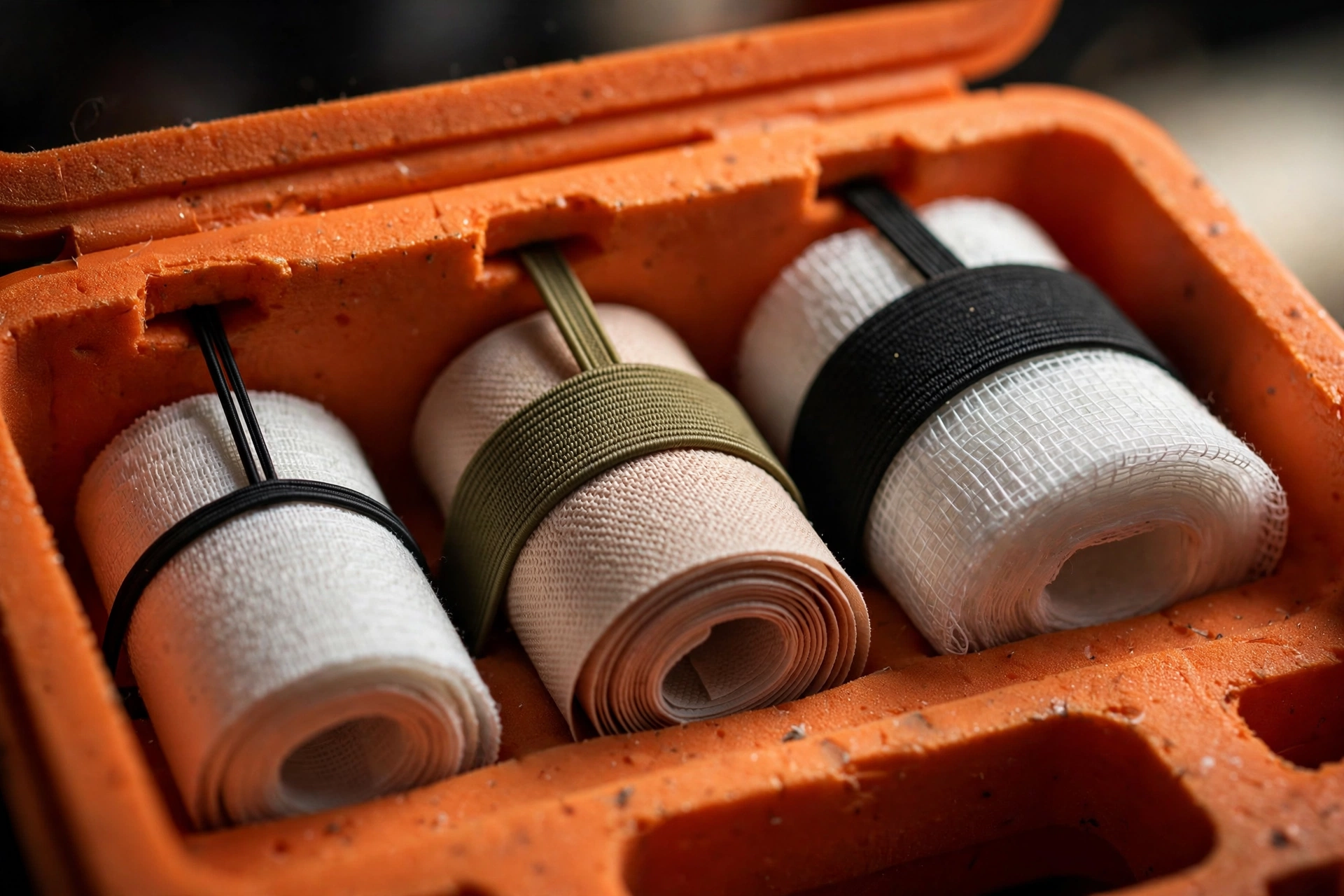
Loops sized to the supply, not the average
Every loop is cut for one specific item — wide for gauze rolls, narrow for bandages, quick-pull for the tourniquet. Contents sit below the rim plane, so the case closes flat and nothing migrates in transit.
- One loop width per supply — zero rattle
- Quick-pull tourniquet loop
- Everything below the close plane
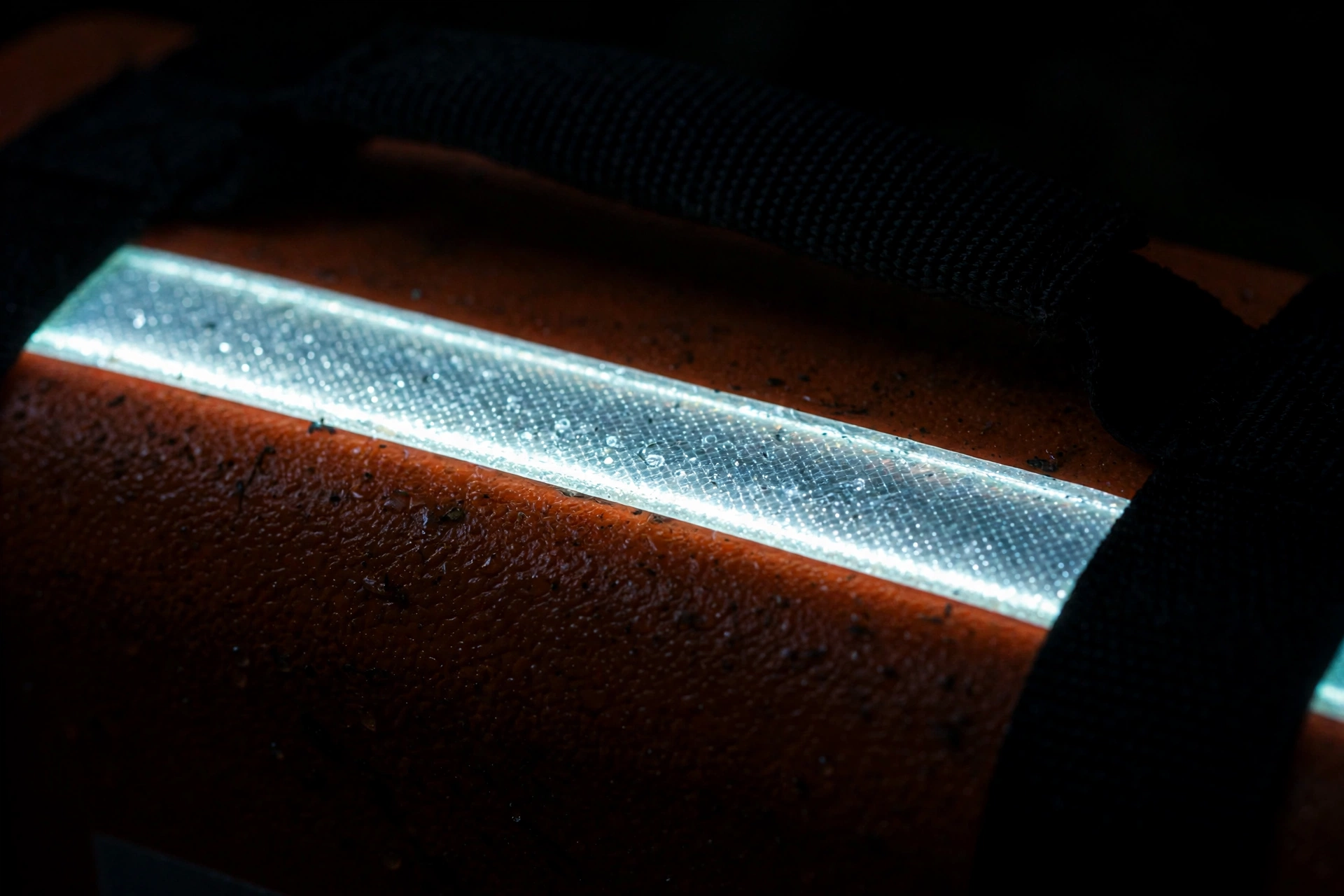
Reflective trim — found in the dark
The detail nobody asks for until they need it. A silver reflective strip around the shell catches headlights and flashlights — the kit is visible in a dark trunk or campsite before your hands find it.
- Hi-vis orange + reflective — day and night
- Bonded, not printed — survives weather
- Your logo, still visible in the dark
Picked for emergencies,
not for shelves.
Every material here serves one master: the moment someone opens this kit in a panic.
- Shell — molded EVA, hi-vis orange
- Why: the findability signal. Orange reads "emergency" in every market — and it's visible in a dark trunk before anything else.
- Trim — reflective strip
- Why: the 2am requirement. Bonded silver reflective catches headlights and flashlights — the kit announces itself in the dark.
- Loops — woven elastic, 3 widths
- Why: the retention system. Each width is cut for its supply — wide gauze, narrow bandages, quick-pull tourniquet. Zero rattle, one-hand grab.
- Pockets — clear mesh, zip
- Why: the inventory system. Labels and expiry dates stay readable; a missing item is obvious. Sealed meds stay dust-free.
- Hinge — reinforced steel, 180°
- Why: the mechanism is the moat. Screwed plates and a lay-flat stop — the case opens into a workstation and stays there.
Every emergency deserves
its own kit.
Not "a first aid box" — a kit designed for one situation, that works when it counts. Find yours.
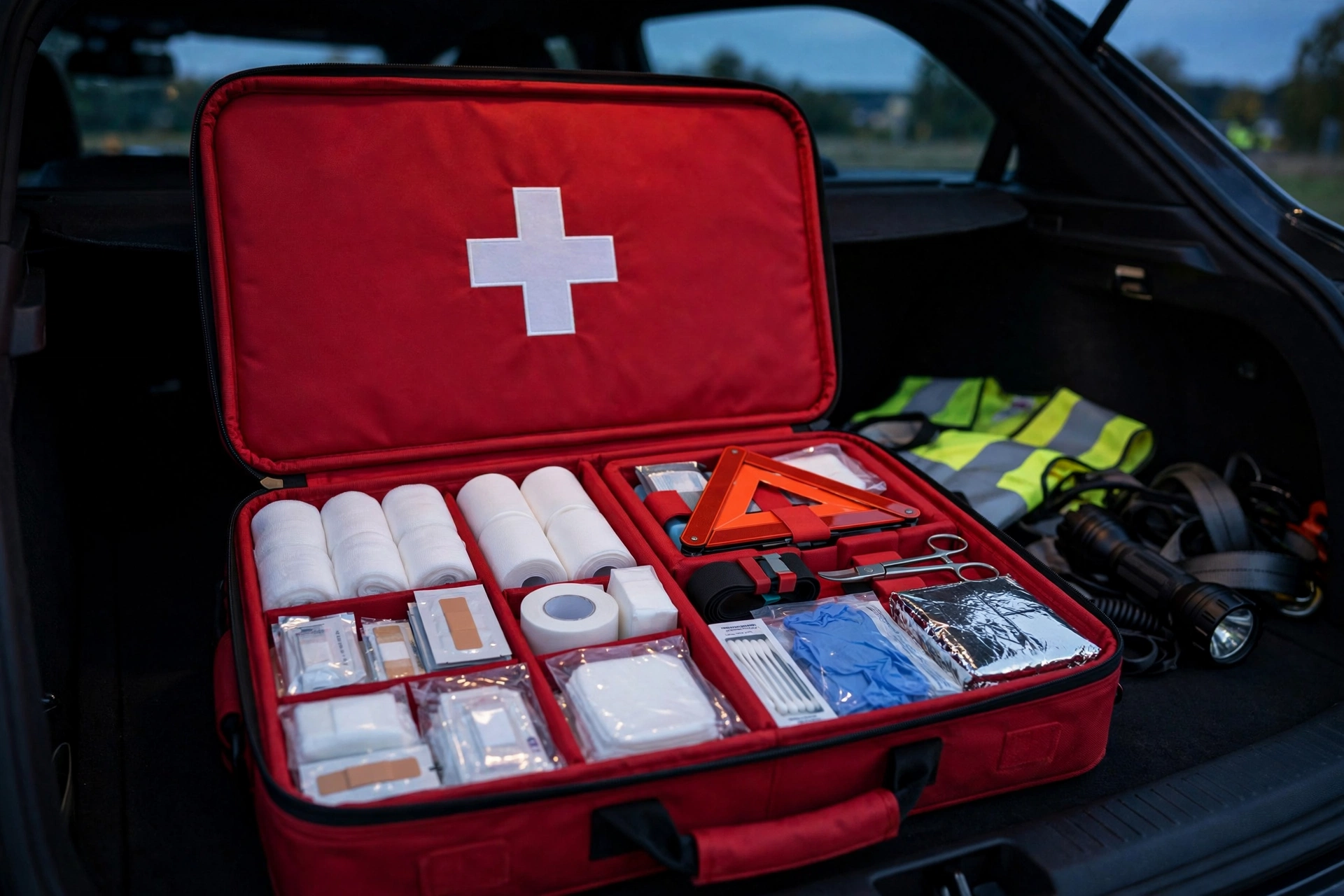
Car emergency
Red shell · white cross · trunk-ready
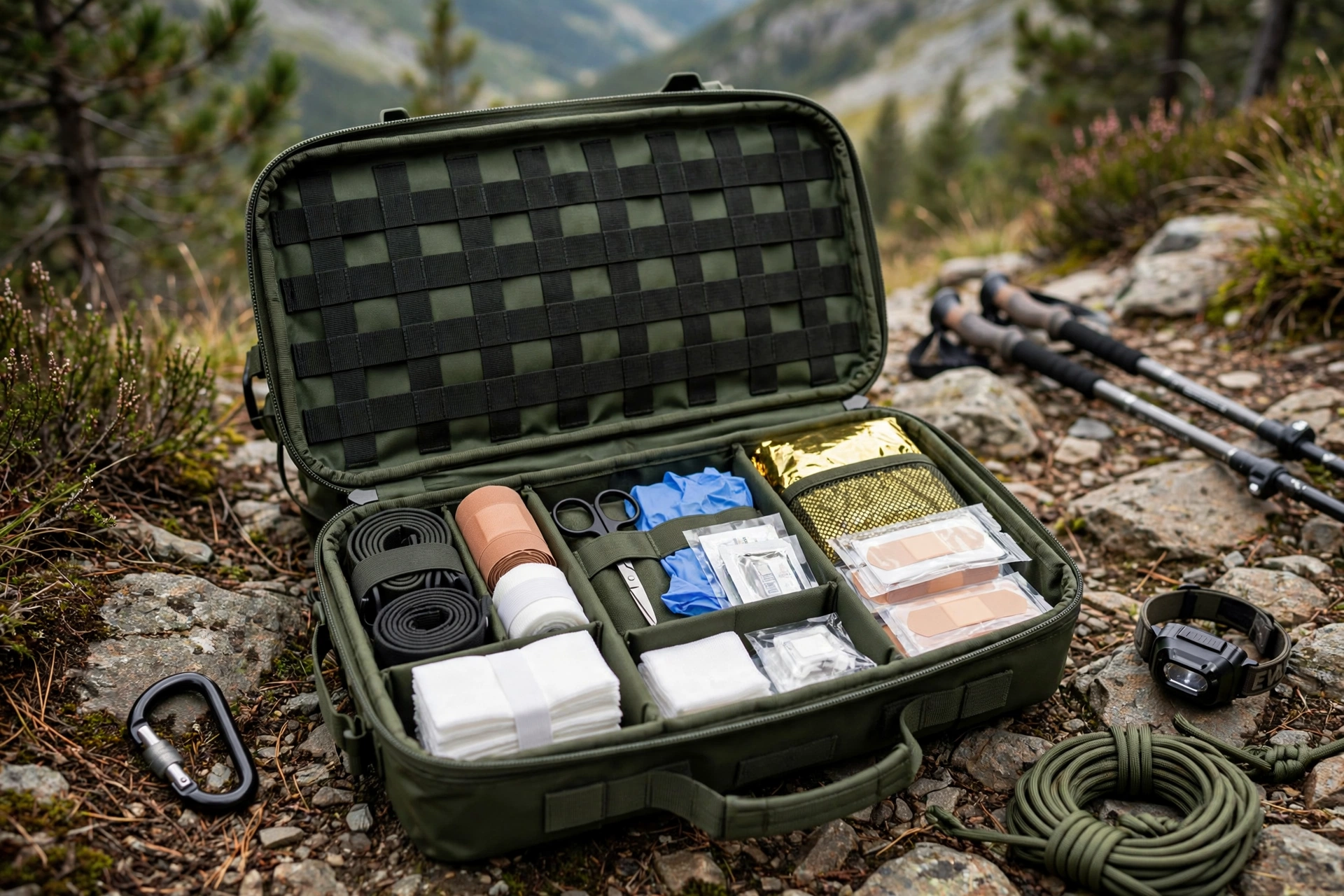
Hiking trauma
Forest green · MOLLE · trail-tough
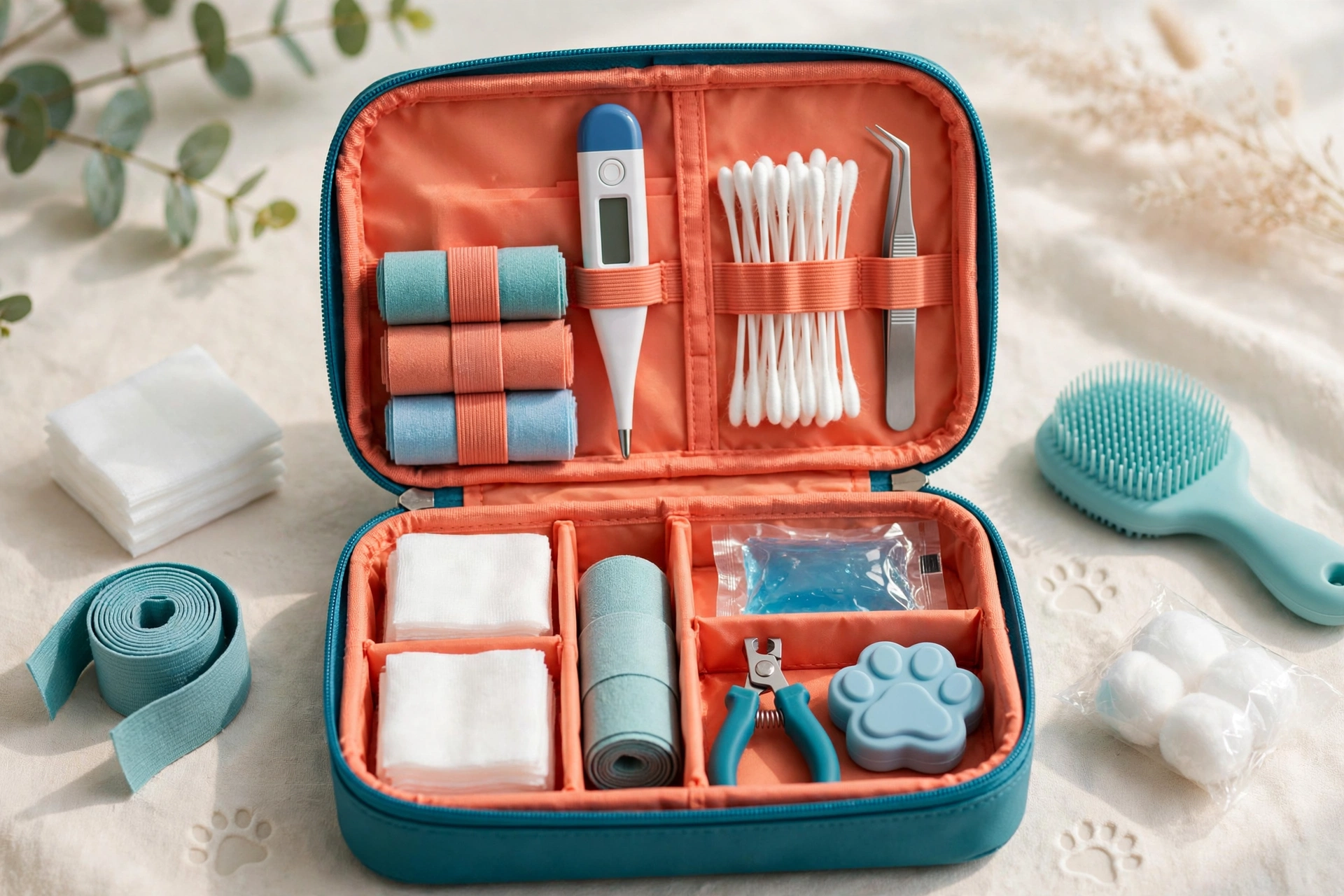
Pet first aid
Teal & coral · pet-sized tools · friendly
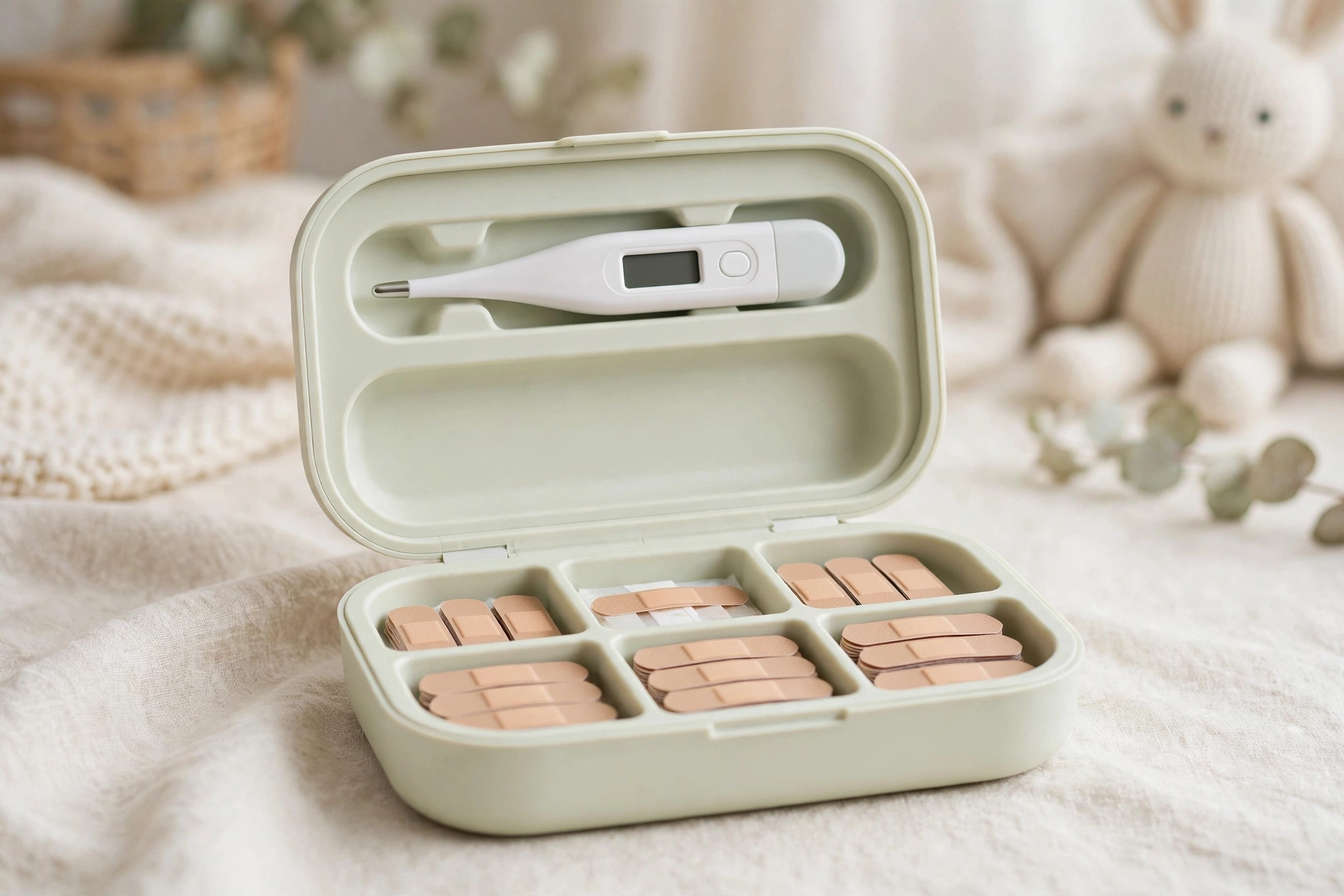
Baby care
Mint shell · rounded · gentle
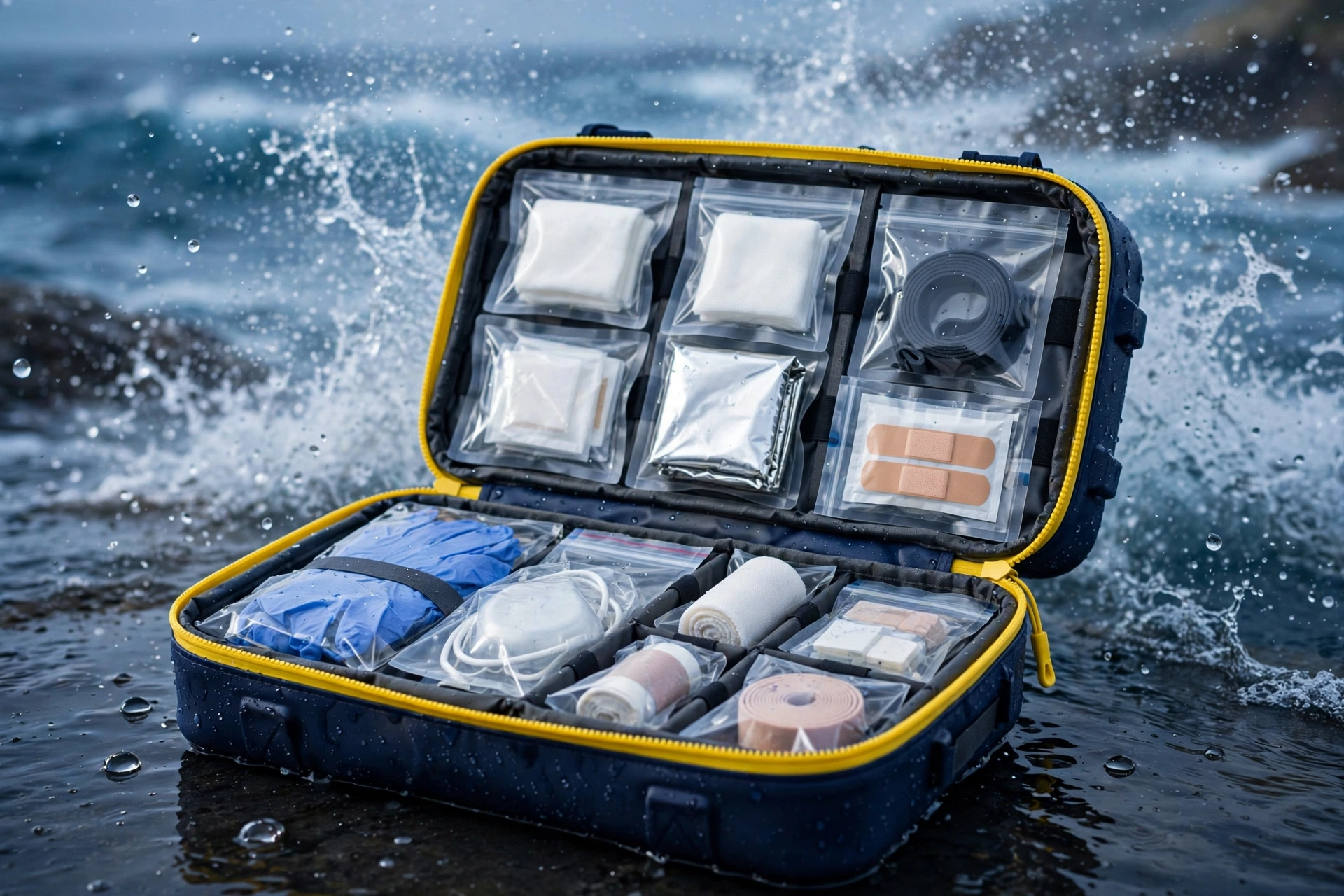
Marine waterproof
Navy shell · sealed pouches · sea-proof
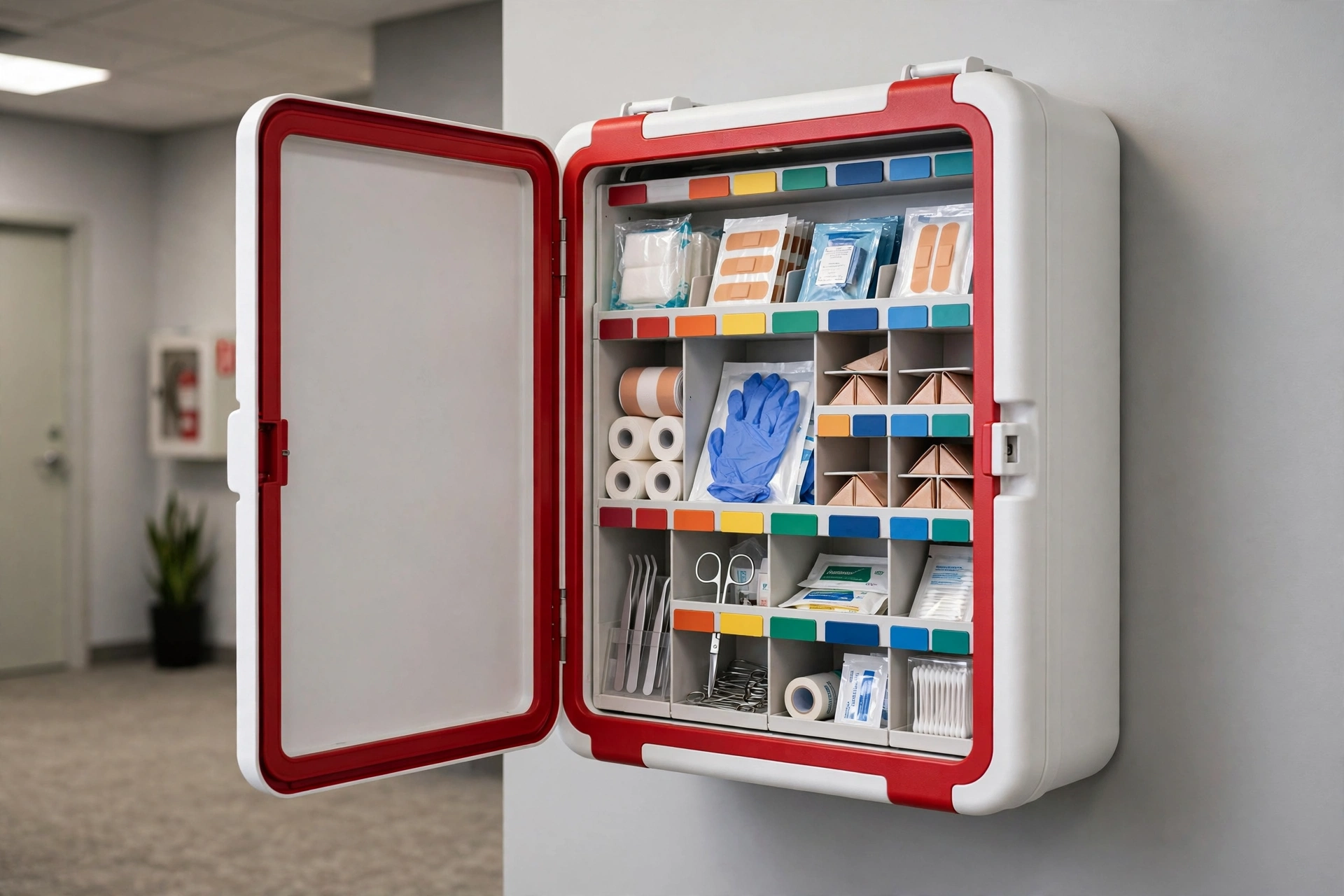
Workplace wall kit
Wall-mount · color tabs · compliant
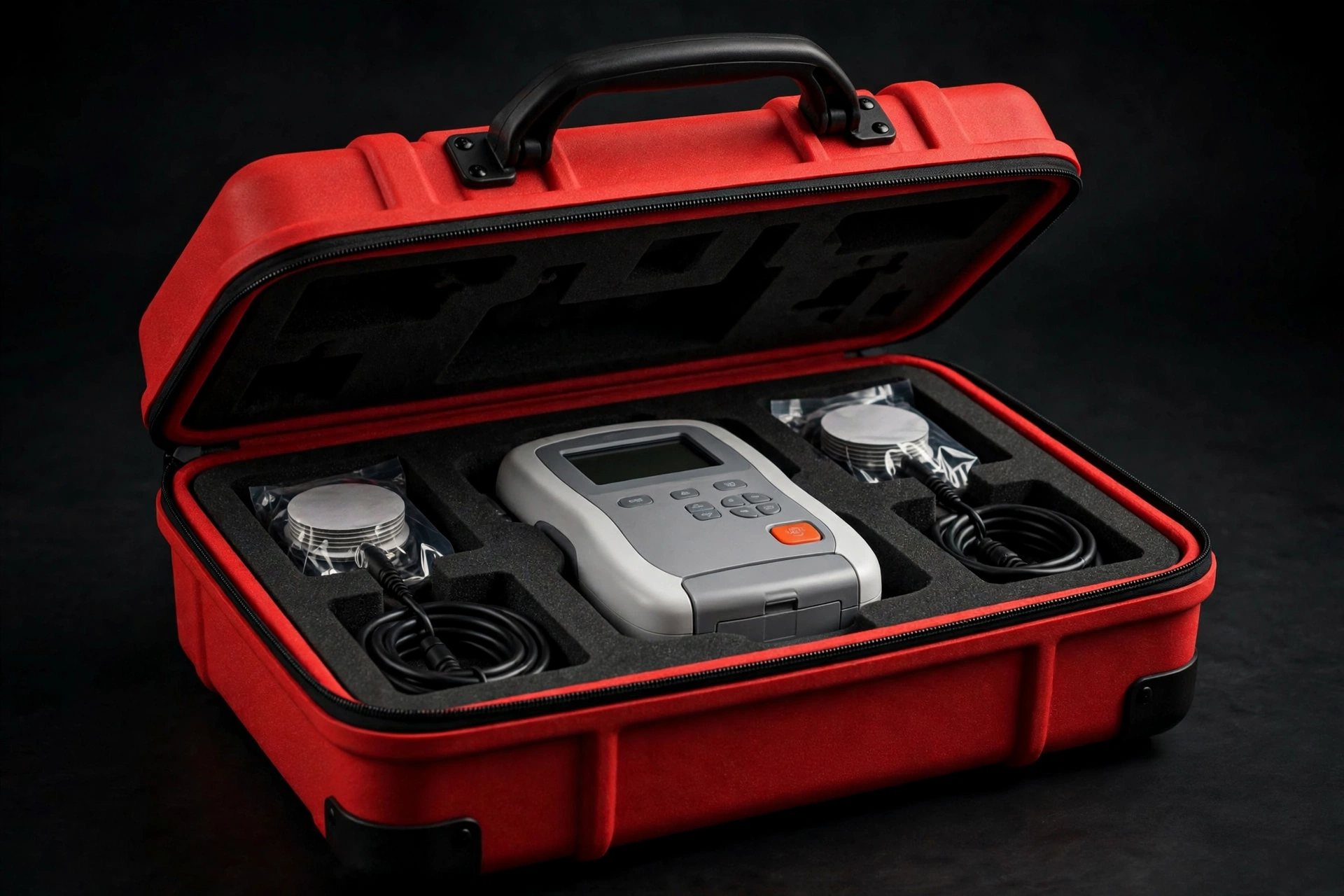
AED carry case
Die-cut device cavity · pad slots · rapid
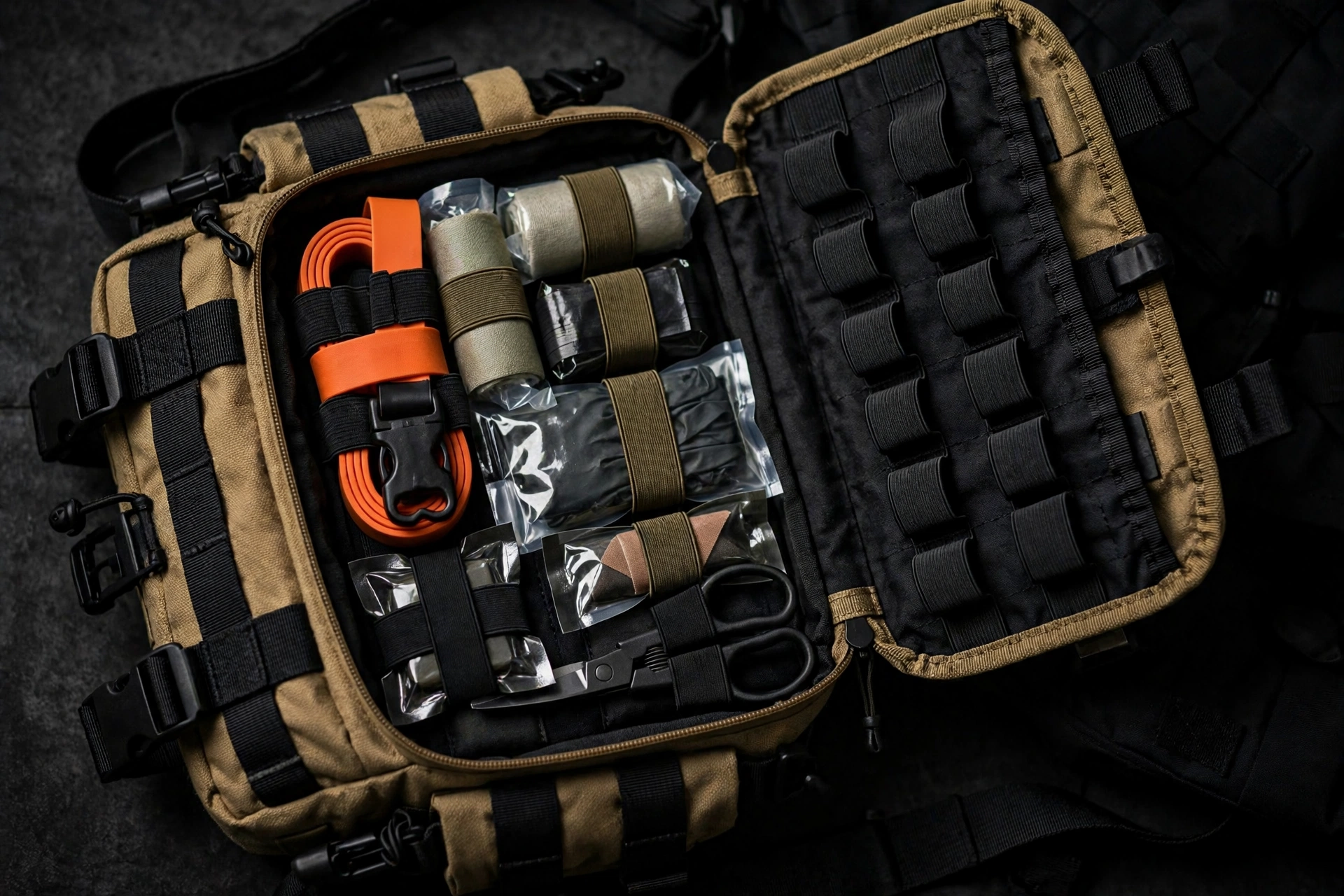
Tactical IFAK
Coyote tan · MOLLE · quick-pull
You don't need to know packaging.
Just tell us about your product.
Three questions about your supplies, their life, your brand — then we prescribe the build that works when it counts.
What decides your case price.
We don't hide behind "contact for quote." Here are the four levers — tell us where you stand on each and the quote writes itself.
Case size & shape
Bigger shell, more material, more freight. A layout trimmed to your supply list — not a generic box — is the cheapest freight you'll ever pay.
Layout complexity
Number of loops, pockets, zones. A three-zone workstation layout costs more than one open slot — and finds the right supply faster.
Materials & hardware
Reflective trim, waterproof zippers, MOLLE webbing — each is a capability with a price. We spec the build to your use case.
Quantity
Custom starts at 1,000 pcs. Unit cost falls as volume rises — tooling is amortized, not repeated.
Five questions to ask any EVA factory.
Including us. Take this list to every supplier you evaluate — the answers tell you who actually engineers the fit.
- 1 · How do you design around our supply list?
- Good answer: we map every item to a loop, pocket or slot before tooling — nothing "finds a corner." Red flag: "our standard layout fits most kits."
- 2 · Is the sample cut on production tooling?
- Good answer: yes — the sample die becomes the production die. Red flag: hand-cut samples that can't be repeated at volume.
- 3 · How do you test one-hand opening?
- Good answer: the hinge and closure are tested for single-hand operation — the case must open flat, not fight back. Red flag: no test, just "the zipper is smooth."
- 4 · How do supplies stay put in transit?
- Good answer: loop widths matched to each item, everything below the close plane, rattle-tested in all directions. Red flag: "EVA is soft, things stay."
- 5 · Can a stranger use it in the dark?
- Good answer: hi-vis shell, reflective trim, color-coded zones — findability and readability are designed in. Red flag: "it's a red box, you'll find it."
Numbers, not adjectives.
- Custom MOQ
- 1,000 pcs — real custom work starts here
- Sampling
- ~7 days — physical sample in your hands
- Mass production
- 15–25 days after sample approval
- Monthly capacity
- 100k+ pcs across 3 production lines
Asked by first aid brands
An EVA first aid case is a hard-shell medical organizer made from heat-pressed EVA foam, with compartments engineered around your supply list — everything visible at a glance and grabbable with one hand.
We zone the layout like triage: red for bleeding, blue for airway, green for meds — with elastic loops sized to each item and mesh pockets for small supplies. Send us your supply list and we map every item.
Yes — that's the design brief. A 180° lay-flat hinge and a single-pull closure: the case falls open into a workstation, everything visible at once.
Mesh zip pockets keep labels readable, so expiry dates stay visible and a missing item is obvious at a glance. Restocking becomes a visual check, not a treasure hunt.
Typically 1,000 pcs. Samples in ~7 days, production 15–25 days after your approval.
Send us your product.
We'll make it worth more.
Your supply list, photos, or dimensions — engineering feedback and a quote within 24 hours.
info@hcdcase.com