EVA-structured canvas tote,
that stands like it means it.
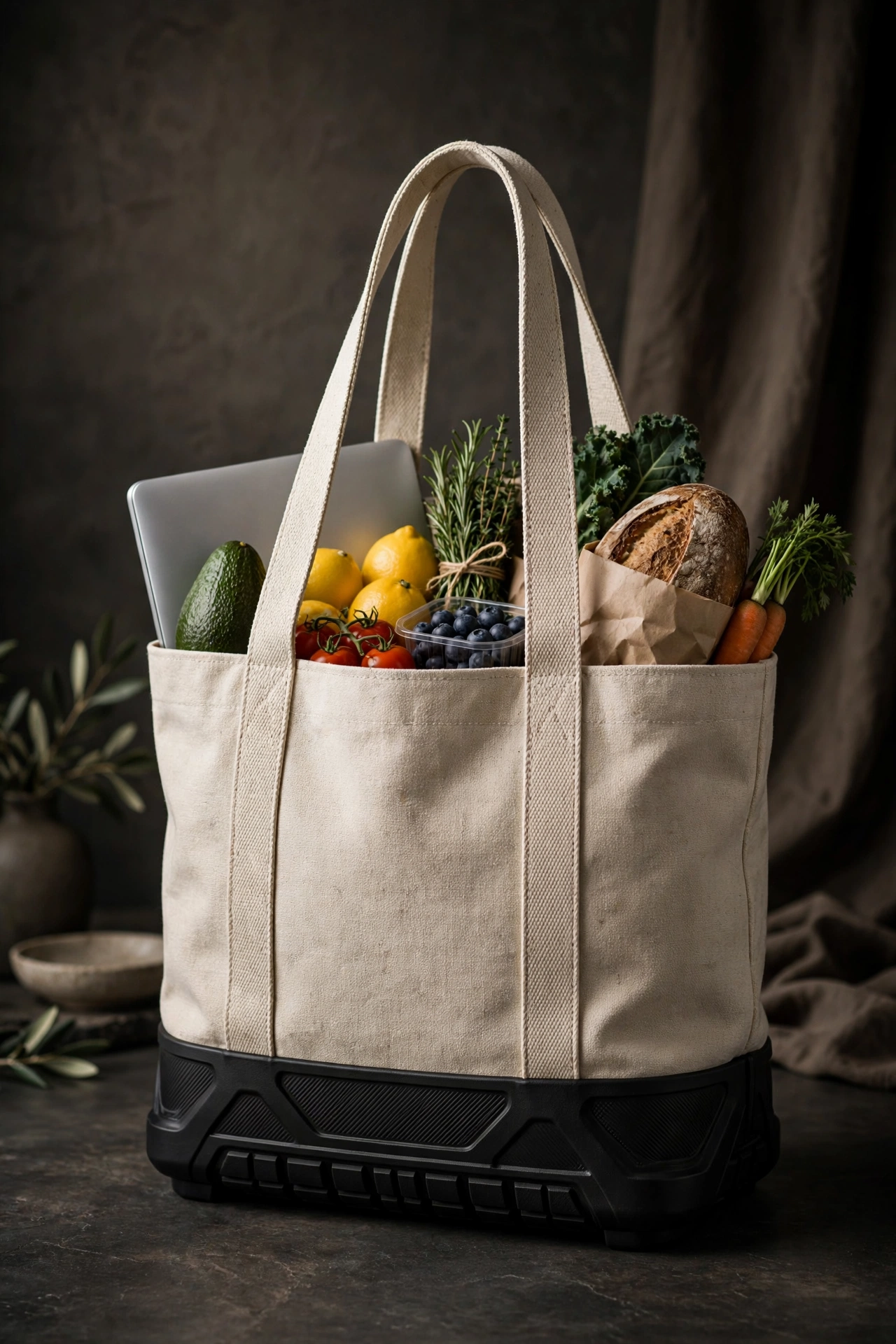
A $5 tote dies in a month. The Foundation Tote changes the math: canvas is the skin, EVA is the skeleton — a molded EVA base tray and structured EVA walls make the tote stand upright on its own, keep groceries organized, and survive wet ground. This isn't a canvas bag with EVA decoration — it's an EVA structure wearing canvas.
- Molded EVA base tray
- Structured EVA walls
- Stands upright alone
- Custom MOQ 1,000 pcs
The four ways totes
die in a month.
A tote has one job: hold its shape while holding everything. Most fail it by week three.
"It collapses the moment you set it down."
Canvas alone has no skeleton — the tote folds like a sock and groceries tumble. Our answer: structured EVA walls — the tote stands upright on its own, mouth open, ready to load.
"The bottom sags and tears."
Weight pulls the canvas down — the bottom drags, then rips at the seams. Our answer: a molded EVA base tray — rigid, load-bearing, stitched to take the weight.
"Wet ground ruins it in one trip."
One rainy market run and the canvas bottom soaks through. Our answer: a water-resistant EVA base — set it on wet pavement, the contents stay dry.
"Everything inside becomes soup."
Groceries, laptop, keys — all tumbling in one canvas void. Our answer: EVA-organized compartments — bottles upright, laptop sleeved, small things homed.
Pull it apart.
See what you're paying for.
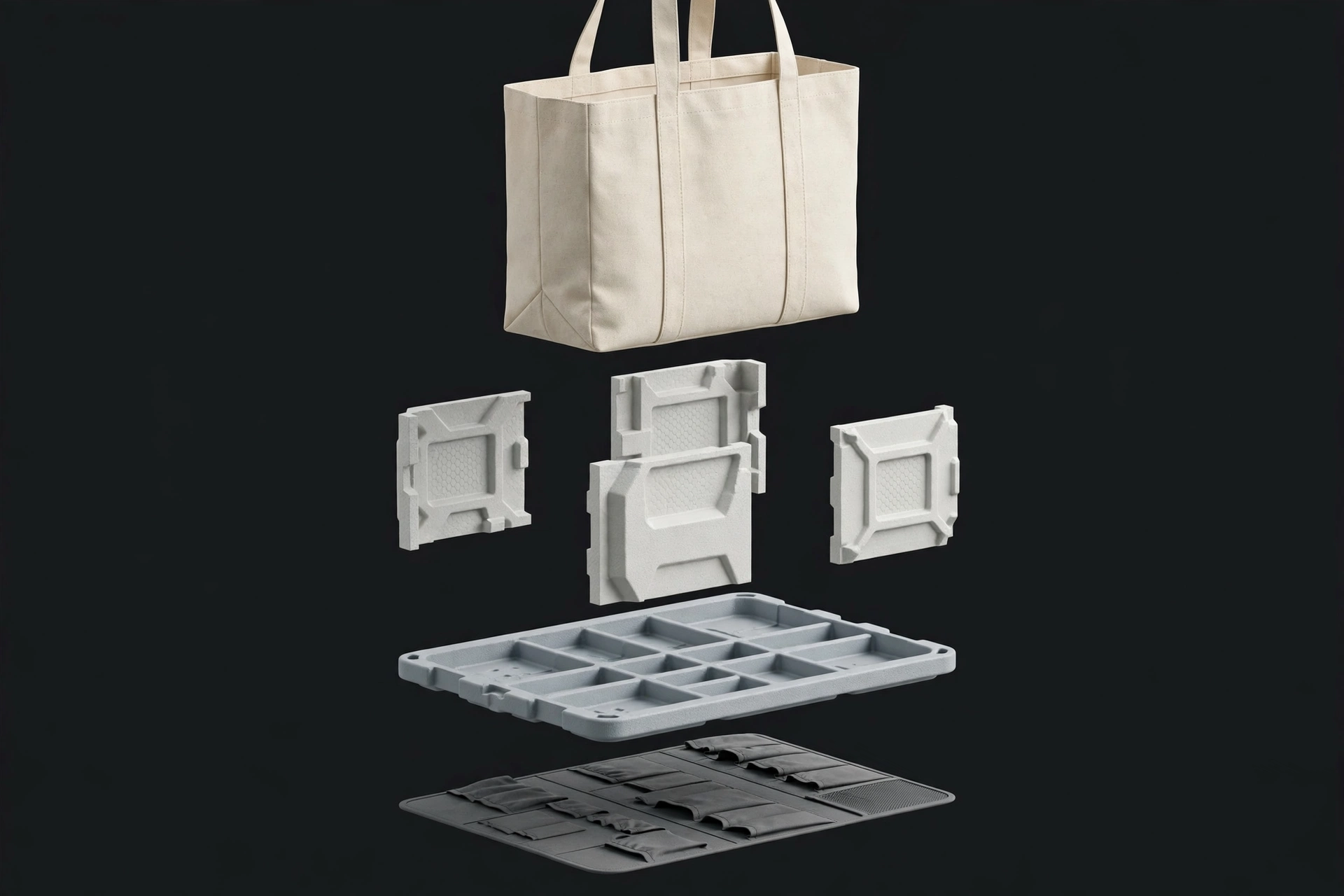
Four layers. Tap each number — every layer answers one of the seven fit-engineering questions: volume, size, protection, rattle, lift, scratch, static.
1 · Top shell
The armor. Molded black EVA — rigid, crush-proof, debossed with your brand. Baggage-belt pressure stops here.
The details tote buyers pay extra for.
Three close-ups. A floppy tote is the baseline — these are the details that make it a structure.
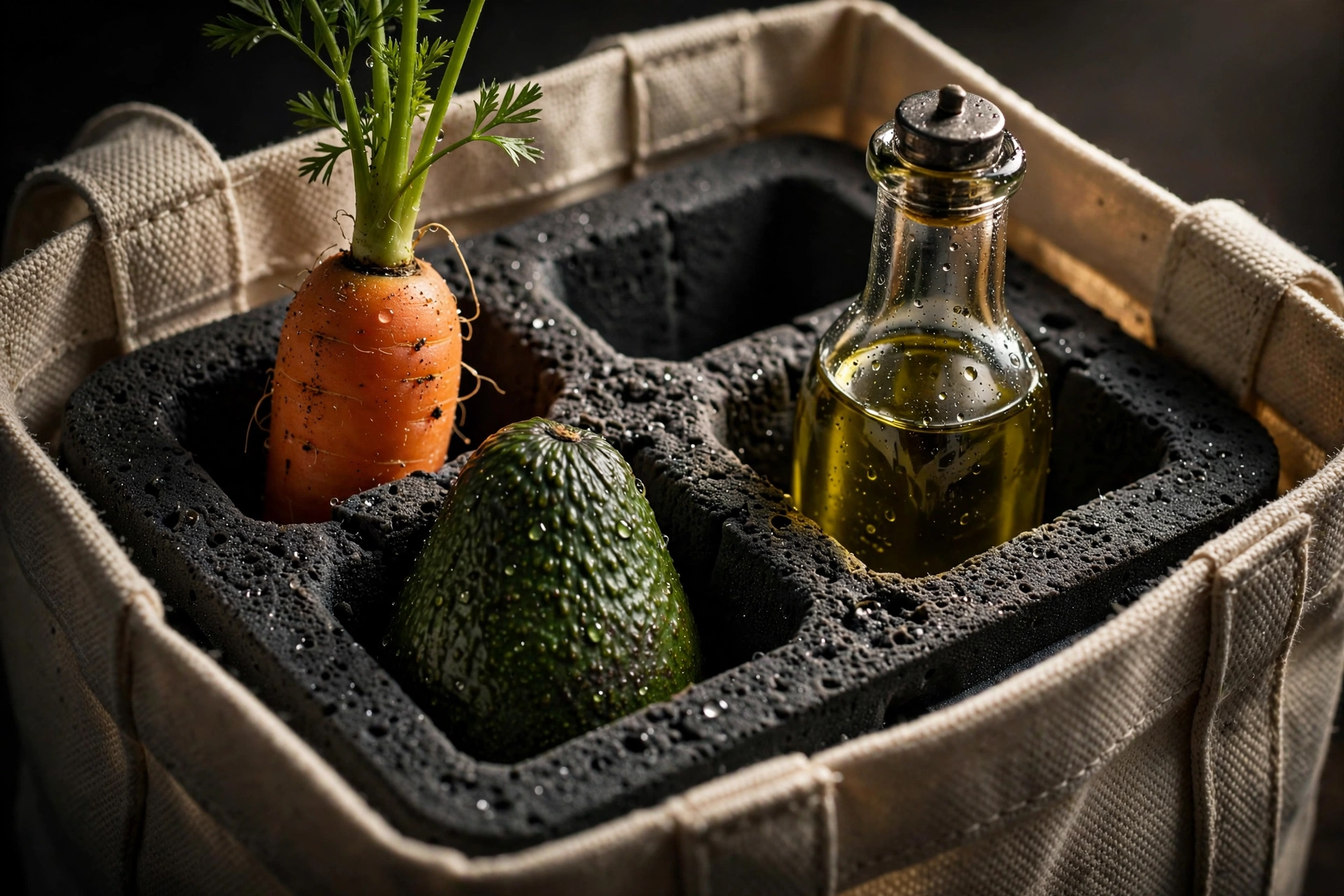
Molded EVA base — the foundation
The mechanism is the skeleton. A rigid EVA base tray carries the load — compartments keep bottles upright, the bottom never sags, wet ground never reaches the canvas.
- Rigid load-bearing tray
- Compartments keep bottles upright
- Water-resistant — set it anywhere
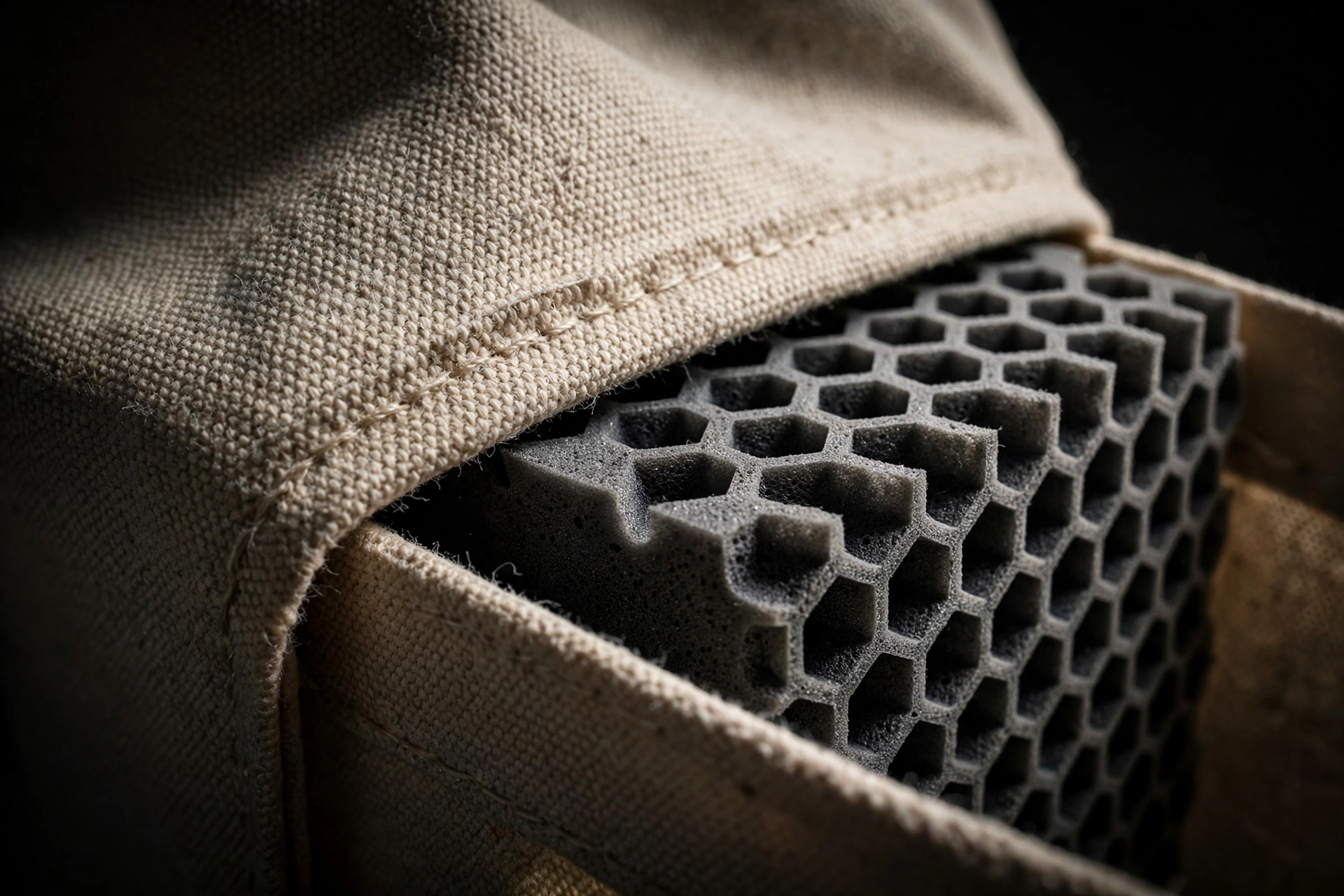
Structured walls — stands on its own
Canvas without a skeleton folds like a sock. EVA wall inserts give the tote posture — it stands upright on the counter, mouth open, ready to load.
- EVA inserts — the posture
- Stands upright, mouth open
- Shape holds for years
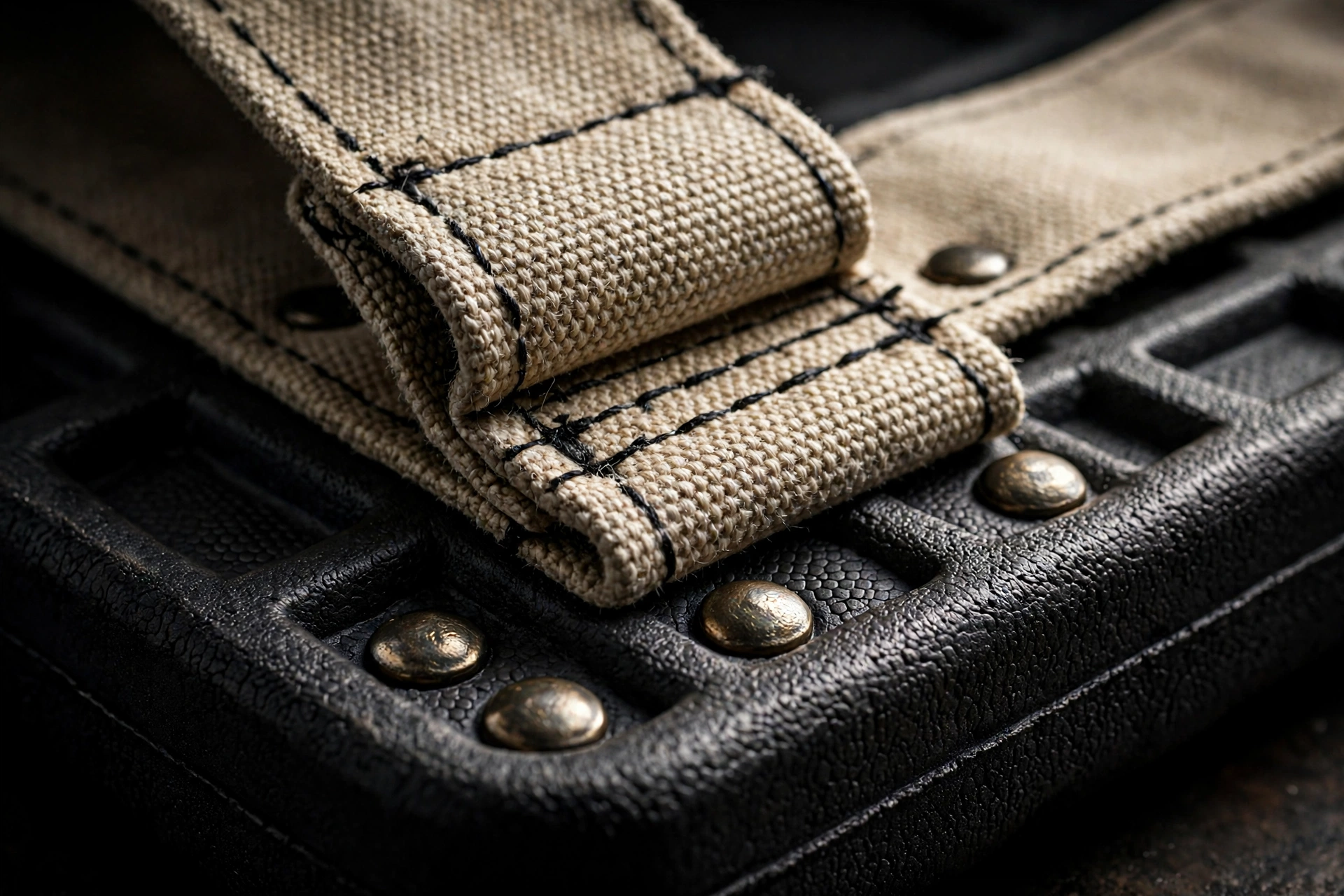
Straps anchored to the EVA base
Straps fail where they meet the bag. Ours anchor into the molded EVA base — the load path runs through the skeleton, not the canvas. The strap breaks first? Not here.
- Anchored to the EVA base
- Load through the skeleton
- Heavy stitching + rivets
Picked to make canvas
behave like luggage.
Every material here serves one master: the tote that stands, organizes, and lasts — because EVA does the structural work.
- Skeleton — molded EVA base tray
- Why: the foundation. Rigid EVA carries the load — compartments, water resistance, shape. This is the product; the canvas is the wrapper.
- Walls — structured EVA inserts
- Why: the posture. EVA inserts keep the tote standing upright — mouth open, groceries visible, no sagging ever.
- Skin — canvas, 16oz
- Why: the look. Heavy canvas takes prints, embroidery and your branding — the part the customer sees and touches.
- Straps — anchored to EVA
- Why: the failure point, fixed. Straps anchor into the molded base — load runs through the skeleton, stitched and riveted.
- Finish — prints, brand colors
- Why: the shelf signal. Your artwork on the canvas — the tote sells your brand on the street.
Every tote deserves
its own skeleton.
Not "a canvas bag" — an EVA structure wearing canvas, built for one job and built to keep it. Find yours.
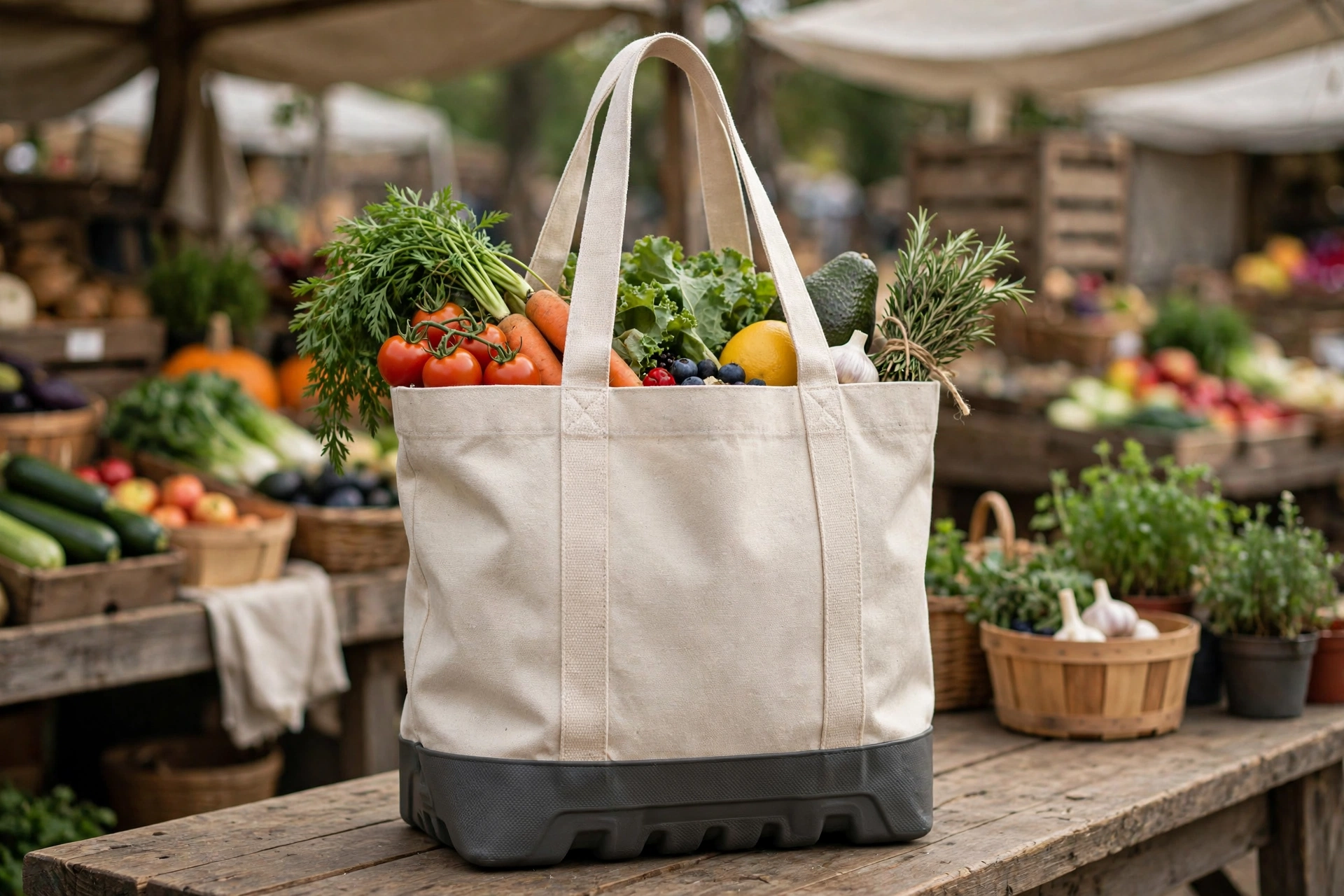
Market run
Natural canvas · EVA base · fresh
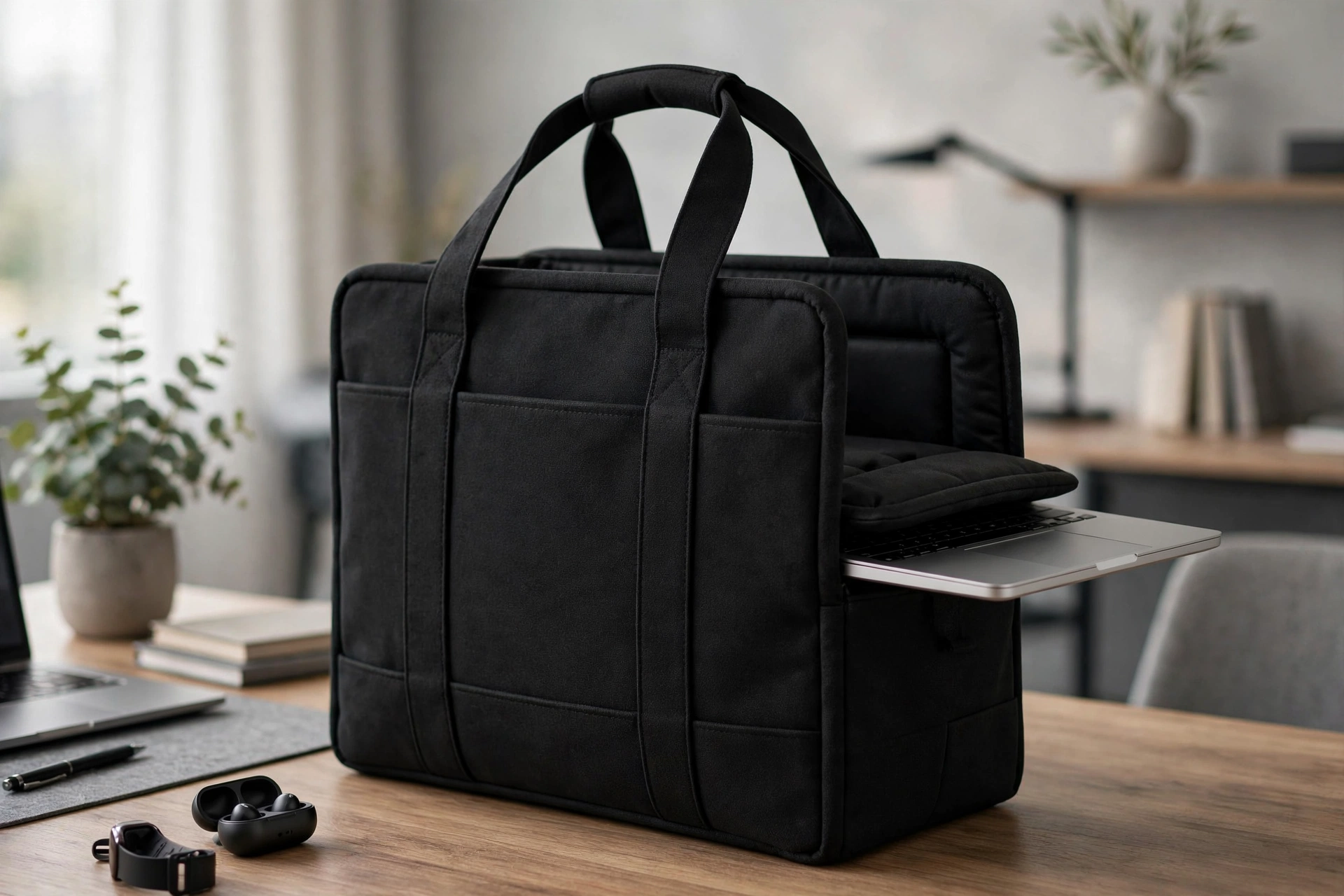
Laptop commuter
Black · padded sleeve · office
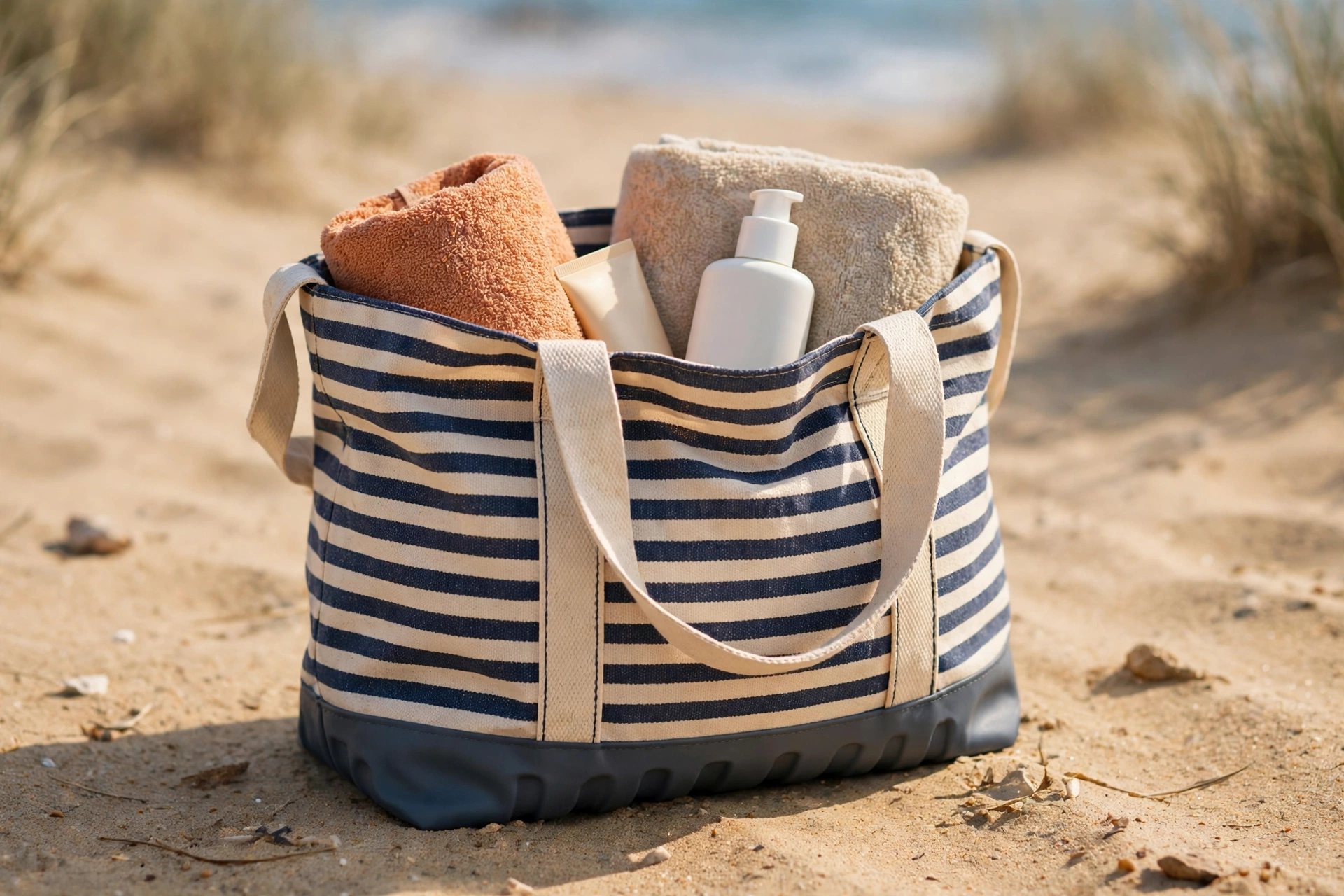
Beach day
Striped · waterproof base · summer

Diaper duty
Insulated pockets · organized · parent
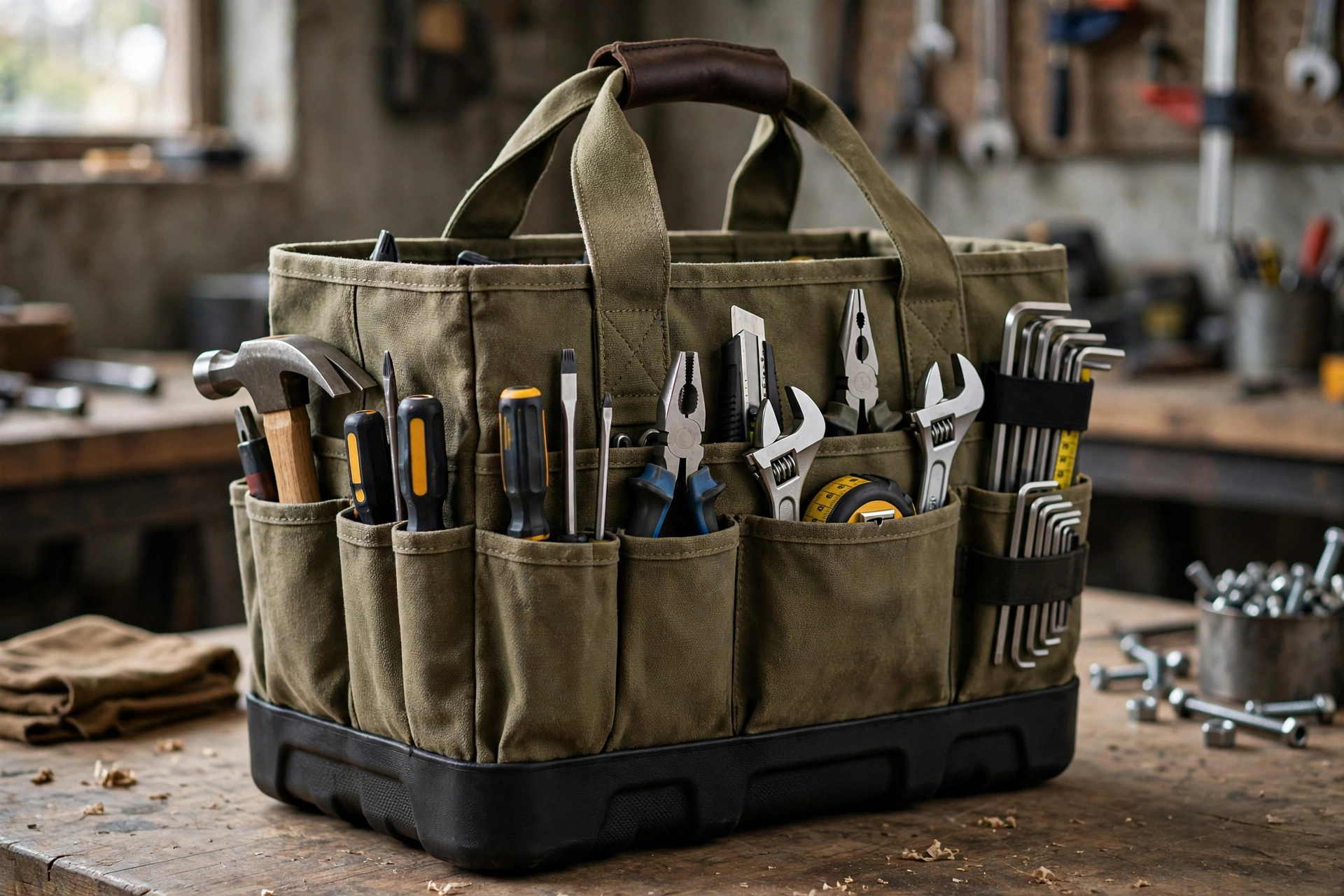
Tool hauler
Heavy-duty · molded base · rugged
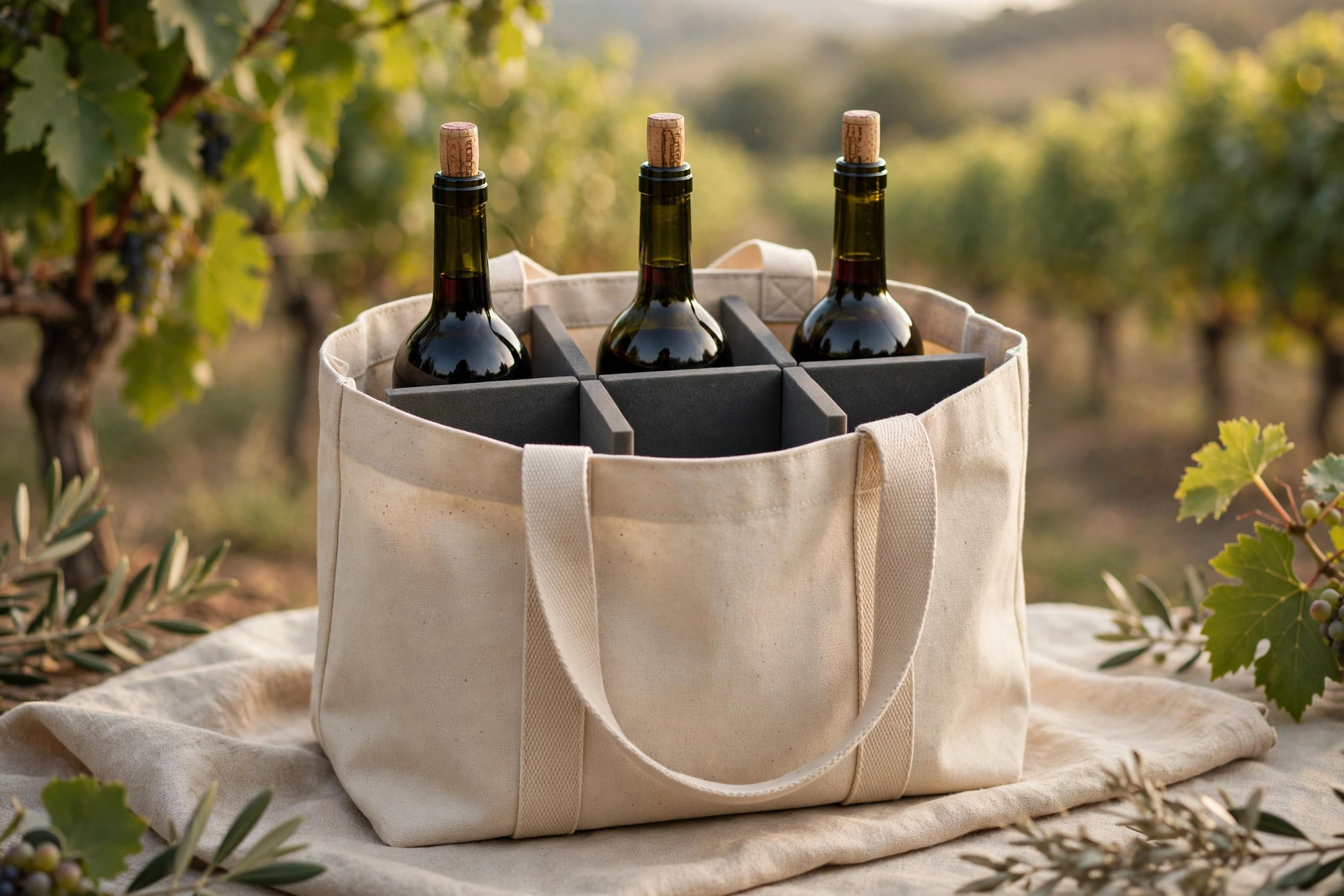
Wine gift
EVA dividers · upright · elegant
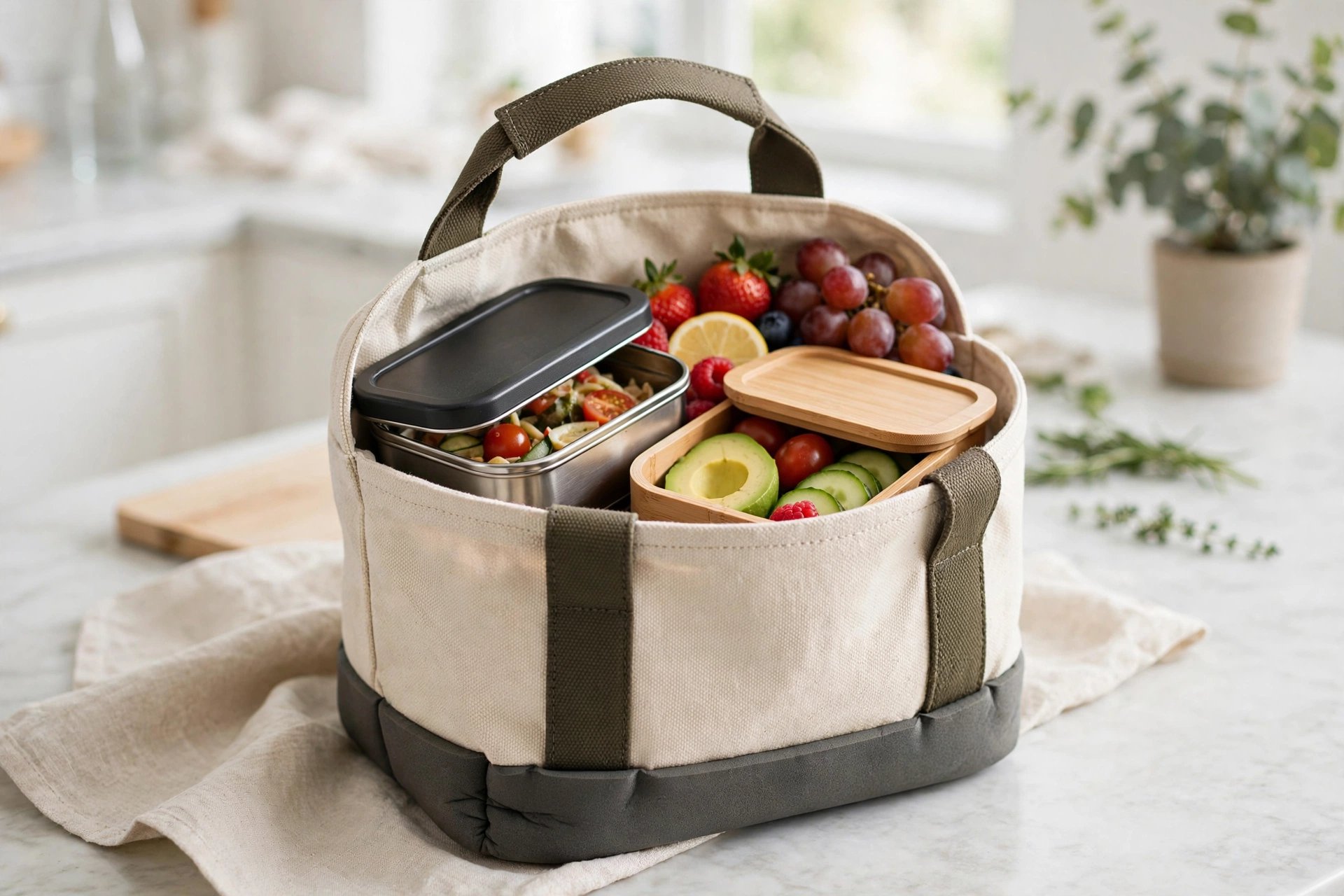
Lunch box
Compact · insulated base · fresh
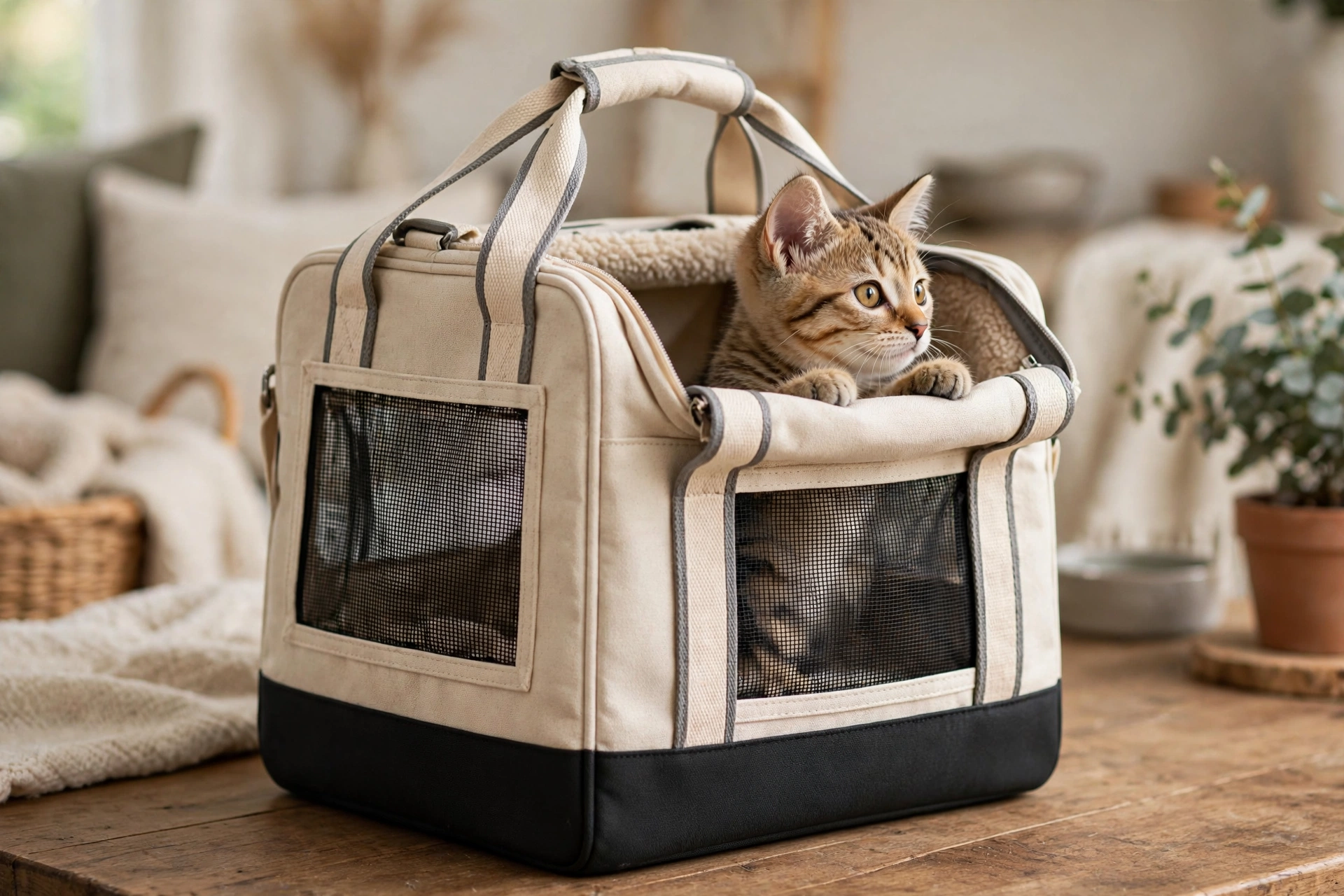
Pet carrier
Mesh windows · EVA base · cozy
You don't need to know packaging.
Just tell us about your product.
Three questions about your tote, its job, your brand — then we prescribe the structure it deserves.
What decides your case price.
We don't hide behind "contact for quote." Here are the four levers — tell us where you stand on each and the quote writes itself.
Tote size & structure
Bigger tote, more material, more freight. An EVA base molded to your tote's footprint — not a generic insert — is the cheapest structure you'll ever buy.
EVA mold complexity
Compartmented base trays and structured walls cost more than a flat board — and they're why the tote stands and organizes.
Canvas & print
Canvas weight, prints, embroidery, custom colors — each is a shelf signal with a price. We spec the skin to your price tier.
Quantity
Custom starts at 1,000 pcs. Unit cost falls as volume rises — tooling is amortized, not repeated.
Five questions to ask any EVA factory.
Including us. Take this list to every supplier you evaluate — the answers tell you who actually engineers the fit.
- 1 · What gives the tote its structure?
- Good answer: a molded EVA base tray plus structured wall inserts — canvas is the skin, EVA is the skeleton. Red flag: "the canvas is thick enough."
- 2 · Is the EVA molded to our tote?
- Good answer: yes — the base tray is molded to your tote's footprint and compartments. Red flag: "we drop in a flat board."
- 3 · What keeps it standing upright?
- Good answer: structured EVA wall inserts — the tote stands on its own, mouth open. Red flag: "it stands when it's full."
- 4 · How do the straps attach?
- Good answer: anchored into the molded EVA base — the load runs through the skeleton, stitched and riveted. Red flag: "sewn to the canvas."
- 5 · Does the base handle wet ground?
- Good answer: water-resistant EVA — set it on wet pavement, the contents stay dry. Red flag: "canvas dries out."
Numbers, not adjectives.
- Custom MOQ
- 1,000 pcs — real custom work starts here
- Sampling
- ~7 days — physical sample in your hands
- Mass production
- 15–25 days after sample approval
- Monthly capacity
- 100k+ pcs across 3 production lines
Asked by tote brands
An EVA-structured canvas tote is a canvas bag built on a molded EVA skeleton — an EVA base tray and structured EVA wall inserts give the tote its shape while the canvas is the skin. The tote stands upright on its own, keeps contents organized, and resists sagging for years.
Canvas alone collapses and sags. Molded EVA base and wall inserts give the tote structure — it stands on its own, groceries stay upright, and the bag keeps its shape for years.
Yes — canvas colors, prints and branding plus EVA base shapes, wall stiffness and compartments. OEM/ODM from your design or sample.
EVA is naturally water-resistant — the molded base tray shrugs off wet ground, spills and rain while the canvas stays clean.
Typically 1,000 pcs. Samples in ~7 days, production 15–25 days after your approval.
Send us your product.
We'll make it worth more.
Your design or sample — engineering feedback and a quote within 24 hours.
info@hcdcase.com